

Certified Installations
We install and inspect flues according to current standards. This ensures your stove is safely connected.
Have a pellet stove installed with the utmost care? Get a quote in 5 steps.
Have a pellet stove installed with the utmost care? Get a quote in 5 steps.
Have a pellet stove installed with the utmost care? Get a quote in 5 steps.

 Written by Dries Nijs3 min read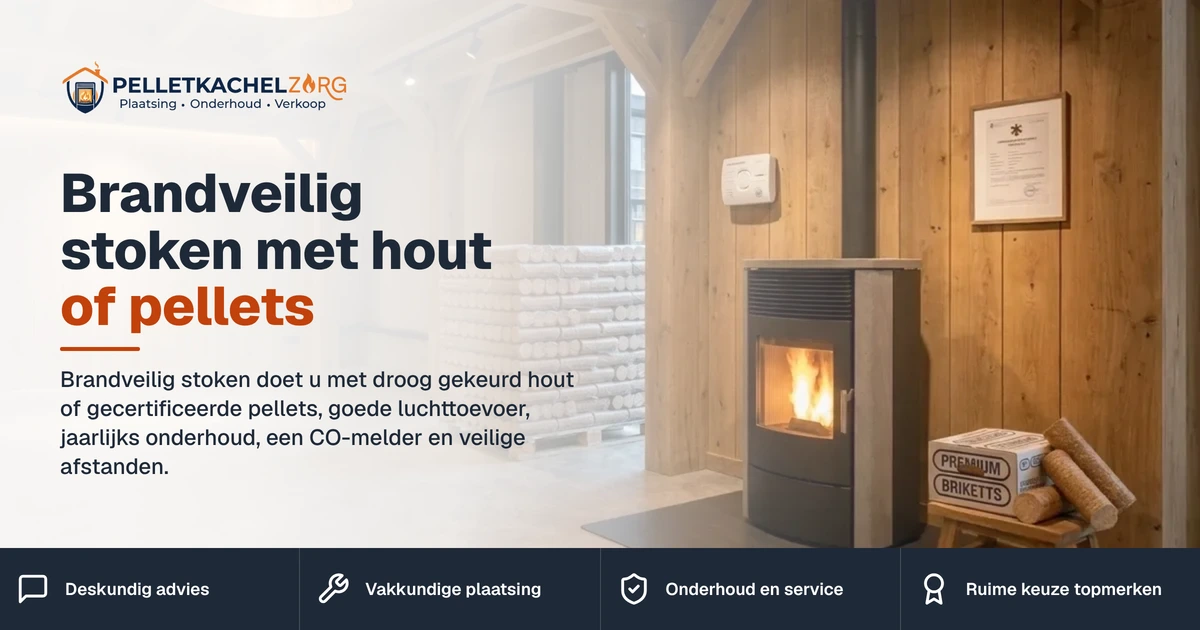
Safe heating starts with dry, certified fuel, proper air supply, annual maintenance, and a working CO detector. Choose dry firewood or certified pellets, never smother the fire, keep a safe distance from flammable materials, and have the chimney swept annually.
This keeps combustion clean and reduces the risk of chimney fires or carbon monoxide.
Safe heating begins with dry, certified fuel, proper air supply, and regular maintenance, whether you have a wood stove or a pellet stove. A clean and complete combustion converts almost all the fuel into heat and leaves little residue in the chimney. Smothering the fire or using damp wood leads to incomplete combustion, more soot and creosote, and thus a higher risk of chimney fires. Additionally, the setup matters: maintain a safe distance from flammable materials, ensure a working CO detector, and have a safe ash disposal. The exact figures, such as minimum distances, are always in the manual and on the CE marking of your appliance. Below, you'll find how to approach this for wood and pellets.
Use dry firewood with a maximum of 20 percent moisture, measured with a moisture meter.
The burning method is crucial: provide plenty of air when lighting and do not smother the fire afterward.
Burn at the right temperature, as a too cool fire produces more smoke and creosote.
Have the chimney swept at least once a year, more often with intensive use.
Use certified pellets, preferably with a recognized quality label, and store them dry.
The supply is automatic, making combustion more stable and, with proper adjustment, producing less creosote.
Regularly clean the fire pot and ash pan to maintain good air flow.
Have the flue and stove inspected annually, even if the combustion appears clean.
Dry fuel plus adequate air plus annual maintenance: that's the essence of safe heating, for both wood and pellets.
Certified Installations
We install and inspect flues according to current standards. This ensures your stove is safely connected.
Annual Maintenance
We clean and inspect your stove and chimney annually. A clean installation reduces the risk of chimney fires.
Tailored Advice
We assess your situation on-site and provide concrete advice on safe distances and air supply. You receive clear, achievable steps.
Check before starting that the chimney is clear, the ash pan is not full, and the air supply can open.
Use only dry, certified wood or certified pellets and never treated wood, paper, or waste.
Light the fire with plenty of air and let it quickly reach temperature instead of smothering it.
Keep the door closed while burning and maintain a safe distance from flammable materials around the appliance.
Let the ash cool completely and store it in a metal, non-flammable bucket with a lid, away from flammable materials.
Dry, certified wood (maximum 20 percent moisture) or certified pellets at home
Air supply open, fire not smothered
Working CO detector in the heating area, batteries tested
Adequate distance from furniture, curtains, and other flammable materials
Chimney swept this year, with certificate
Ash cooled and stored in a metal bucket with a lid
Manual and CE marking checked for exact distances and settings
The way you build the fire largely determines how clean and thus how safe your heating is. In a wood stove, top-down lighting provides faster, cleaner combustion with less smoke than the traditional bottom-up method. A good explanation of this approach can be found in our article on the Swiss burning method. Smothering the fire by closing off the air leads to incomplete combustion and a tar-like residue. How this deposit forms is explained in the article on how creosote forms in a chimney. With pellets, the focus is less on the lighting technique and more on the quality of the pellets and the maintenance of the fire pot.
Besides the fuel and combustion, your setup offers the most protection against accidents. Install a working carbon monoxide detector in the heating area, as CO is odorless and colorless. Where to best place this device is explained in our article on where to place a CO detector near a stove. Also, ensure sufficient space around the appliance and the stove pipe. The required margins depend on your appliance and can be checked in the article on the distance to flammable materials near stove pipes. The exact distances and settings always depend on the manual and the CE marking of your stove, so consider these as binding sources. To structurally minimize the risk of a chimney fire, combine clean combustion with timely sweeping. Our complete guide to preventing chimney fires covers everything.
Are you unsure about the settings, distances, or flue of your stove? Request a free quote or advice and we will assess your situation on-site.
We are happy to help. Contact us without obligation.
You heat most safely with dry, certified firewood with a maximum of 20 percent moisture and adequate air supply. Do not smother the fire by closing off the air, as this leads to more creosote in the chimney. Have the chimney swept annually and install a CO detector near the stove.
A pellet stove is generally more stable in combustion when used correctly, as the supply is automated and the fuel has consistent quality. However, a pellet stove also relies on certified pellets, a good flue, and annual maintenance. Neglecting maintenance makes both types unsafe.
Place a CO detector in the same room as the stove, at breathing height or according to the detector's manual. Carbon monoxide is odorless, so a working detector is your main warning for poor combustion or exhaust. Test the device regularly and replace the batteries on time.
The exact distance to flammable materials is indicated on the CE marking of the stove and in the manual, as it varies per appliance and flue type. When in doubt, allow for a generous margin and use heat-resistant panels where necessary. If unsure, have a professional assess the setup.


