
Tailored advice for your setup
We inspect your stove and flue system together, helping you identify the safest position for your CO detector.
Have a pellet stove installed with the utmost care? Get a quote in 5 steps.
Have a pellet stove installed with the utmost care? Get a quote in 5 steps.
Have a pellet stove installed with the utmost care? Get a quote in 5 steps.

 Written by Dries Nijs3 min read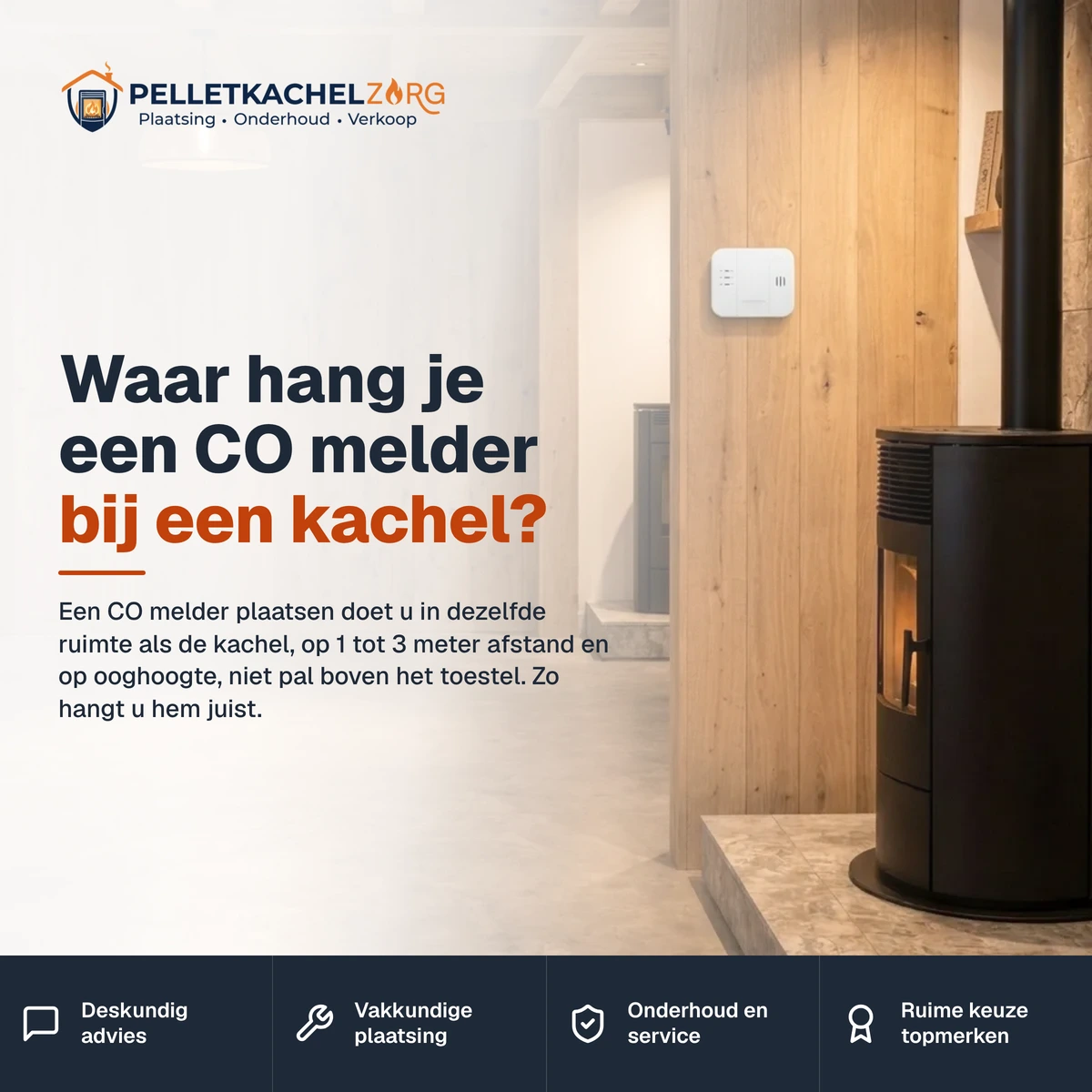
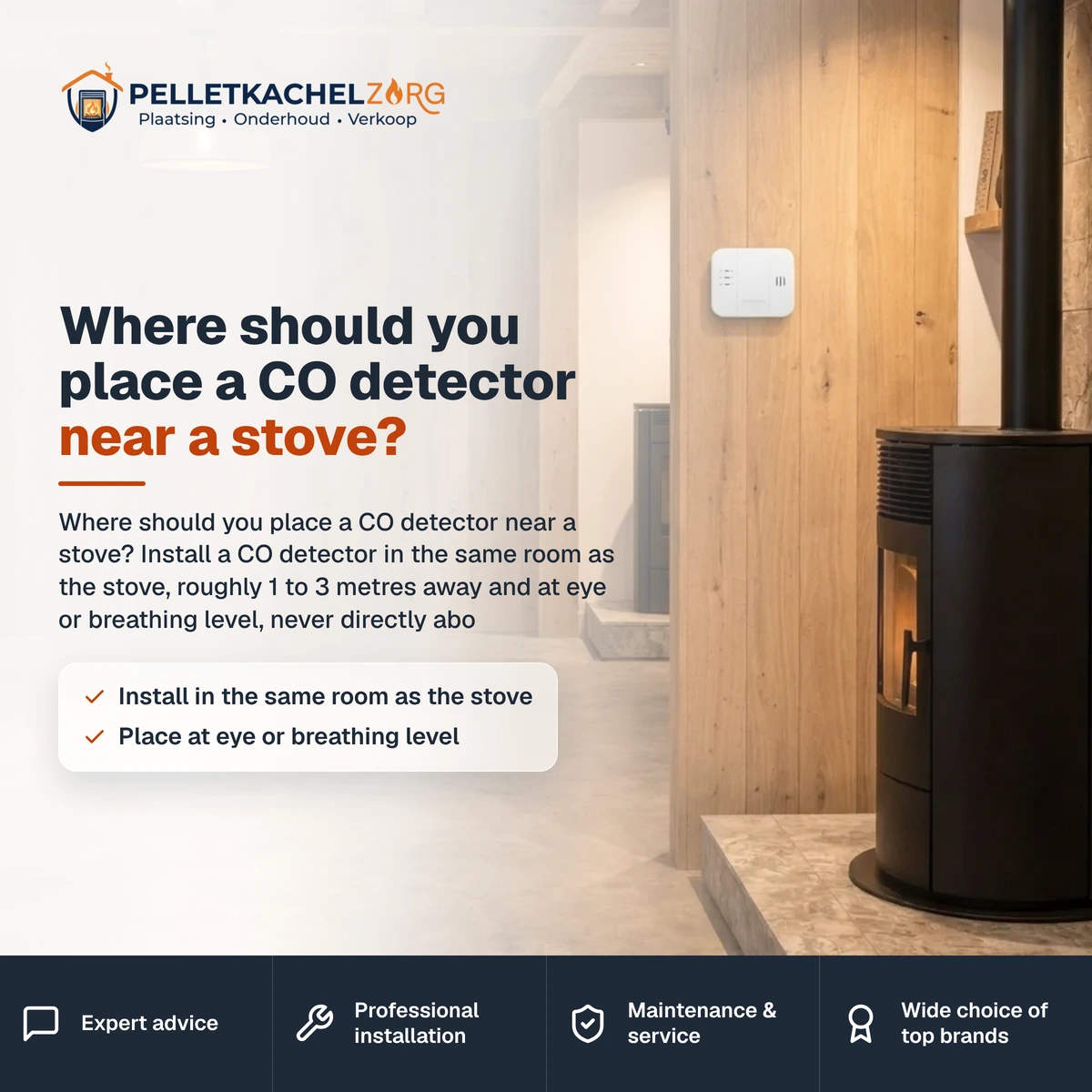
Install a CO detector in the same room as the stove, roughly 1 to 3 metres away and at eye or breathing level, never directly above the appliance. Carbon monoxide mixes easily with air, so positioning it at sitting height works perfectly.
Do not place it next to a window, door or vent, and fit an extra alarm near the bedrooms. Always follow your detector's manual.
The best place to fit a CO detector is in the same room as your stove, about 1 to 3 metres away horizontally and at breathing or eye level, but never directly above the stove. Carbon monoxide is similar in weight to air and distributes evenly, meaning a detector placed at sitting or eye level will reliably catch rising concentrations. Avoid placing the device right next to a window, door or ventilation opening, as fresh airflow can dilute the air sample and delay the alarm. Additionally, mount a second detector near sleeping areas so you are alerted at night if an issue arises. Always check your specific model's manual, as manufacturers may state preferred mounting heights.
Keeping that 1 to 3 metre distance is critical due to how carbon monoxide moves. The gas disperses quickly throughout the room rather than concentrating above the appliance like warm smoke. Placing the detector too close to the stove can trigger false alarms from minor, normal fluctuations. Conversely, mounting it in a dead air space, behind furniture, or beside an air inlet slows gas detection. Positioning it a few metres away, unobscured, at breathing height ensures the most accurate reading.
Rule of thumb: a CO detector belongs in the same room as the heat source, at head height, a few metres away, never directly over the flame.
Tailored advice for your setup
We inspect your stove and flue system together, helping you identify the safest position for your CO detector.
Safe installation and testing
A properly installed chimney flue minimizes carbon monoxide risks. We verify draft safety and connections thoroughly.
Clear maintenance and certificates
Receive straightforward guidelines for testing schedules, along with official sweeping certificates for insurance needs.
Select the room containing the stove as your primary location.
Measure a horizontal distance of roughly 1 to 3 metres from the appliance.
Set the mounting height to eye or breathing level unless manufacturer guidelines state otherwise.
Keep clear of windows, doors, vents and blocked corners behind furniture.
Mount the alarm securely to the wall or ceiling per manufacturer instructions.
Test the unit immediately using the test button and log the replacement date.
Fit a secondary detector near sleeping quarters for extra safety.
Test the alarm at least once a month using the built-in test button.
Replace batteries immediately when the low-battery warning sounds.
Check the expiration date printed on the casing, usually 7 to 10 years.
Keep sensor vents free of dust to maintain accurate detection.
Replace the complete unit after its stated lifespan, even if it still chirps during testing.
A CO detector and a smoke alarm do not replace one another, both are essential safety devices. A smoke alarm detects visible smoke particles during early stage fires, whereas a CO detector measures invisible, odorless carbon monoxide produced by incomplete combustion. Carbon monoxide often builds up silently due to poor chimney draft or blocked flues. Read more about carbon monoxide risks with stoves and fireplaces and why smoke in the house is dangerous, helping you evaluate indoor risks and position alarms correctly.
For multi-storey homes, consider safety coverage across every room with a stove as well as bedroom floors. Installing a CO alarm in the main living space protects you during the day, while an extra alarm near bedrooms wakes you at night when gas leaks go unnoticed. Choose detectors of the same brand and lifespan to simplify regular maintenance.
Whether you are legally required to fit a carbon monoxide alarm depends on your location and property type: regulations vary across regions in Belgium and municipalities in the UK or Netherlands, frequently targeting rental properties or new builds. However, the ideal positioning for a CO detector near a stove remains technically identical everywhere. Remember that an alarm is no substitute for a correctly installed and serviced appliance. Start by practicing fire-safe heating with wood or pellets and keeping flues clean, utilizing our guide to preventing chimney fires alongside your safety alarms. Contact your local authorities or insurer if you need binding advice for your home. Proper flue installation and annual sweeping drastically lower carbon monoxide risks. Treat your CO alarm as a backup line of defense, not a replacement for proper maintenance.
Want to ensure your stove, flue and safety devices work safely together? Request a free quote or expert advice today.
We are happy to help. Contact us without obligation.
Mount your CO detector at eye or breathing level unless specified otherwise by the manufacturer. Carbon monoxide mixes easily with air, so eye height works best. Avoid installing it directly above the stove.
No, never place a CO detector directly above a stove. Intense heat and direct combustion gases distort sensor readings and shorten lifespan. Position it 1 to 3 metres away horizontally.
Yes, both safety devices are necessary. Smoke alarms detect visible fire particles, while CO alarms detect odorless carbon monoxide gas. They serve distinct purposes and cannot replace each other.
Test your detector monthly using its test button and replace batteries immediately upon low power warnings. Replace the complete unit when it reaches its expiration date, typically every 7 to 10 years.