
Annual Maintenance with Certificate
We clean and inspect your stove and flue, providing a sweeping certificate. This keeps the exhaust clear and combustion safe.
Have a pellet stove installed with the utmost care? Get a quote in 5 steps.
Have a pellet stove installed with the utmost care? Get a quote in 5 steps.
Have a pellet stove installed with the utmost care? Get a quote in 5 steps.

 Written by Dries Nijs2 min read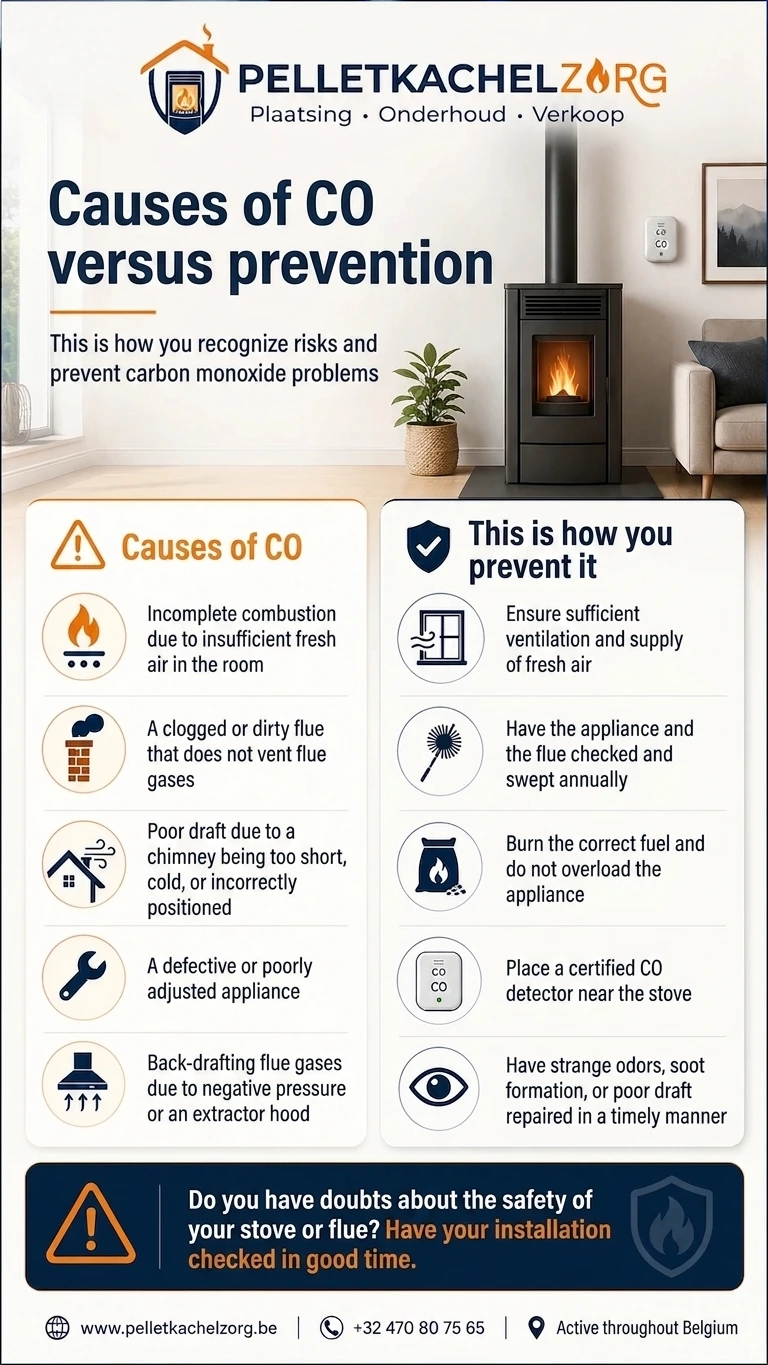
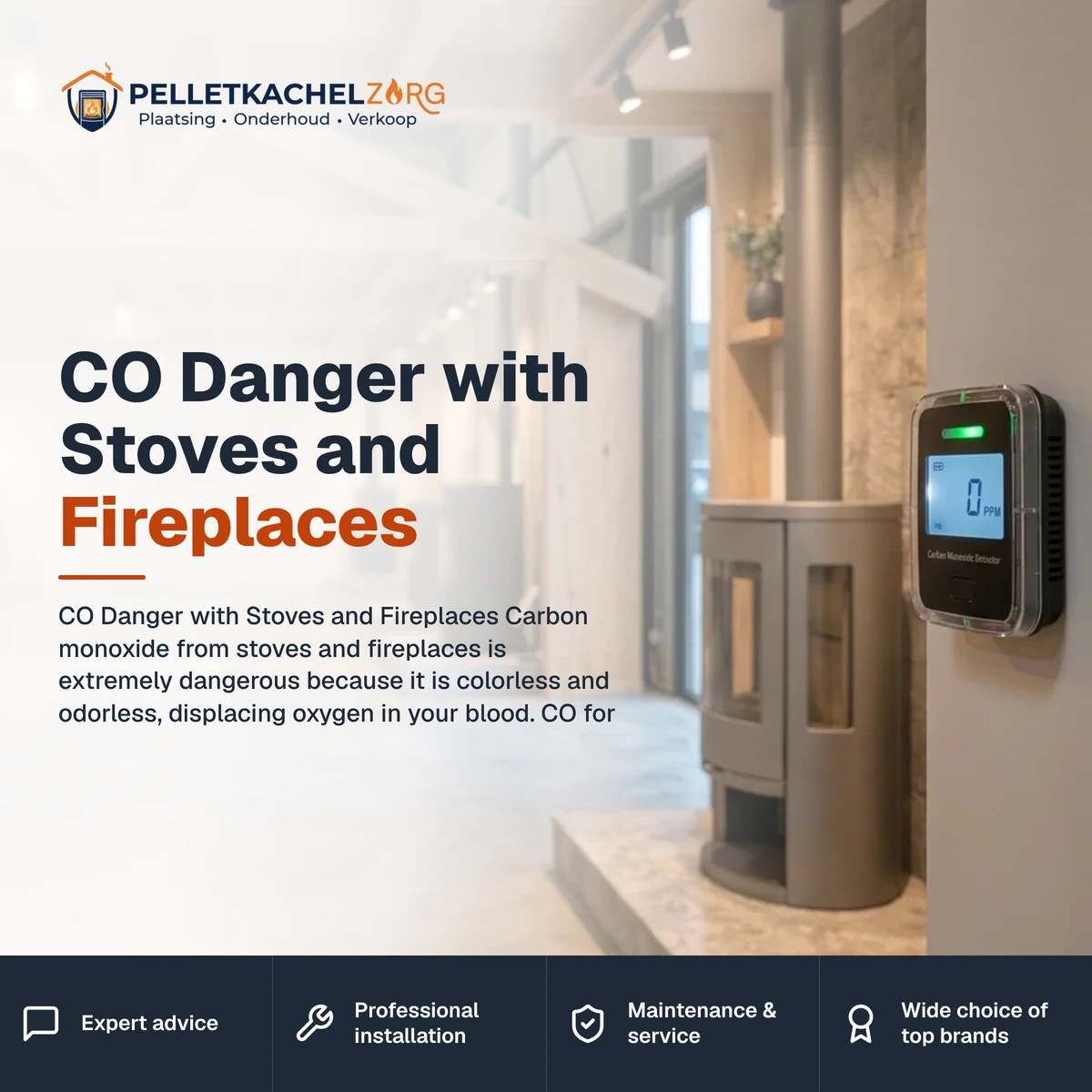
Carbon monoxide from stoves and fireplaces is extremely dangerous because it is colorless and odorless, displacing oxygen in your blood. CO forms during incomplete combustion due to poor draft, a blocked flue, insufficient ventilation, or a faulty appliance.
Prevent it with proper ventilation, annual maintenance, cleaning, and a certified CO detector. If you experience symptoms like headache, nausea, or dizziness, go outside immediately and call 112.
The CO danger from a stove or fireplace arises from carbon monoxide, a colorless and odorless gas released during incomplete combustion.
You won't notice it yourself, as CO has no color, smell, or taste, yet it can be life-threatening in a short time. The gas forms when an appliance receives insufficient fresh air, when the flue is blocked or has poor draft, or when a stove is defective. At high concentrations, carbon monoxide displaces the oxygen in your blood, causing unconsciousness before you realize what's happening.
Good ventilation, annual maintenance, and a working CO detector are not luxuries but necessities. Below, you will read how CO forms, what symptoms indicate poisoning, and what to do immediately if in doubt.
Incomplete combustion due to insufficient fresh air in the room
A blocked or dirty flue that doesn't vent smoke gases
Poor draft due to a short, cold, or improperly placed chimney
A defective or poorly adjusted appliance
Backdrafting smoke gases due to negative pressure or an exhaust hood
Ensure adequate ventilation and fresh air supply
Have the appliance and flue inspected and cleaned annually
Burn the correct fuel and do not overload the appliance
Install a certified CO detector near the stove
Address unusual odors, soot formation, or poor draft promptly
Carbon monoxide is deadly precisely because you can't smell or see it: a working CO detector is your only reliable warning.
Annual Maintenance with Certificate
We clean and inspect your stove and flue, providing a sweeping certificate. This keeps the exhaust clear and combustion safe.
Draft and Exhaust Inspection
We measure the draft and detect blockages or leaks before they become dangerous. A proper exhaust reliably vents smoke gases outside.
Advice on Ventilation and CO Detector
We assess the air supply in your space and advise on the correct placement of a CO detector. This ensures timely warnings in case of danger.
Immediately open windows and doors to let fresh air in.
Turn off the appliance if it's safe and quick to do so, but don't delay.
Leave the house and go outside into the fresh air.
Call emergency services at 112 and report suspected carbon monoxide.
Do not re-enter until the fire department or a professional has declared the area safe.
Headache that disappears once you're outside
Nausea, vomiting, or a feeling of sickness
Dizziness or lightheadedness
Confusion, loss of concentration, or unusual drowsiness
Symptoms in multiple family members or pets at the same time
Most cases of CO poisoning from stoves and fireplaces can be prevented with simple care. An annual inspection and cleaning of the flue keep the exhaust clear, so smoke gases exit instead of re-entering the room. Equally important is fresh air: a burning appliance consumes oxygen, and in a too well-sealed room, negative pressure quickly develops. If you notice poor smoke gas draft, read how to address a chimney that doesn't draft well before it becomes dangerous. Additionally, install a certified detector and check where to best place a CO detector, as an improperly placed detector warns too late.
We are happy to help. Contact us without obligation.
No, carbon monoxide is completely odorless, colorless, and tasteless. You can't detect the gas yourself, making a certified CO detector your only reliable protection.
The first symptoms are headache, nausea, dizziness, and fatigue. These complaints resemble flu but often disappear once you're outside; if multiple family members experience them simultaneously, go outside immediately and call 112.
Yes, any appliance that burns fuel can produce carbon monoxide, including a pellet stove. A blocked flue, poor draft, or a faulty smoke fan can cause incomplete combustion, so maintenance and a CO detector are also necessary here.
Place a CO detector in the same room as the stove, at breathing height or according to the detector's manual. Do not hang it directly above the appliance or near a window, as it will detect too late there.