
Chimney flues are our specialty
We specialize in flues for pellet and wood stoves in Limburg and the surrounding areas. This allows us to quickly identify draft problems and tackle the root cause.
Have a pellet stove installed with the utmost care? Get a quote in 5 steps.
Have a pellet stove installed with the utmost care? Get a quote in 5 steps.
Have a pellet stove installed with the utmost care? Get a quote in 5 steps.

 Written by Dries Nijs3 min read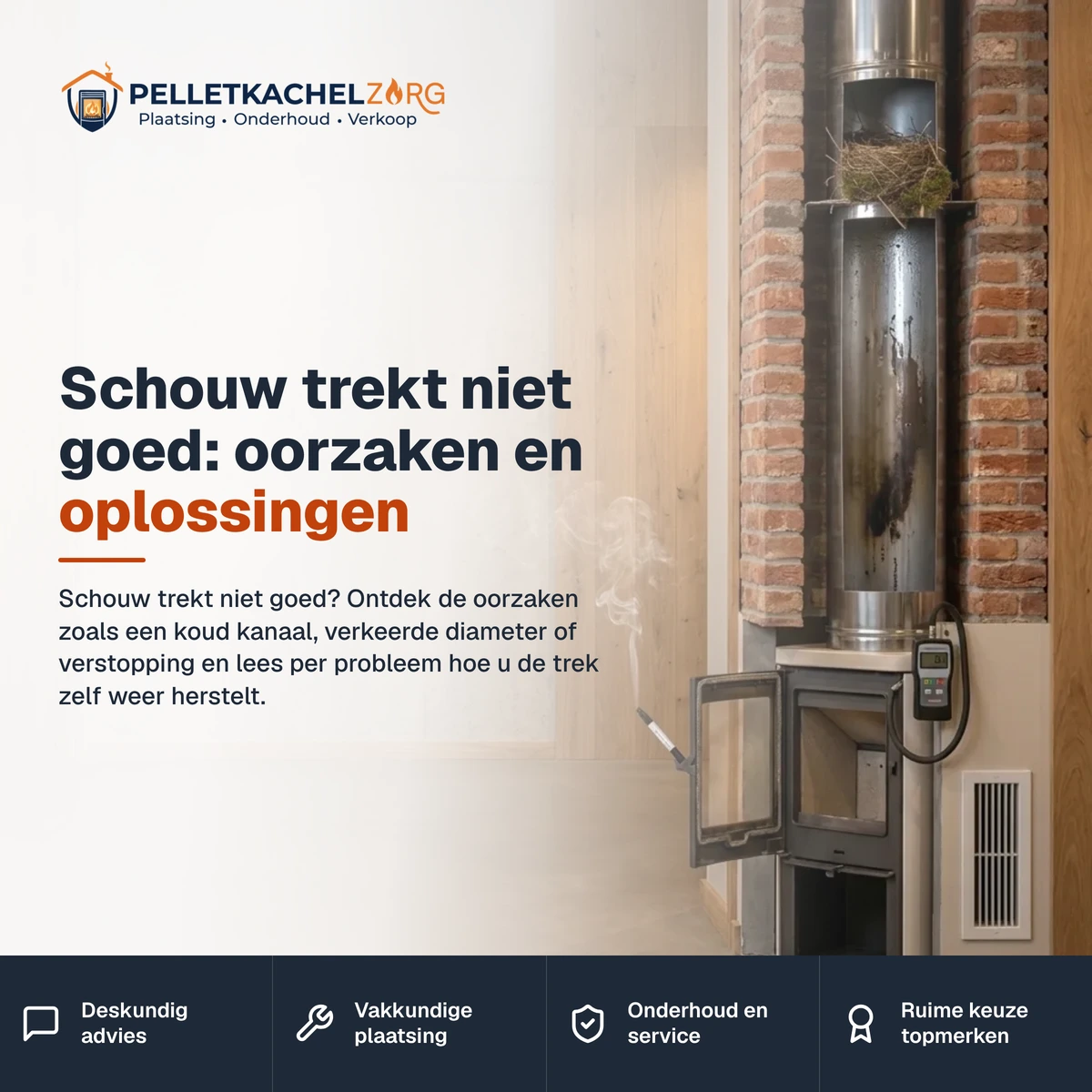
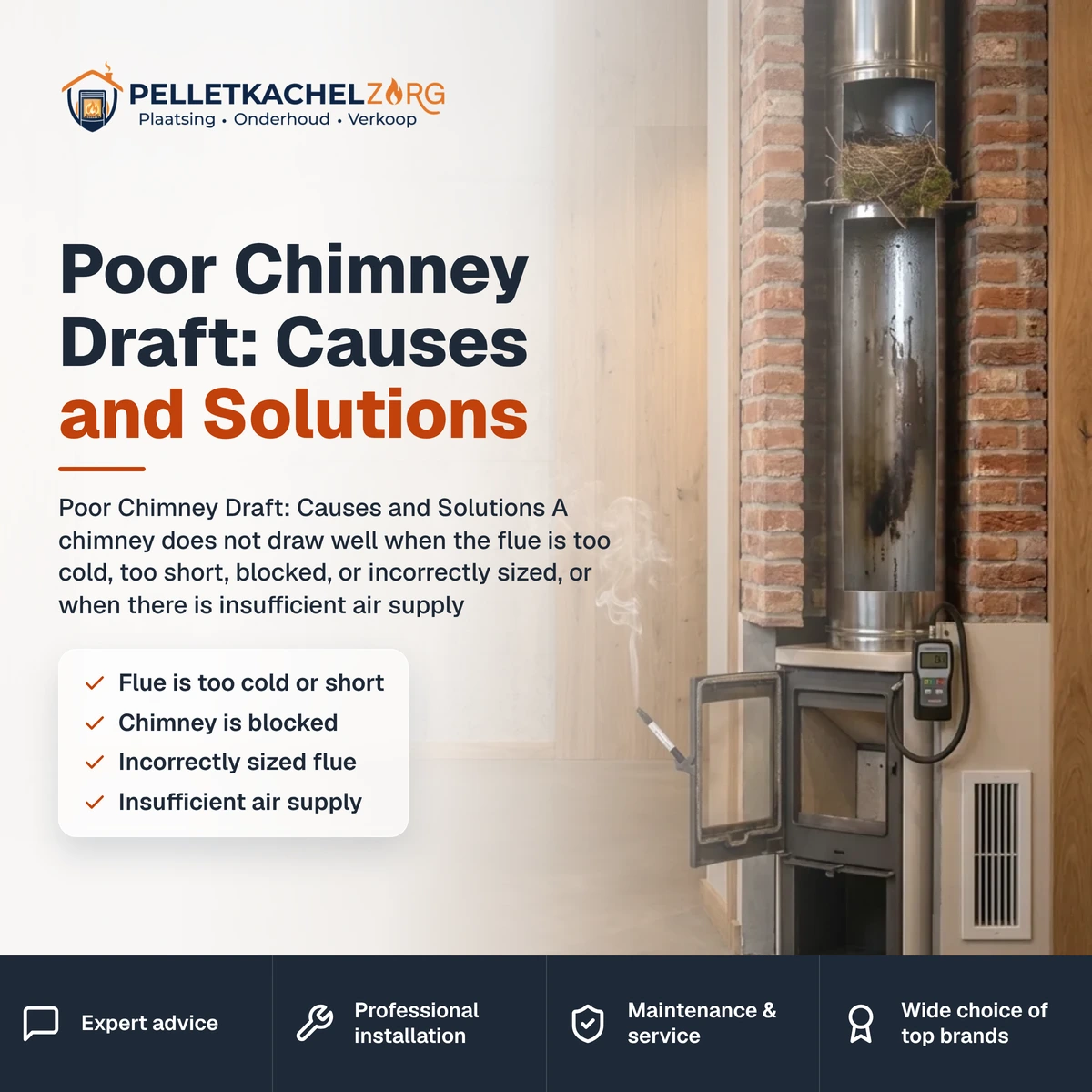
A chimney does not draw well when the flue is too cold, too short, blocked, or incorrectly sized, or when there is insufficient air supply in the house. Draft occurs due to the temperature difference between the flue gases and the outside air, as well as the height of the chimney. Therefore, a warm, tall, and unobstructed flue draws best.
You can fix poor draft by burning dry wood or quality pellets, preheating the flue, having it swept, ensuring proper ventilation, and insulating or extending the flue if necessary.
A chimney experiences poor draft when the temperature difference between the flue gases and the outside air is too small, or when the flue is blocked, too cold, too short, or incorrectly sized. Draft is created because warm flue gases are lighter than cold outside air and naturally rise. The warmer and taller the chimney, the stronger this suction. As soon as this negative pressure drops, smoke lingers, the fire dies down, or smoke blows back into the room. Causes range from a cold start and damp wood to an oversized diameter or improper termination. Below you can read what goes wrong for each cause and how to restore the draft.
Good draft depends entirely on a warm, tall, and clear flue. Always address the simple causes first (dry wood, preheating, sweeping) before making structural changes to the chimney.
Chimney flues are our specialty
We specialize in flues for pellet and wood stoves in Limburg and the surrounding areas. This allows us to quickly identify draft problems and tackle the root cause.
Camera inspection of your flue
With a camera inspection, we can easily spot blockages, fractures, or improper construction in your flue. You get a clear picture before any modifications are made.
Advice tailored to your appliance
We match the diameter, insulation, and termination to your specific appliance. This ensures your chimney draws stably and you can burn safely and efficiently.
First, check the fuel: are you burning dry wood or quality pellets, or does the wood feel damp and produce heavy smoke?
Test a cold start by burning a crumpled piece of paper high up in the flue. This preheats the chimney and lets you see if the draft starts up.
Leave a window or door slightly open. If the stove immediately draws better, there is too little air supply in the house.
Check if the diameter is correct and if the appliance is connected to the right flue, especially if you recently made changes. If in doubt, check what diameter stove pipe you need.
Inspect the flue for soot, creosote, or nests, and check the termination for height and obstacles like trees or a neighboring roof.
Is the wood truly dry (maximum 20 percent moisture) or are you using quality pellets?
Are you preheating the flue during a cold start?
Is there enough fresh air supply in the room?
Has the chimney been swept recently and is it free of soot or nests?
Does the termination extend high enough above the ridge and clear of any wind shadow?
Is smoke lingering in the house or can you smell flue gases? If so, stop burning immediately.
A cold flue is by far the most common reason why a chimney does not draw well. Flue gases traveling through a single-wall or external pipe cool down rapidly, causing the upward suction to collapse and the fire to die down. A double-wall or insulated flue retains heat longer and therefore draws more stably. Read here when a double-wall flue is necessary. If your flue keeps cooling down due to contamination, also pay attention to the signs of a dirty chimney, as a thick layer of soot narrows the passage and further restricts the draft.
Persistent poor draft combined with smoke indoors is not just annoying, it can indicate a dangerous situation. If flue gases cannot escape, carbon monoxide can build up, which is an odorless, colorless, and life-threatening gas. If you notice smoke repeatedly blowing back, stop burning and read what to do if smoke comes back into the house. If the problem persists or you are unsure how to assess the cause yourself, hire a professional. Read here when you need to hire a professional for your flue. Always install a CO detector near the appliance.
If your chimney continues to draw poorly despite dry wood, preheating, and a clean flue, the problem is often in the construction or termination of the flue itself. Request a free quote or advice and have your flue inspected or adjusted.
We are happy to help. Contact us without obligation.
When starting a fire, your chimney draws poorly because the flue is still cold and the flue gases don't generate enough suction. First, burn a crumpled piece of paper high up in the flue to preheat it. Once the air in the chimney warms up, the draft usually starts naturally.
Yes, an oversized chimney can draw poorly because the flue gases have too much space and cool down too quickly. The upward velocity drops, causing the smoke to linger. Installing a stainless steel flexible liner or a flue with the correct diameter usually restores the draft.
A chimney cowl mainly helps when the poor draft is caused by wind or turbulence around the termination. The cowl prevents the wind from pushing the flue gases back down and keeps the negative pressure more stable. However, it will not solve the problem if the flue is too cold or blocked.
Poor draft becomes dangerous as soon as flue gases linger indoors, because carbon monoxide can build up. Stop burning if you notice smoke or a smoke smell in the house and make sure to have a CO detector near the appliance. If the problem keeps recurring, have the flue inspected.