
Cleaner and safer
We show you how to reduce smoke and soot using proper lighting techniques, significantly lowering chimney fire risks.
Have a pellet stove installed with the utmost care? Get a quote in 5 steps.
Have a pellet stove installed with the utmost care? Get a quote in 5 steps.
Have a pellet stove installed with the utmost care? Get a quote in 5 steps.

 Written by Dries Nijs4 min read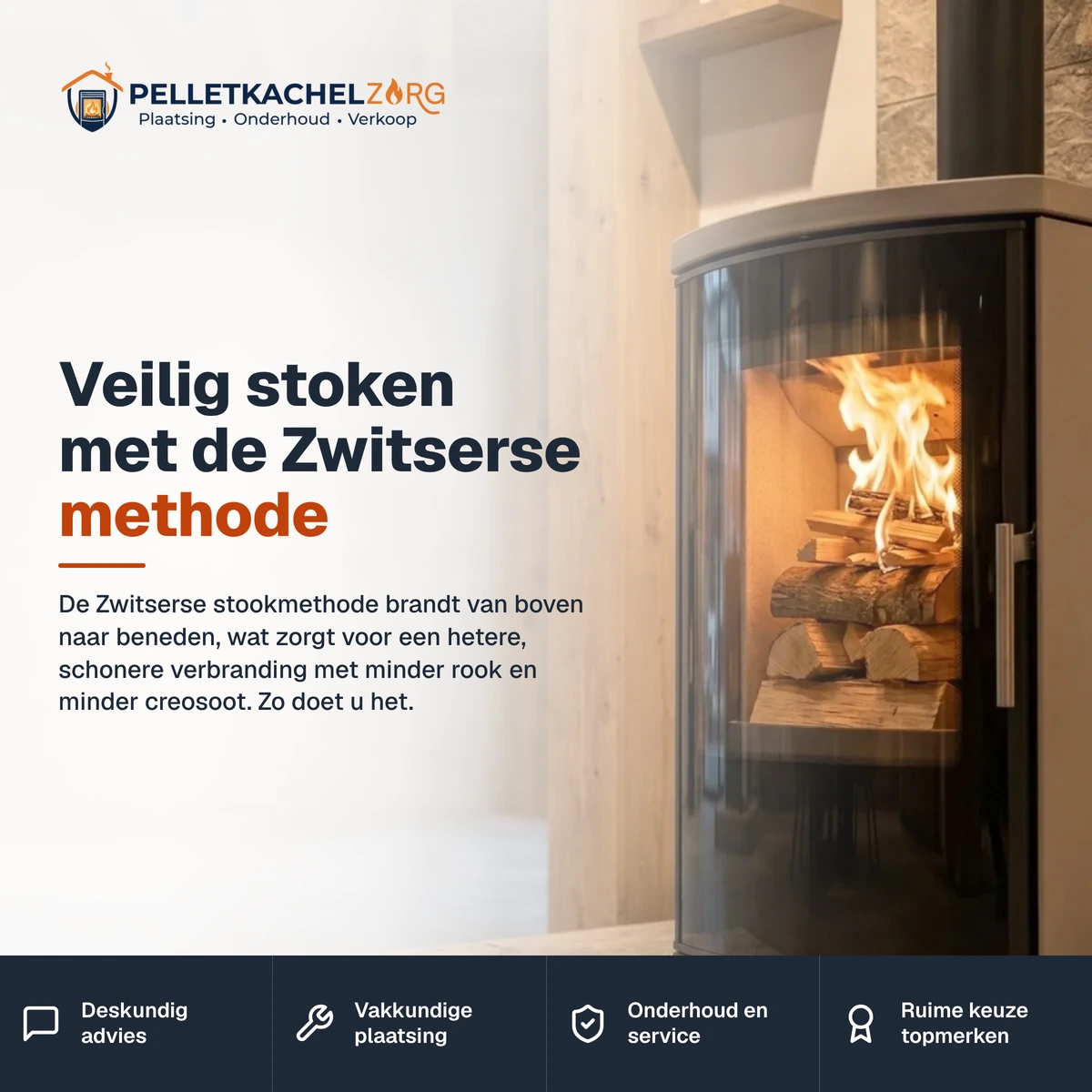
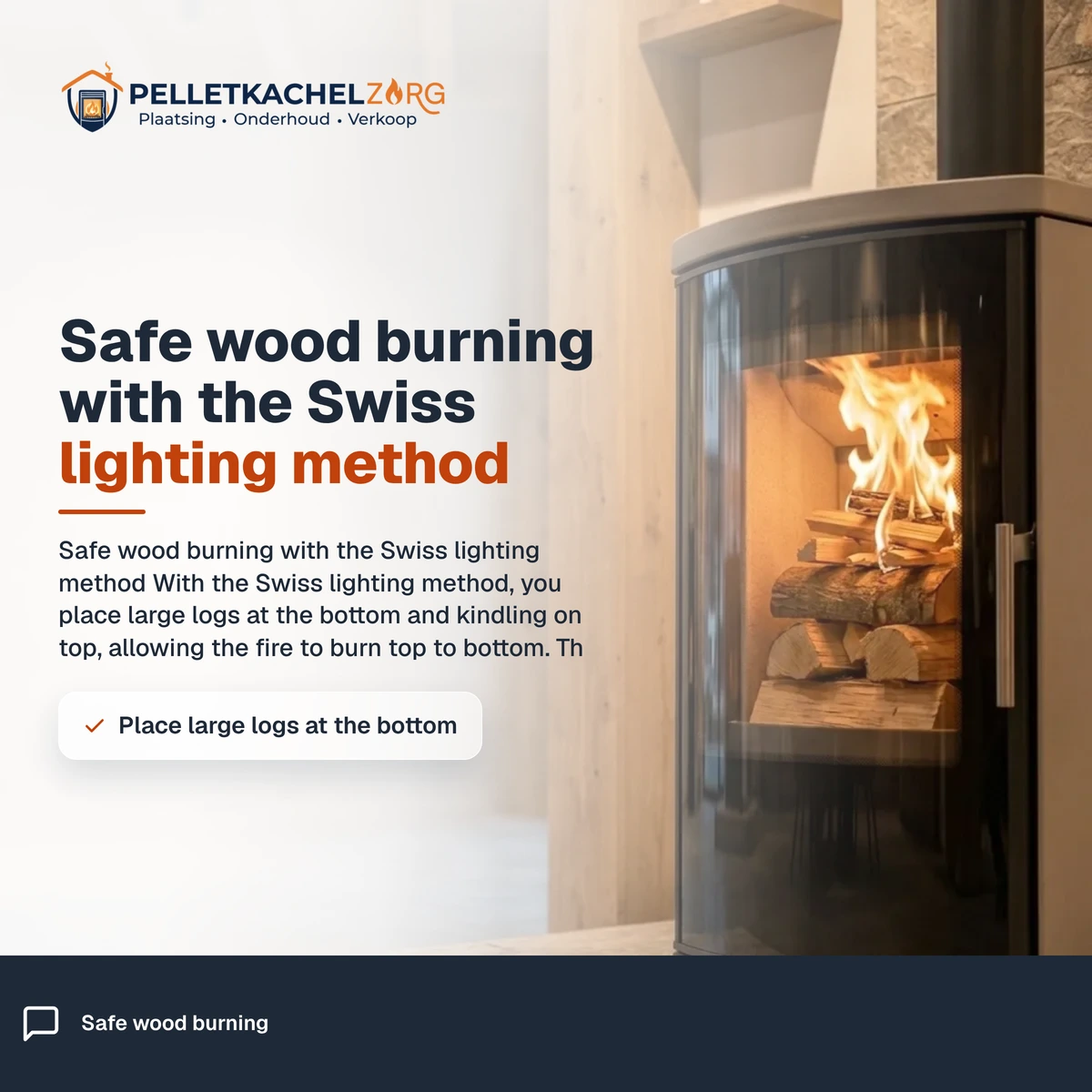
With the Swiss lighting method, you place large logs at the bottom and kindling on top, allowing the fire to burn top to bottom. This setup ensures a faster, hotter, and more complete combustion with less smoke and minimal creosote buildup.
This technique, also known as top-down lighting, is primarily designed for wood stoves and fireplaces. In a pellet stove, the appliance regulates combustion automatically.
The Swiss lighting method is a way of burning wood where you light the fire from the top instead of the bottom, so it burns downwards. You lay the largest logs on the bottom, smaller wood on top of those, and kindling with firelighters right at the top. The flame heats the top layer first, and rising flue gases pass directly through that hot zone, burning completely. The result is a quicker start, a hotter fire core, and a significantly cleaner burn. This approach is also called top-down lighting. With the traditional method, you place the kindling underneath, causing the cold wood above it to smoulder and emit gases before getting hot enough to ignite. That smouldering phase creates the most smoke and creosote soot.
Lighting top-down with dry wood creates a hotter, cleaner burn with less chimney buildup.
Cleaner and safer
We show you how to reduce smoke and soot using proper lighting techniques, significantly lowering chimney fire risks.
Expert guidance
Our team knows wood stoves, flues, and airflow inside out. You get practical advice based on real-world experience.
Inspection and maintenance
We inspect and clean chimneys to ensure your heating system remains completely safe and efficient.
Place two to three large, dry logs next to each other at the bottom of the firebox or hearth.
Stack a layer of medium-sized wood on top, crisscrossed over the bottom layer to ensure adequate airflow.
Add a layer of fine kindling on top in a cross pattern so air can flow freely between the pieces.
Place one or two firelighters on top of the stack and light them.
Open the air intake completely and let the fire burn quietly from top to bottom.
Only add more wood once the first batch has burnt down to glowing embers.
Only use dry, certified wood with a moisture content below roughly 20 percent
Fully open the air intake when lighting for a fast, hot start
Stack the wood loosely so flames and air can reach everywhere
Avoid waste wood, painted or treated timber, and excessively large, dense stacks
Gradually reduce airflow only when the fire is burning well, never shut it completely right away
Have your chimney inspected and swept annually
The key advantage lies in the combustion temperature. When lighting from above, the fire reaches a high temperature more quickly, allowing tar-like substances in the flue gases to burn off rather than settle against the cold chimney wall. This leads to less sticky residue that hardens and turns flammable over time. A cold, smouldering fire does the exact opposite: it produces numerous unburnt particles that stick to the flue as soot and tar. Besides a cleaner chimney, you will notice the top-down method results in less smoke from the stack and cleaner stove glass, as fewer unburnt gases hit the glass. The environment benefits as well, because hotter combustion emits significantly less particulate matter than a smouldering wood fire. You can read more about how these deposits build up in our article on how creosote forms in a chimney. Fewer deposits directly mean less fuel for a chimney fire, which forms the core of safe burning with wood or pellets. If you notice heavy soot, a black interior, or strong odours, these are often signs of a dirty chimney.
The Swiss method is particularly useful for wood stoves, fireplaces, and insert stoves, where you manually stack and light the fuel. For pellet stoves, it is not applicable, as the appliance automatically feeds pellets and combustion air while regulating the burn itself. A pellet stove ignites via a heating element and keeps the flame continuously regulated, meaning the distinction between top-down and bottom-up lighting simply does not apply. With a pellet stove, it pays off more to focus on pellet quality and an optimized combustion profile. Even with the best burning techniques, always stick to dry, certified wood, as damp logs burn cold, produce smoke, and negate any benefits. Fresh logs contain too much moisture, which must evaporate before the wood can burn properly, and that evaporation consumes heat while generating smoke. Furthermore, good firing technique is no substitute for maintenance: have your chimney swept and inspected annually, and keep local regulations or insurer requirements in mind, as these vary by area. If you want to make sure you are burning the right quality wood, read how to identify dry wood before placing it in the stove. For a full overview on safe heating, check our guide on preventing chimney fires.
If you are unsure whether your wood stove or flue is operating safely and cleanly, feel free to have it inspected. Request a free quote or advice to get clarity right away.
We are happy to help. Contact us without obligation.
The Swiss method is a top-down lighting technique where you stack large logs at the bottom and put kindling on top. The fire burns downwards, providing a hotter, cleaner burn with far less smoke.
Yes, lighting from the top is much cleaner. Flue gases pass directly through the hot flame above the wood and burn up completely, resulting in fewer particulates, soot, and creosote inside your chimney.
No, it is not needed in a pellet stove. Pellet stoves automatically feed pellets and air to regulate combustion. Top-down lighting is designed for log wood stoves and open fireplaces where you stack wood manually.
Always use dry, seasoned firewood with a moisture content under 20 percent. Wet wood burns cold and produces excessive smoke, ruining the benefits of the method and increasing chimney soot.