

Expert Inspection
We assess the condition of your flue and recognize creosote at every stage. You'll know immediately if sweeping is enough or if intervention is needed.
Have a pellet stove installed with the utmost care? Get a quote in 5 steps.
Have a pellet stove installed with the utmost care? Get a quote in 5 steps.
Have a pellet stove installed with the utmost care? Get a quote in 5 steps.

 Written by Dries Nijs4 min read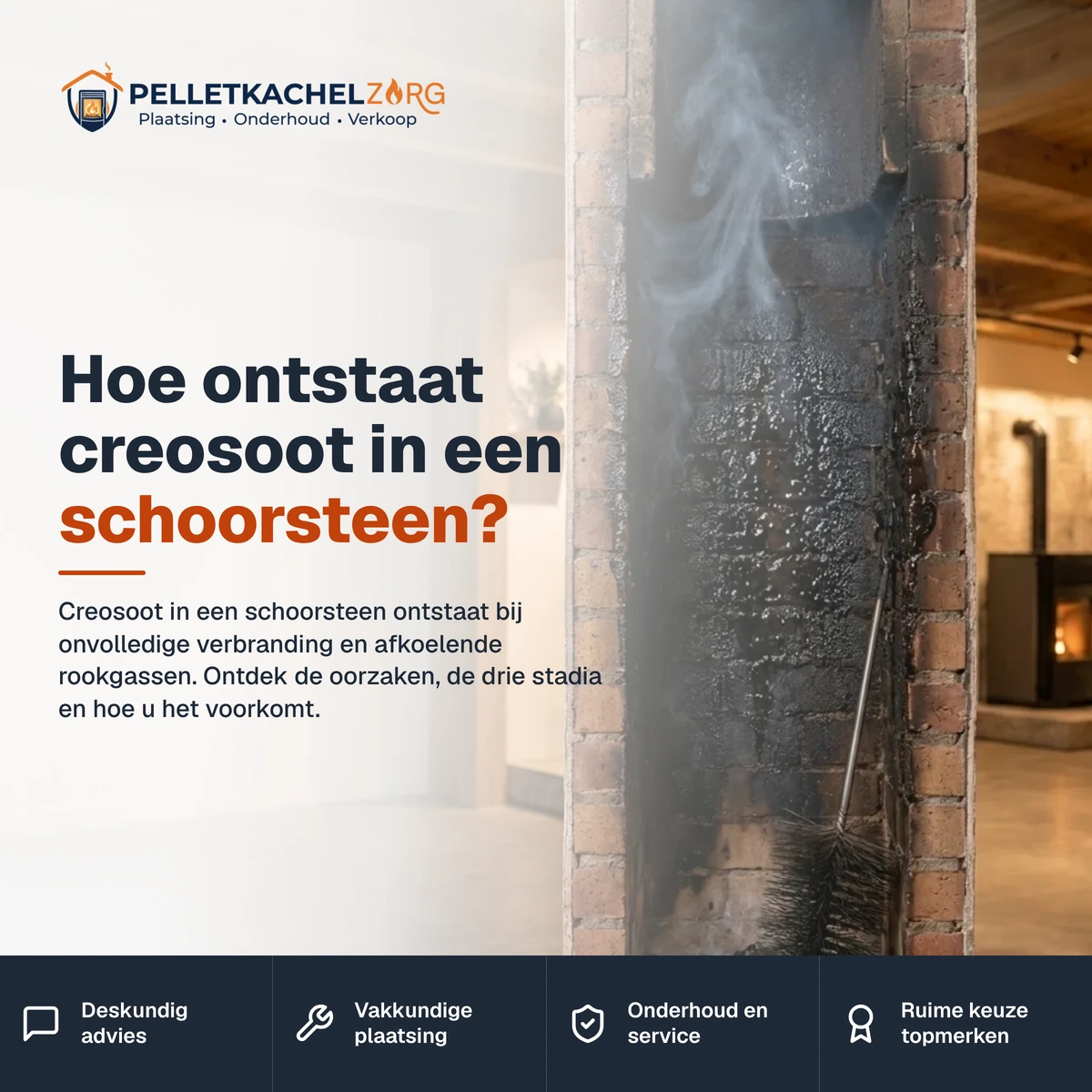
Creosote in a chimney forms due to incomplete combustion and cooling smoke gases, which deposit tar-like, flammable substances on the flue wall. The buildup is accelerated by moist wood, smoldering, low flue gas temperature, and a cold or oversized flue.
Because creosote burns very well, it is the main cause of chimney fires. Burning dry, letting the fire burn well, and sweeping annually keep the buildup under control.
Creosote in a chimney forms when smoke gases burn incompletely and cool too much, causing tar-like substances to deposit as a flammable layer on the flue wall. This buildup starts as a thin, soot-like film but can grow into a thick, sticky, or even glassy crust with improper burning. The main causes are moist wood, smoldering with insufficient air, low flue gas temperature, and a cold or oversized flue. During combustion, water vapor and unburned wood gases are released, and as long as these gases remain hot, they exit the flue without depositing. However, once they cool below about 150 degrees, the tar particles condense on the cold wall. Because creosote burns very well, this deposit is the main cause of chimney fires. This article explains how creosote forms, the stages you can recognize, and how to slow its buildup.
The rule of thumb is: the colder the smoke gases and the wetter the wood, the faster creosote builds up in your chimney.
Expert Inspection
We assess the condition of your flue and recognize creosote at every stage. You'll know immediately if sweeping is enough or if intervention is needed.
Fire Safety Advice
Receive concrete advice on burning dry, ensuring proper draft, and insulating the flue. This limits the buildup of flammable deposits.
Professional Cleaning
Hard, glaze-like creosote requires specialized tools. We remove deposits safely and provide the accompanying certificate.
Stage 1: Sooty Deposit. A dry, powdery to slightly flaky layer that mainly consists of soot. This deposit can be relatively easily brushed away by you or a chimney sweep.
Stage 2: Sticky, Granular Tar. A tough, shiny layer that forms with repeated smoldering and cooling. It adheres strongly and requires vigorous mechanical sweeping, sometimes with special tools.
Stage 3: Hard Glaze. A rock-hard, glassy crust that forms like a lacquer around the flue. This glaze forms when tar is repeatedly heated and cooled, is highly flammable, and is almost impossible to remove with regular sweeping. In this stage, the risk of chimney fire is highest, and professional cleaning or flue replacement is sometimes the only safe option.
Creosote is dangerous because it burns very well: in an overheated or sparking flue, the deposit can ignite and cause a chimney fire with temperatures that can exceed a thousand degrees. Such a fire often sounds like a loud roaring or rumbling noise and is accompanied by sparks and thick smoke from the chimney top. The flue can crack, and the fire can spread to the beams, roof structure, or facade of the house. A thick layer also narrows the flue, worsens the draft, and increases the risk of backdrafting smoke gases and carbon monoxide in the house. The more the glaze builds up, the harder and more expensive the cleaning becomes, and the greater the chance that a single overheated burn is enough to ignite the layer. Therefore, pay attention to the signs of a dirty chimney and have it checked if in doubt how often you should have the chimney swept. Those who want to structurally limit the buildup should also read how to prevent a chimney fire for a complete overview of the most important measures.
Burning wood generally produces more creosote than pellets because wood logs contain more moisture and volatile tar substances and often burn incompletely. Especially with open fireplaces and night burns with restricted air supply, the smoke gases cool significantly, accelerating the buildup. Pellet stoves use dry, compressed pellets and controlled air supply, resulting in more complete combustion and less tar deposition. However, no system is completely free of buildup: even a pellet stove deposits soot and condensate, especially with a cold flue, lower pellet quality, or when the stove runs long on the lowest setting. A well-insulated flue helps keep the smoke gases warm, so consider when a double-walled flue is needed for a new installation. For tips on daily burning practices, safe burning with wood or pellets is a useful addition. When faced with a hard, glaze-like creosote buildup, stop brushing yourself: call in a chimney sweep or installer, as this glaze requires specialized cleaning, sometimes with rotating tools, and an inspection of the flue. The exact obligations regarding sweeping and certificates also vary by region and municipality in Belgium and by municipality in the Netherlands, so always consult your municipality and your fire insurer for the binding rules in your situation.
Are you unsure about the condition of your chimney or flue? Request a quote or advice and have your situation expertly assessed.
We are happy to help. Contact us without obligation.
You can recognize creosote by a tar-like, shiny, or granular black layer on the flue wall, sometimes with brown droplets at joints. A dull-burning fire, quickly blackened glass, and a sharp tar smell also indicate buildup. If in doubt, have the flue inspected.
Yes, creosote is extremely flammable and the main cause of chimney fires. A thick layer can ignite at high flue gas temperatures and cause the flue to crack. It also narrows the passage and worsens the draft.
Prevent creosote by burning only dry wood, letting the fire burn well, and not smoldering. Ensure a warm, preferably double-walled or insulated flue and proper draft. Have the flue swept at least annually.
You can often brush away light, soot-like creosote with a suitable brush. Sticky tar and especially hard glaze are almost impossible to remove this way and require a professional with specialized tools. For a thick or hard layer, it's best to call a chimney sweep.


