
Annual sweep with a certificate
We thoroughly sweep and inspect your chimney, providing you with a valid sweeping certificate. This document is crucial for your home insurance.
Have a pellet stove installed with the utmost care? Get a quote in 5 steps.
Have a pellet stove installed with the utmost care? Get a quote in 5 steps.
Have a pellet stove installed with the utmost care? Get a quote in 5 steps.

 Written by Dries Nijs4 min read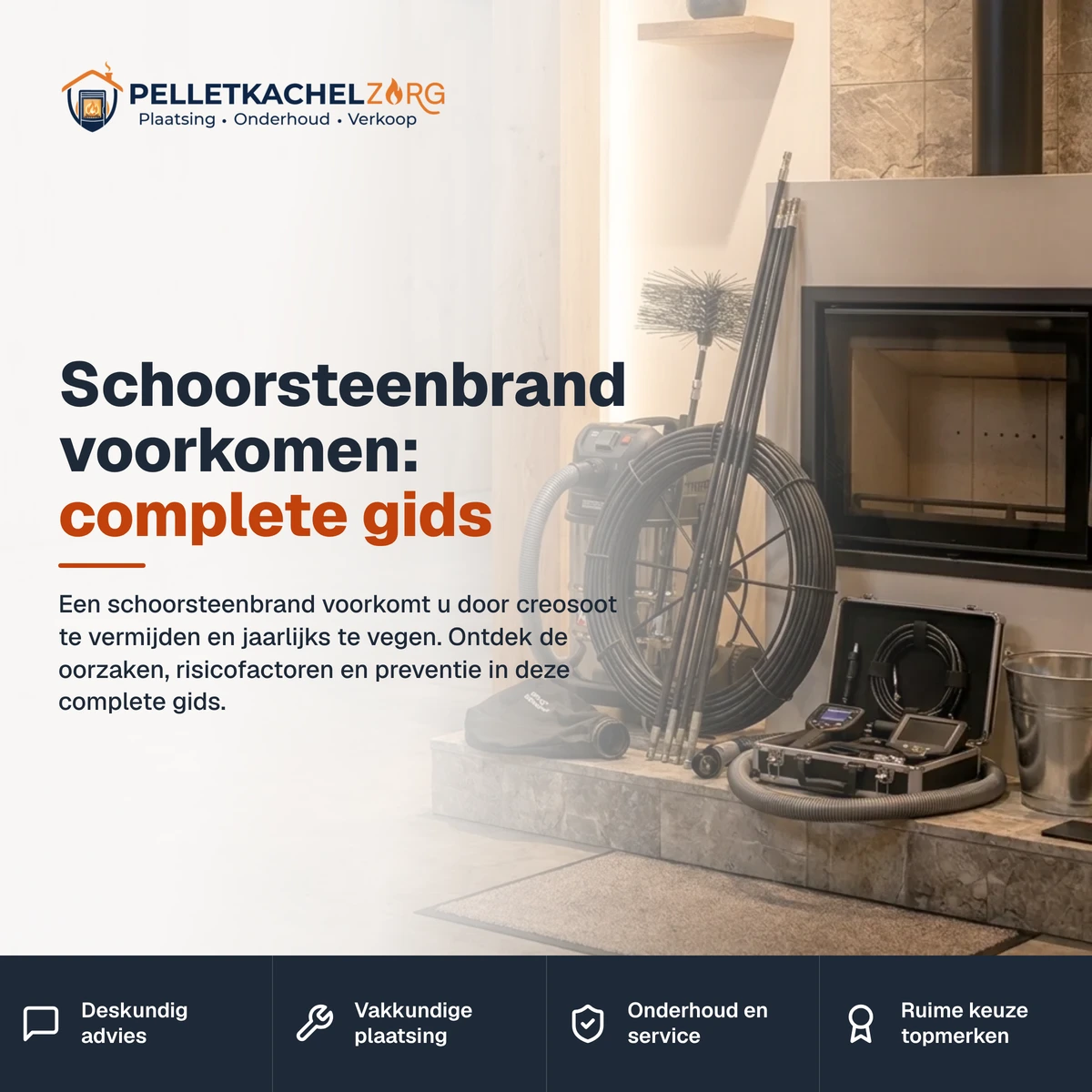
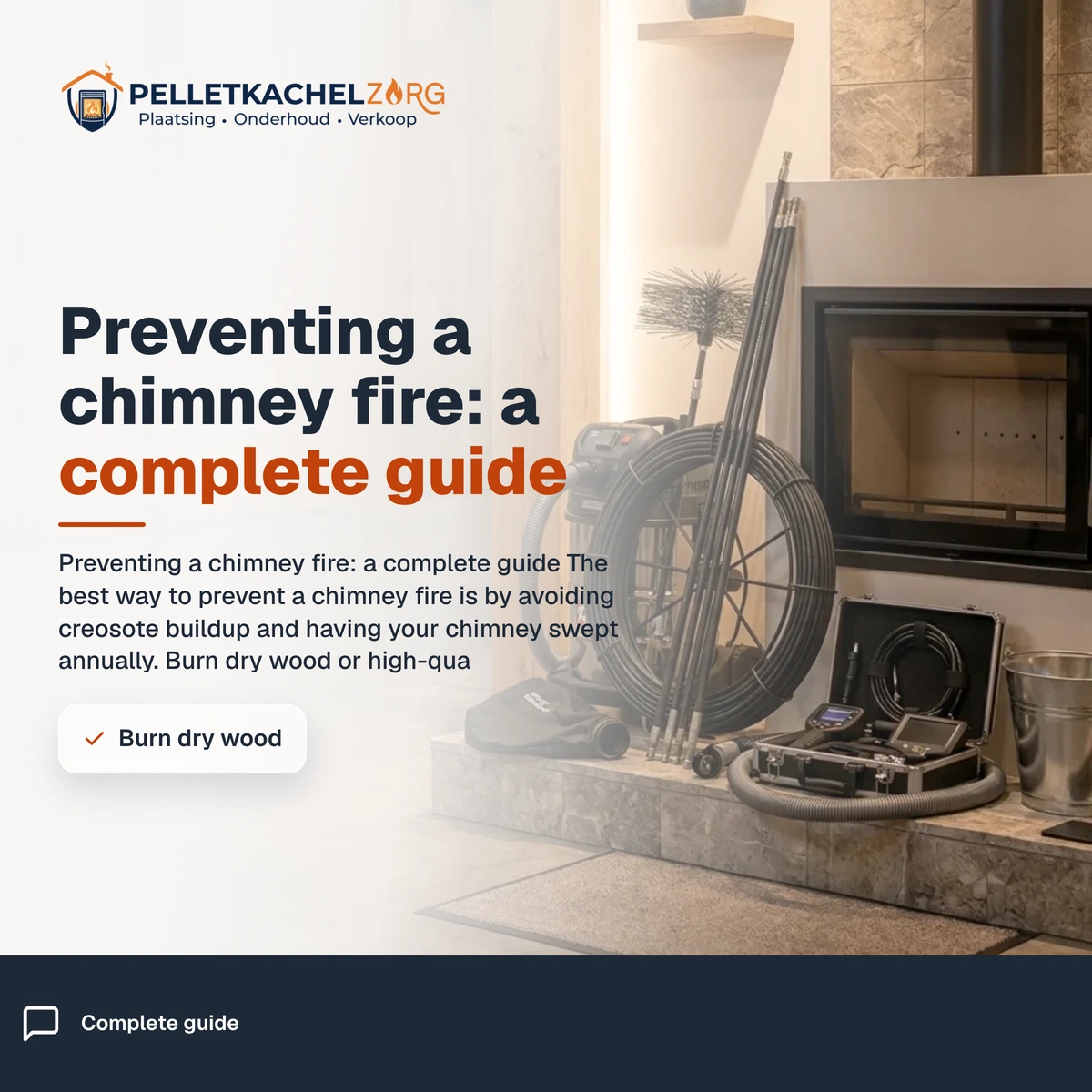
The best way to prevent a chimney fire is by avoiding creosote buildup and having your chimney swept annually. Burn dry wood or high-quality pellets, ensure enough air supply without smothering the fire, and have the flue properly installed and inspected.
If you notice warning signs, close the stove immediately, call emergency services and never use water to extinguish the fire.
Preventing a chimney fire primarily involves minimizing creosote and scheduling a yearly chimney sweep. Creosote is a highly flammable, tar-like residue that accumulates in the flue and can ignite at high temperatures. This buildup happens faster when burning damp wood, keeping the fire too low and neglecting maintenance. Burning dry wood or certified pellets, providing adequate combustion air and having the chimney checked greatly reduces this risk. A chimney fire often develops silently: the creosote layer grows unnoticed until a short, intense burn ignites it, reaching temperatures well over a thousand degrees. This intense heat can damage masonry or stainless steel flues and easily spread to your attic or roof. This guide covers the main causes, risk factors and practical prevention methods, while also explaining what to do if a fire does break out.
The golden rule is simple: burn dry fuel, maintain a hot fire and sweep annually to keep creosote low and the risk of fire minimal.
Annual sweep with a certificate
We thoroughly sweep and inspect your chimney, providing you with a valid sweeping certificate. This document is crucial for your home insurance.
Professional camera inspections
Using advanced camera equipment, we detect hidden creosote buildup, structural cracks and faulty connections that you cannot spot from the outside. This allows us to tackle risks before a fire happens.
Properly installed and insulated
A high-quality double-wall insulated flue minimizes condensation and creosote buildup. We install everything strictly according to current safety standards and your appliance's manual.
Immediately close all air supplies to the stove or fireplace and do not add any extra fuel, starving the chimney fire of oxygen.
Call emergency services right away and clearly state that it is a chimney fire, even if the flames seem to be dying down.
Never extinguish the fire with water: the sudden creation of steam can crack the flue and make the fire much worse.
Evacuate all residents, keep doors closed and move any flammable items away from the chimney breast and out of the attic.
Always have the chimney inspected and approved before using it again, as the intense heat may have caused invisible structural damage.
Have the chimney swept at least once a year and safely store the sweeping certificate.
Get the flue inspected for creosote, cracks and loose connections.
Only use dry wood or certified pellets and store them in a dry place.
Regularly clean the stove and glass, and check all seals.
Install working smoke and carbon monoxide detectors near the appliance.
Recognize warning signs: brown glass, soot deposits, poor draft and a smoke smell inside the house.
The key to avoiding a chimney fire is generating as little creosote as possible and removing any deposits in time. Creosote forms when flue gases cool down too much and tar particles stick to the walls, which you can learn to spot in our explanation on how creosote forms in a chimney. By maintaining a hot fire with dry wood or high-quality pellets, the gases remain hotter and less residue is left behind. Avoid smothering the flames: a fire that smolders all night with a closed air vent produces the exact cool, tar-heavy smoke that severely pollutes the flue. It is much better to start the fire with plenty of air, let it reach a high temperature quickly, and only then add fuel in moderation. Using the right technique makes a massive difference, as shown in our guide to safe heating with wood or pellets. The flue itself also matters: a double-wall, properly insulated and correctly sized chimney cools down much slower, drafts better and retains less buildup than a cold or overly large one. If you notice any warning signs between sweeps, do not wait for your next scheduled maintenance. Find out which indicators should alert you in our article on the signs of a dirty chimney.
The obligation to sweep your chimney varies significantly depending on your local region and municipality. It is often determined by local laws and the specific requirements of your home insurance provider. Always treat your local municipality and your insurance policy as the primary source of truth, rather than relying on a general rule of thumb. How often you should sweep depends entirely on your appliance and heating habits. Our page detailing how often a chimney should be swept provides a clear overview. Importantly, in the event of fire damage, your insurance company will almost certainly ask for a valid sweeping certificate. Without this document, your claim payout might be reduced or completely denied. You can read more about these requirements in our post on what insurance requires after a chimney fire. Keep your sweeping certificates in a safe place.
Do you want to make sure your chimney is safe, clean and compliant with your insurance policy? Request a free quote or expert advice and we will schedule a custom sweep, inspection or installation tailored to your specific needs.
We are happy to help. Contact us without obligation.
The main cause is creosote, a highly flammable tar-like residue that builds up inside the flue. When flue gas temperatures get too high, this layer can easily ignite and trigger a severe chimney fire. Burning damp wood and smothering the flames will rapidly speed up this buildup.
For a wood stove or open fireplace, you should generally have the chimney swept at least once a year, or more often if used intensively. Exact rules vary by region and municipality, so it is best to check with your local council and insurance provider. Always keep the sweeping certificate.
Often you can. You might hear a loud roaring or howling sound in the chimney, see thick dark smoke or sparks coming from the top, and feel the stove pipe becoming unusually hot. If you notice these signs, immediately close the appliance's air vents and call emergency services.
No, you should never try to extinguish a chimney fire with water. The water will instantly turn into steam, and the massive pressure can cause the chimney structure to crack or explode. Simply cut off the air supply to the stove, leave the house and call emergency services.