
Certified Cleaning & Inspection
We thoroughly clean your chimney and flue, providing an official sweeping certificate required for insurance purposes.
Have a pellet stove installed with the utmost care? Get a quote in 5 steps.
Have a pellet stove installed with the utmost care? Get a quote in 5 steps.
Have a pellet stove installed with the utmost care? Get a quote in 5 steps.

 Written by Dries Nijs4 min read
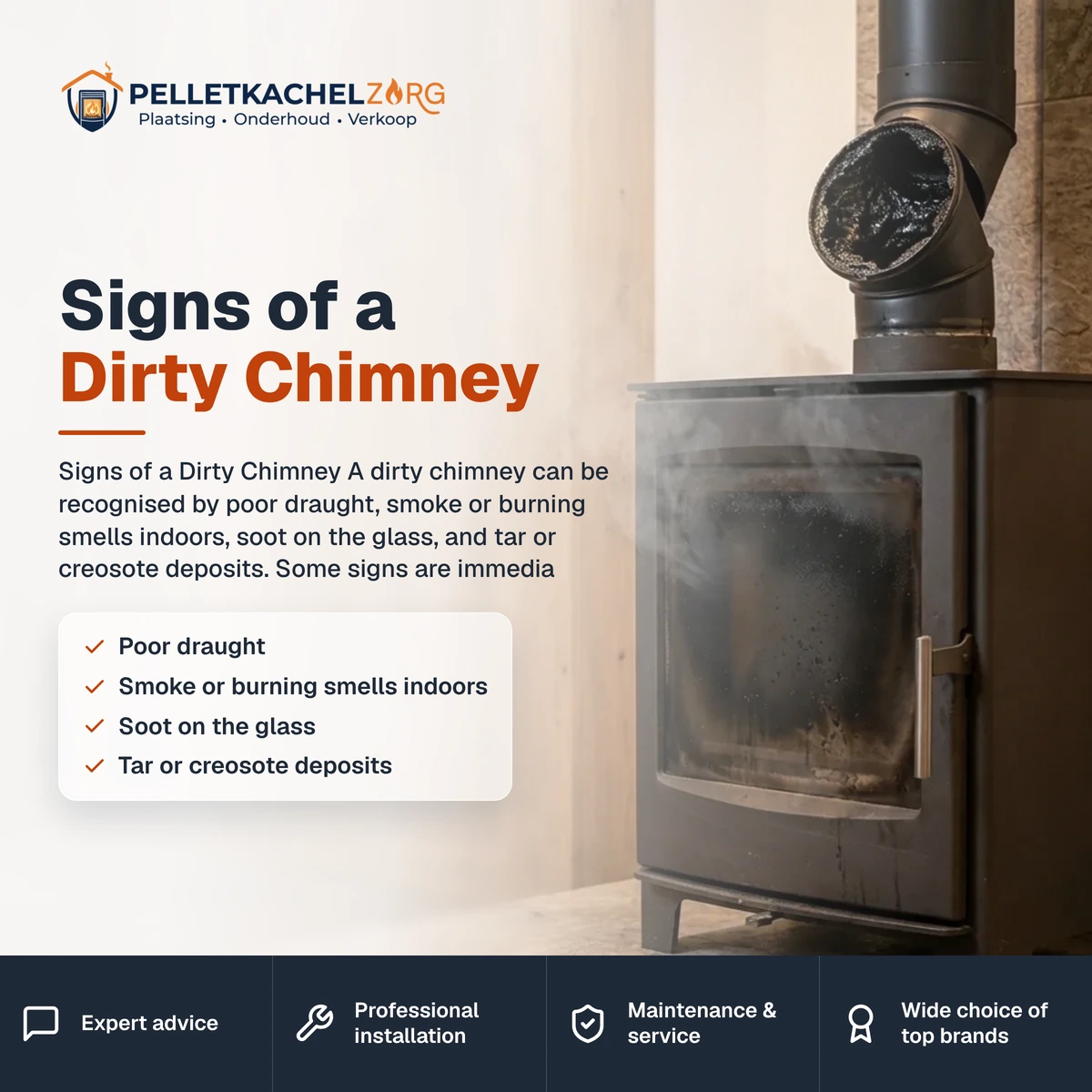
A dirty chimney can be recognised by poor draught, smoke or burning smells indoors, soot on the glass, and tar or creosote deposits. Some signs are immediately visible, while others are only noticeable during burning.
If you notice these signs, it is best to have your flue swept and inspected if in doubt.
You can recognise a dirty chimney by poor draught, smoke or burning smells indoors, soot build-up on the glass and around the appliance, tar or creosote deposits, and more soot than usual. These warning signs mean your flue needs attention and likely requires sweeping. A dirty chimney narrows the passage, disrupts draught, and increases the risk of carbon monoxide poisoning and chimney fires. Some signs are immediately visible, while others only become clear while burning. In this article, you will learn the main warning signs and what action to take.
It helps to distinguish between signs you can see with the naked eye and signs that only appear when the stove is operating. Visible signs can be spotted by checking the glass, stove pipe, and the area around the appliance. Signs while burning are noticed through how well the fire burns, the smell in the room, and any warnings from your carbon monoxide alarm. Often, both types occur together, which strongly indicates a dirty chimney.
Rule of thumb: the darker and stickier the deposits, the more urgent chimney sweeping becomes.
Certified Cleaning & Inspection
We thoroughly clean your chimney and flue, providing an official sweeping certificate required for insurance purposes.
Focused on Fire Safety
We check creosote levels, draught performance, and overall flue condition to reduce the risk of chimney fires and carbon monoxide.
Tailored Advice for Your Appliance
We adapt our approach to your specific stove, fuel type, and burning habits, giving you total clarity on maintenance needs.
Stop burning fuel immediately if you smell smoke or a sharp burning odour in your home, open windows, and ventilate the room properly.
Check the glass door, the stove pipe, and the area around the appliance for soot, tar drips, and a glossy residue.
Note down when the draught started getting worse and whether the issue happens every time you light the stove or only during specific weather conditions.
Make sure your carbon monoxide detector is working properly and replace the battery if necessary, so you are alerted promptly in case of danger.
Have your chimney and the entire flue swept by a certified chimney sweep rather than just cleaning the bottom section.
Request a cleaning certificate, as you will need this document for your home insurance and as proof of maintenance.
Go through the points below to quickly assess whether your chimney needs cleaning. If you recognise one or more of these dirty chimney signs, an inspection or sweeping service is strongly advised. The more points that apply, the more urgent the sweep.
Blackened glass that gets dirty quickly despite correct settings
Persistent smell of burning or smoke in your living area
Visible tar or creosote buildup in the pipe or flue
Reduced draught resulting in a sluggish, low fire
More soot and ash deposits than usual
Bird nests, fallen leaves, or debris blocking the chimney terminal
Soot marks or dark stains on the wall around the appliance
A dirty chimney is dangerous because the accumulated deposits are highly flammable and obstruct flue gases. Incomplete combustion causes creosote to form - a sticky, highly flammable layer that restricts airflow. If this layer overheats, it can ignite a dangerous chimney fire, causing flames to burst through the entire flue. At the same time, a blocked chimney increases the risk of carbon monoxide poisoning, an odourless and colourless gas that is lethal. Read our complete guide to preventing chimney fires to learn how to minimize this risk.
Even less severe soot accumulation causes issues. A layer of soot and tar insulates the flue lining and disrupts chimney draw, making your stove burn far less efficiently and consume more fuel. Poor draught leads to even further soot production, creating a vicious cycle. Ignoring these warning signs leads not only to higher heating costs, but also causes your appliance to wear out faster and break down more frequently.
You should have your chimney swept as soon as you spot one or more of the signs listed above, and at least once a year as part of your regular maintenance routine. Try not to wait until the heating season is in full swing: chimney sweeps often have long waiting lists then, while buildup continues to accumulate in your flue. Booking a sweep before winter guarantees your chimney is clear and your stove can burn safely and economically. How often sweeping is required depends on your specific appliance, fuel type, and usage intensity, as explained in our overview on how often a chimney needs sweeping. If you mainly notice a weak draw, it pays off to check whether it is caused by blockage or structural chimney design issues, which we discuss in our guide on poor chimney draught causes and solutions. If you are unsure about the severity, schedule an inspection to determine when professional pellet stove cleaning is required. Regulations vary per region and local council, so always consult your local authorities, home insurance provider, and manufacturer manual for binding guidelines. A qualified professional does not just check for soot buildup, but also assesses the overall condition of the chimney, joints, and airflow, giving you total peace of mind that your heating system runs safely and up to standard.
Recognise these signs in your own chimney? Do not wait too long to get it inspected. Request a free quote or advice today and have your flue checked safely.
We are happy to help. Contact us without obligation.
You can spot a dirty chimney by poor draught, soot build-up on the glass, burning smells in your home, and tar or creosote in the pipe. Unusually high amounts of soot and ash are also clear indicators. When in doubt, it is best to have the flue inspected.
Yes, a dirty chimney is dangerous. Creosote deposits are highly flammable and can cause chimney fires, while a blocked or narrowed flue increases the risk of carbon monoxide poisoning. Always clean your chimney promptly and never ignore warning signs.
As a rule, have your chimney swept at least once a year, and more frequently with heavy use or visible build-up. The exact frequency depends on your stove, fuel, and local regulations. Check with your local authority and insurer for required guidelines.
You can carry out basic visual checks and clean the glass yourself, but full flue sweeping is best left to a qualified professional. A professional safely removes creosote and provides a certificate. Professional sweeping is essential for stubborn deposits or if you have any doubts.