
Sweeping with Certificate
After the sweep, you receive a clear cleaning certificate. This strengthens your position with your municipality and fire insurance.
Have a pellet stove installed with the utmost care? Get a quote in 5 steps.
Have a pellet stove installed with the utmost care? Get a quote in 5 steps.
Have a pellet stove installed with the utmost care? Get a quote in 5 steps.

 Written by Dries Nijs4 min read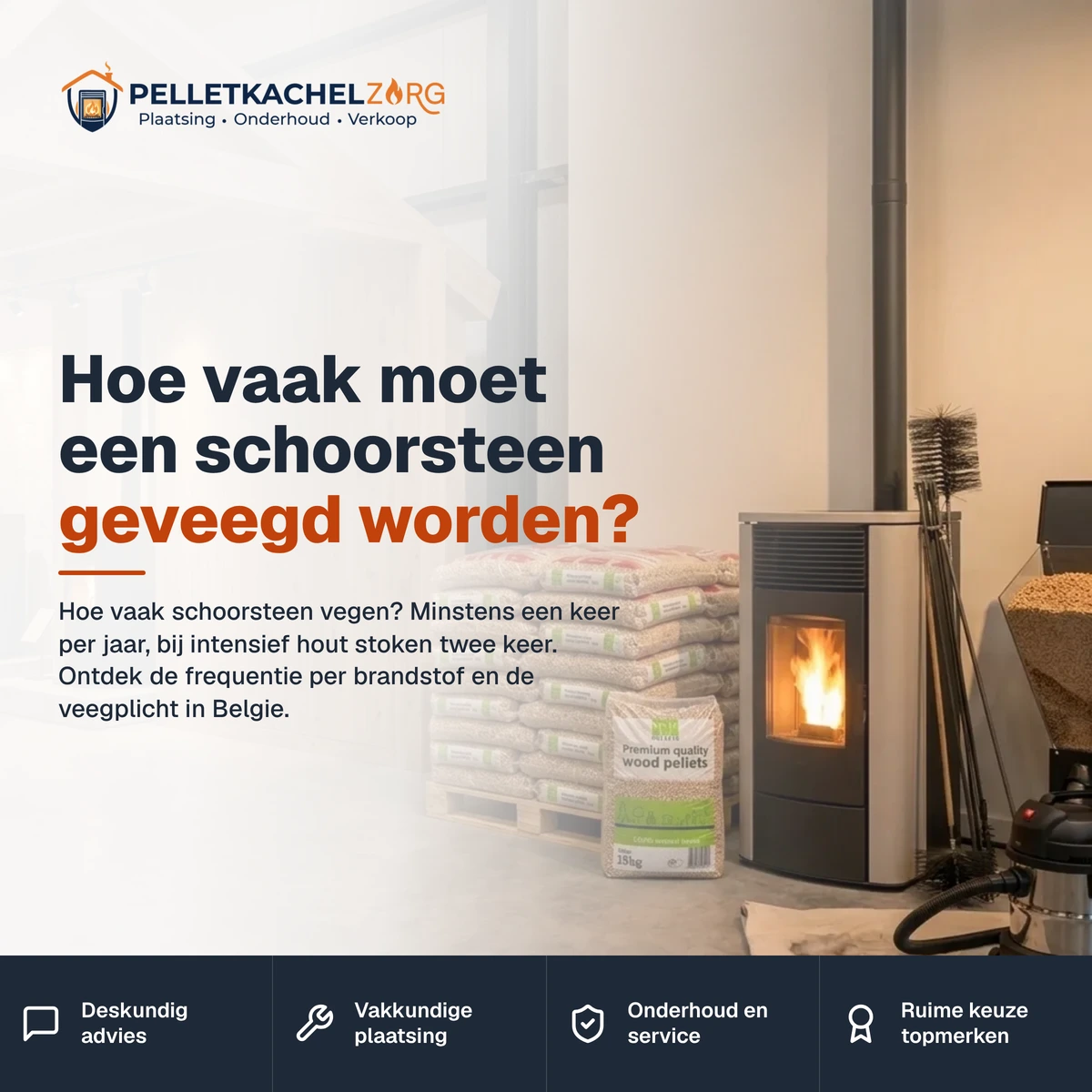
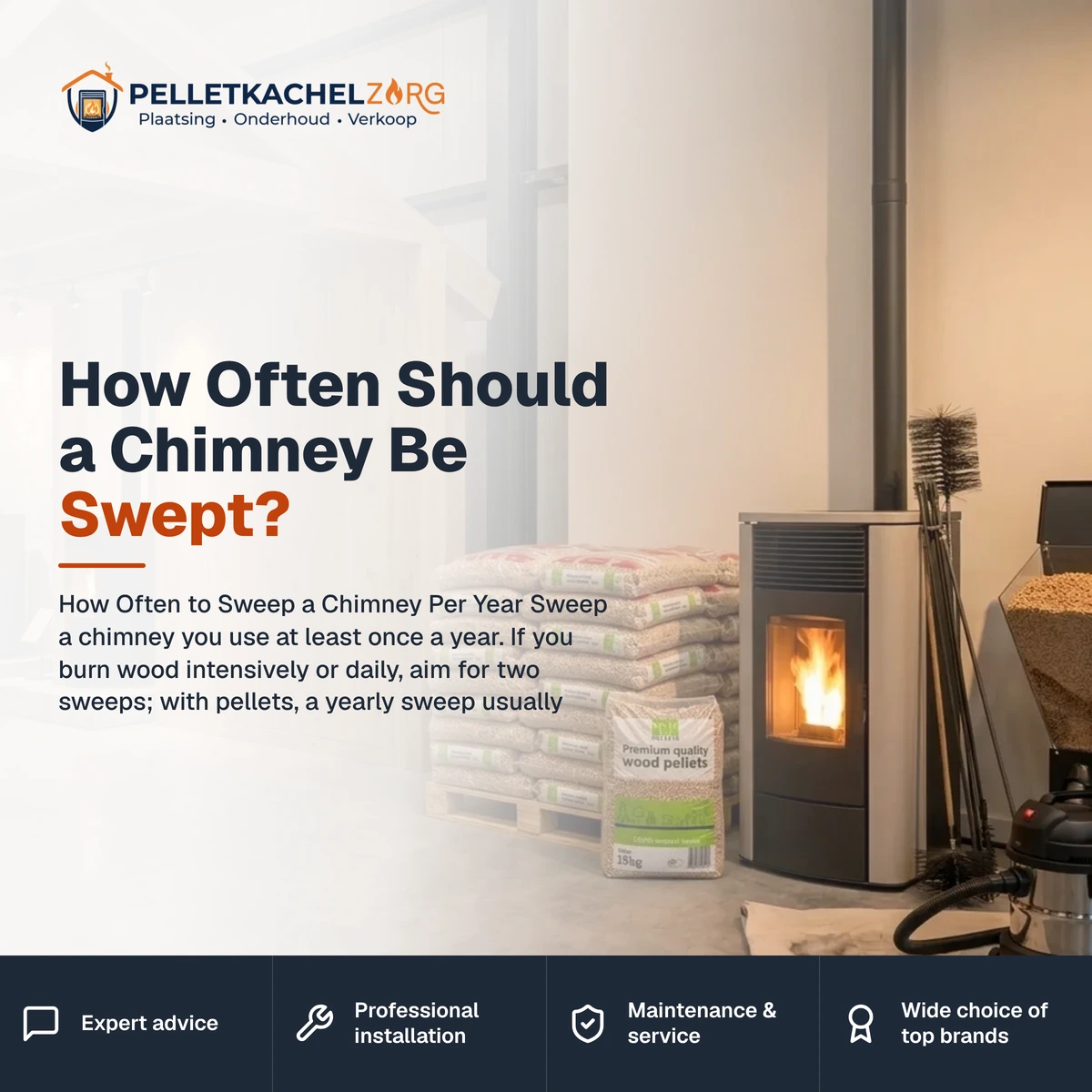
Sweep a chimney you use at least once a year. If you burn wood intensively or daily, aim for two sweeps; with pellets, a yearly sweep usually suffices due to lower ash and creosote production.
Once a year is the minimum; wood that burns intensively requires more frequent sweeps.
How often you need to sweep a chimney depends on what you burn: a chimney in use should be swept at least once a year, and twice a year if burning wood intensively or daily. Those who burn pellets usually manage with an annual sweep due to lower ash and creosote production.
The correct frequency depends on three factors: your fuel, your burning intensity, and your type of appliance. In many Belgian municipalities and regions, annual sweeping is also legally required and often necessary for your fire insurance. Below, you'll find the guidelines, the factors involved, and the signs that indicate a quick sweep is needed.
Rule of thumb: sweeping once a year is the minimum for any appliance you use; heavy wood burning requires twice a year.
Sweeping with Certificate
After the sweep, you receive a clear cleaning certificate. This strengthens your position with your municipality and fire insurance.
Knowledge of Wood and Pellets
We know the difference in buildup between burning wood and pellets. You receive advice tailored to your appliance.
Focus on Fire Safety
We pay attention to creosote, draft, and soot buildup in the flue. You avoid unnecessary risk of a chimney fire.
The sweeping frequency isn't a fixed number but depends on several concrete factors. Weigh them together for your own situation, as two homes with the same stove can vary greatly.
If you burn infrequently and with dry wood on a modern stove, an annual sweep often suffices. If you burn daily, with varying fuel or on an old flue, you may need two sweeps per year.
Fuel: wood causes more buildup than pellets, and pellets more than natural gas.
Burning intensity: daily burning through winter requires more frequent sweeps than an occasional evening fire.
Type of appliance and draft: an old open fireplace or a chimney with poor draft gets dirty faster than a modern stove.
Fuel quality: wet or unsuitable wood and cheap pellets cause extra soot and tar, leading to how creosote forms in a chimney.
Condition and length of the flue: a long, winding, or outdated flue cools faster and deposits more.
Don't always wait for the calendar. The following signs indicate pollution that requires a quick sweep.
The stove drafts poorly or smoke backs into the room.
You smell a strong soot or burning odor in the space.
There's a thick, tar-like or shiny layer in the flue.
The glass of the stove turns black faster than before.
Soot falls down or you hear rustling in the chimney.
It's been more than a year since the chimney was swept.
Regular sweeping keeps the draft healthy and reduces the risk of a chimney fire. Soot and creosote are flammable, and with increasing deposits, a small flame in the flue can quickly grow. A clean chimney also safely vents smoke gases, reducing the risk of indoor carbon monoxide.
A good sweep is more than just cleaning. The professional checks the flue for cracks, loose connections, and the condition of the draft hood. This gives you an overview of the safety of your entire smoke exhaust, not just the pollution.
For a pellet stove, both the flue and the stove itself count. Ash pan, heat exchanger, and smoke exhaust collect fine ash, so an annual cleaning keeps efficiency up. This keeps the draft stable and reduces pellet consumption for the same heat.
If you're unsure whether your chimney is too dirty, recognize the signs of a dirty chimney in time. If you want to schedule a sweep, first check what chimney sweeping costs so you know what a normal price is.
In Belgium, regulations vary by region and municipality, and in many municipalities, there is an annual sweeping obligation for chimneys used with solid or liquid fuel. Always check if chimney sweeping is mandatory in Belgium, as the exact frequency and required professional can differ locally.
In the Netherlands, there is no national sweeping obligation, but municipalities and especially insurers usually require an annual sweep. After a sweep, you receive proof, and it's worthwhile to know the difference between a cleaning certificate and sweeping proof. This way, you know which document your insurer expects after a damage incident.
Treat the rule of thumb of an annual sweep as a safe minimum, not an absolute legal rule. In both countries, consult your insurer and your appliance's manual as binding sources, as they determine what applies to you.
In summary: an annual sweep is the basis, heavy wood burning requires twice a year, and pellets usually suffice with once. Want to be sure how often your chimney needs a sweep or want it done with a proper certificate? Request a quote or advice.
We are happy to help. Contact us without obligation.
For wood, it's best to sweep at least once a year, and twice a year if burning daily or intensively. Wood produces more soot and creosote, causing the flue to get dirty faster than with pellets.
Yes, for a pellet stove, an annual sweep of the flue usually suffices. Pellets burn cleaner with less ash and creosote, though an annual cleaning of the stove itself is also required.
In many Belgian municipalities, annual sweeping is mandatory, though the rule varies by region and municipality. In the Netherlands, there is no national obligation, but insurers and municipalities usually still require an annual sweep.
You can perform superficial cleaning yourself, but for a valid certificate and safe inspection, it's best to hire a certified professional. Many insurers only accept a sweep by a professional after a chimney fire.