
Tailored advice for your installation
We inspect your proposed flue route and stove specs so you know exactly whether single wall suffices or twin wall is required.
Have a pellet stove installed with the utmost care? Get a quote in 5 steps.
Have a pellet stove installed with the utmost care? Get a quote in 5 steps.
Have a pellet stove installed with the utmost care? Get a quote in 5 steps.

 Written by Dries Nijs4 min read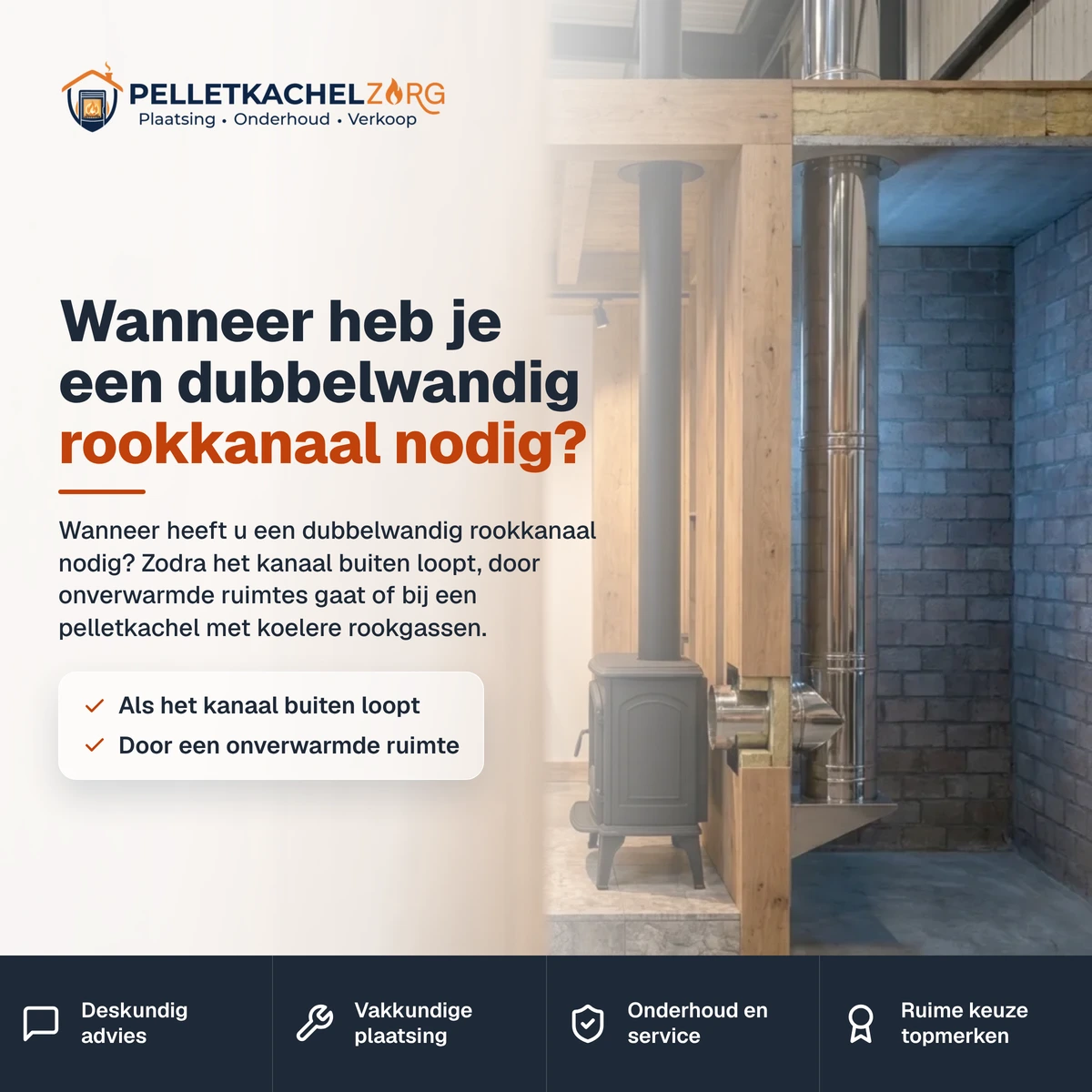
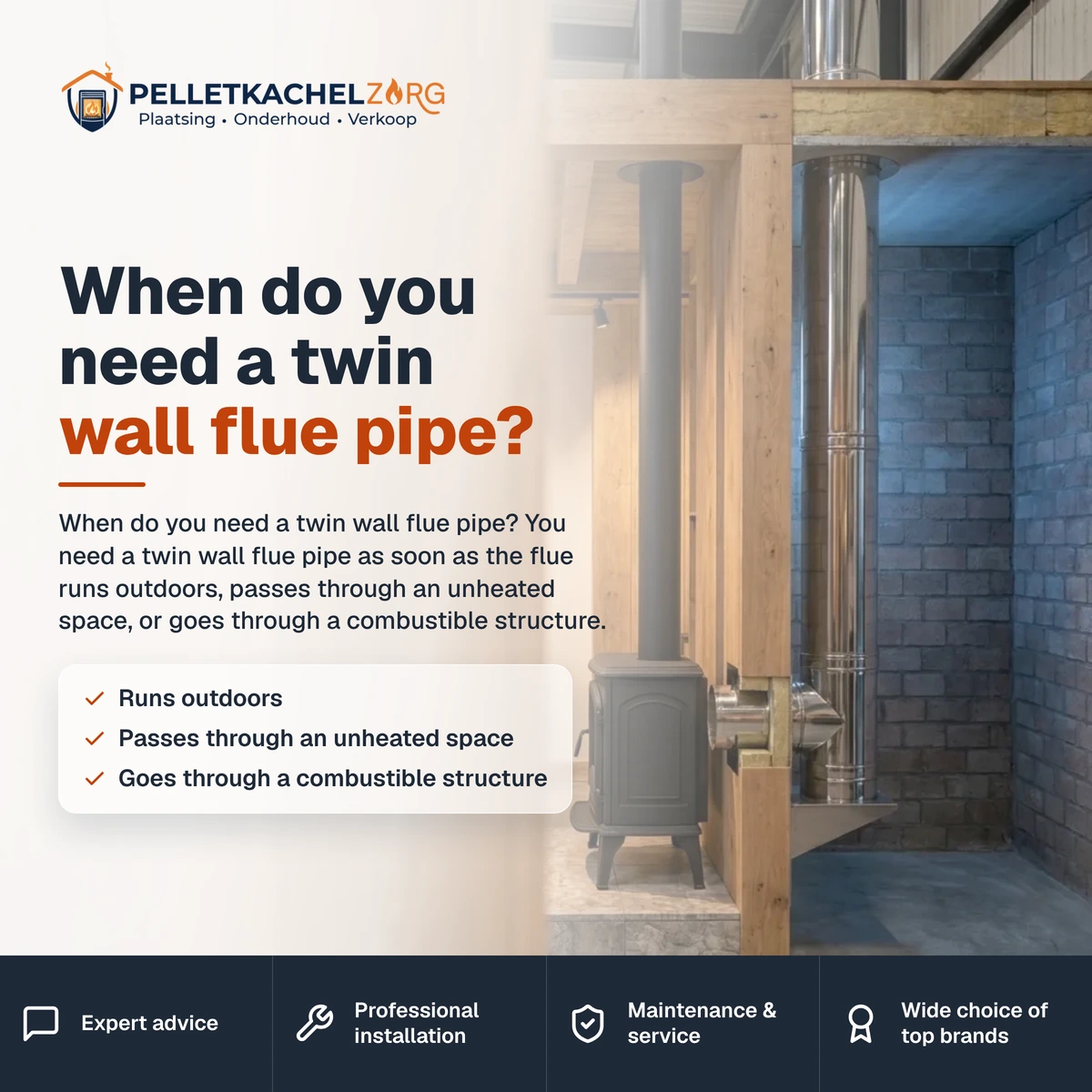
You need a twin wall flue pipe as soon as the flue runs outdoors, passes through an unheated space, or goes through a combustible structure. An insulated flue is also the right choice for a pellet stove with cooler flue gases. Single wall is only suitable for a short, visible section in the living area.
Once the flue leaves the heated living area, you must choose twin wall.
You need a twin wall flue pipe as soon as the flue runs outside, passes through an unheated room, or extends up an external wall. An insulated flue pipe is also the safest option for pellet stoves with cooler exhaust gases and when passing through combustible building structures.
Single wall pipe is only adequate for a short, exposed section within the heated living space. Determining when twin wall flue is strictly required depends entirely on the flue pipe route and the exhaust gas temperature.
In this guide, you will walk through the specific scenarios. This helps you determine whether single wall is sufficient or if an insulated twin wall flue pipe is necessary for safe, efficient operation.
2>Single wall sufficient or twin wall required
The choice depends on where the flue pipe runs and how warm the flue gases remain. The comparison below lays out the two scenarios.
As soon as the flue exits the heated living space or passes through a wall, floor, or roof, always install twin wall.
Tailored advice for your installation
We inspect your proposed flue route and stove specs so you know exactly whether single wall suffices or twin wall is required.
Compliant with safety regulations
We strictly adhere to local building regulations, CE standards, and manufacturer instructions to guarantee full compliance.
Safely installed and inspected
Our certified engineers fit insulated twin wall flues with careful attention to fire safety distances and proper draw.
The situations below are the most common. If you recognize one of them, an insulated flue is not a luxury but a requirement for safe operation and a stable draught.
The flue runs outside along the external wall. Cold outdoor air cools down a single wall pipe too much, causing draught to drop and flue gases to stall.
The flue passes through an unheated attic, garage, or crawl space. The insulation layer keeps flue gases warm, maintaining proper draught and reducing condensation.
The flue passes through a combustible structure such as a wooden roof, wall, or floor. The outer casing stays significantly cooler, greatly reducing fire risk at that point.
You are installing a pellet stove with cooler flue gases. These cool down to below the dew point faster, which without insulation leads to condensation and eventual corrosion in the pipe.
The flue run is long or includes multiple bends. Every bit of heat loss weakens the draught, whereas a twin wall flue retains temperature and suction power much better.
The flue goes through the roof to the outside. From the roof penetration to above the roofline, an insulated flue is required for fire safety and proper discharge above the ridge.
Go through the points below. If you can check one or more boxes, twin wall is the right choice for your situation.
Part of the flue runs outdoors or along an external wall.
The flue passes through an unheated space.
The pipe passes through a wall, floor, or roof.
You burn pellets with lower flue gas temperatures.
You notice condensation or weak draught with a single wall pipe.
The manual or CE marking specifies an insulated flue.
A twin wall flue features an insulation layer contained between two pipes. This holds heat inside the flue gas, keeping the draught stable while leaving the outer wall much cooler to the touch than a single wall pipe.
This structural difference immediately explains which type suits which setup. If you want to compare both options in detail, read the difference between single wall and twin wall flues. It breaks down the benefits section by section.
Temperature is particularly critical with pellet stoves. Cooler exhaust gases reach the dew point faster, causing moisture to settle inside the pipe. That moisture mixes with soot and will eventually degrade an uninsulated flue.
Insulation minimizes this risk significantly. In why condensation collection is important for pellet stoves, you can learn how to drain remaining moisture properly so your flue stays clean and dry.
Choosing the right flue depends not only on the route, but also on your specific stove and local building regulations. Manufacturers often specify a minimum quality standard and flue type.
The instruction manual and CE marking state the required type, temperature rating, and diameter. Our guide on which flue you need for a pellet stove helps you choose the correct setup for your appliance.
When passing through or near combustible materials, minimum clearance distances always apply. Learn how to calculate these distances in clearance to combustible materials for stove pipes. Always maintain this distance, even if an insulated flue runs cooler.
Requirements vary depending on your region and local building authority. If you are unsure about local codes, have your installation reviewed by a qualified technician.
If you choose an insulated system, it helps to understand how to install twin wall stove pipes beforehand, ensuring a clean, weatherproof, and safe installation.
Not sure whether your installation requires single wall or twin wall? Request a free quote or tailored advice to receive a personalized proposal for your home and stove.
We are happy to help. Contact us without obligation.
You need a twin wall flue as soon as the pipe runs outside, passes through an unheated space, or penetrates a combustible structure. Insulation is also essential for the cooler flue gases of a pellet stove.
Yes, single wall flue pipe is permitted for short, exposed runs contained completely inside the heated living room. Switch to twin wall as soon as the pipe reaches a wall, ceiling, roof, or unheated room.
In most cases yes, because pellet stoves produce cooler exhaust gases that condense quickly. Whenever the flue runs outside or through unheated zones, an insulated twin wall pipe is required. Always verify with manufacturer guidelines.
You risk weak chimney draft, condensation, and corrosion inside the pipe, as well as overheating nearby combustible materials. This creates a severe fire hazard and can invalidate your home insurance.