
Have your flue inspected
We detect leaks, poor connections, and draft issues with camera inspections. You receive a clear report detailing what needs to be done.
Have a pellet stove installed with the utmost care? Get a quote in 5 steps.
Have a pellet stove installed with the utmost care? Get a quote in 5 steps.
Have a pellet stove installed with the utmost care? Get a quote in 5 steps.

 Written by Dries Nijs4 min read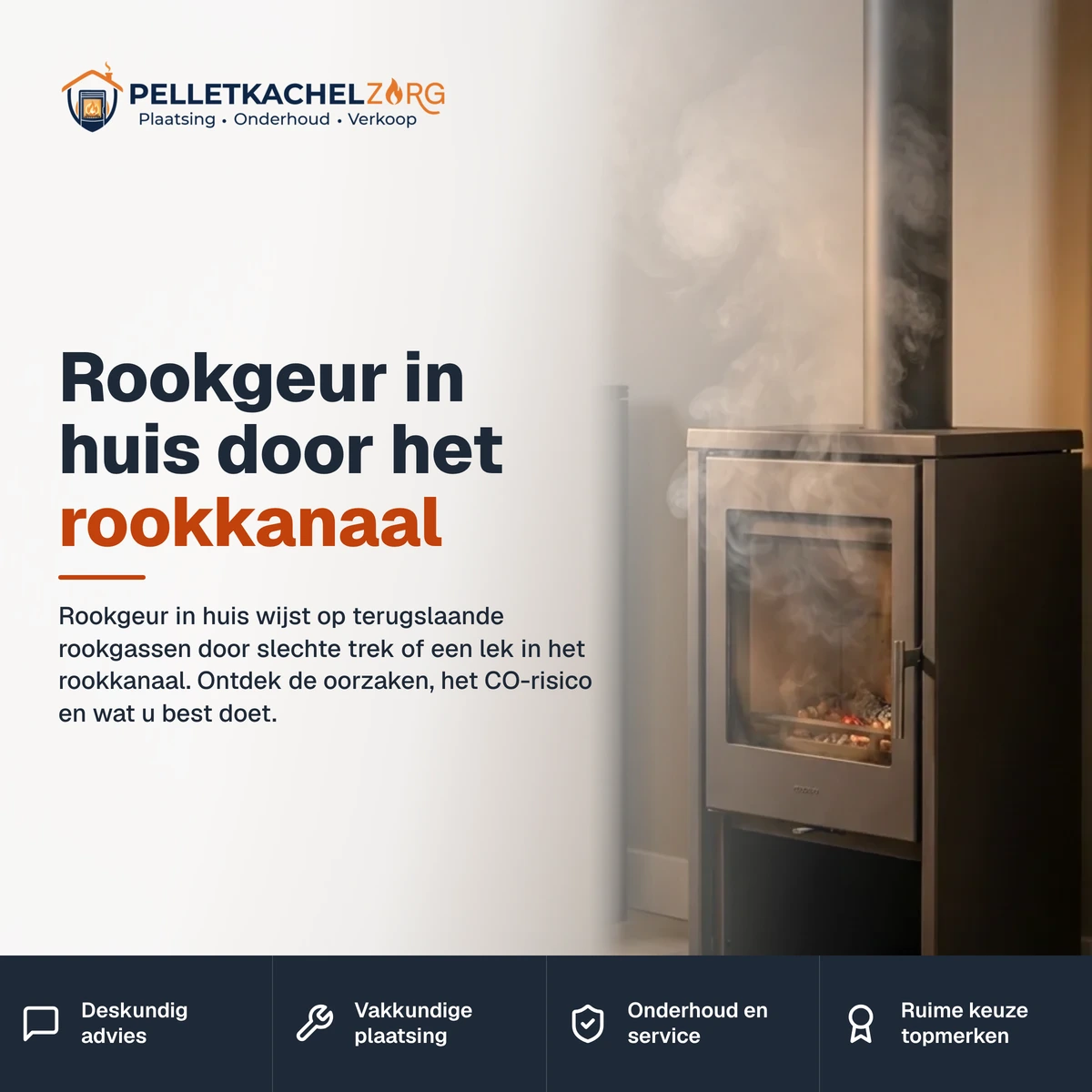
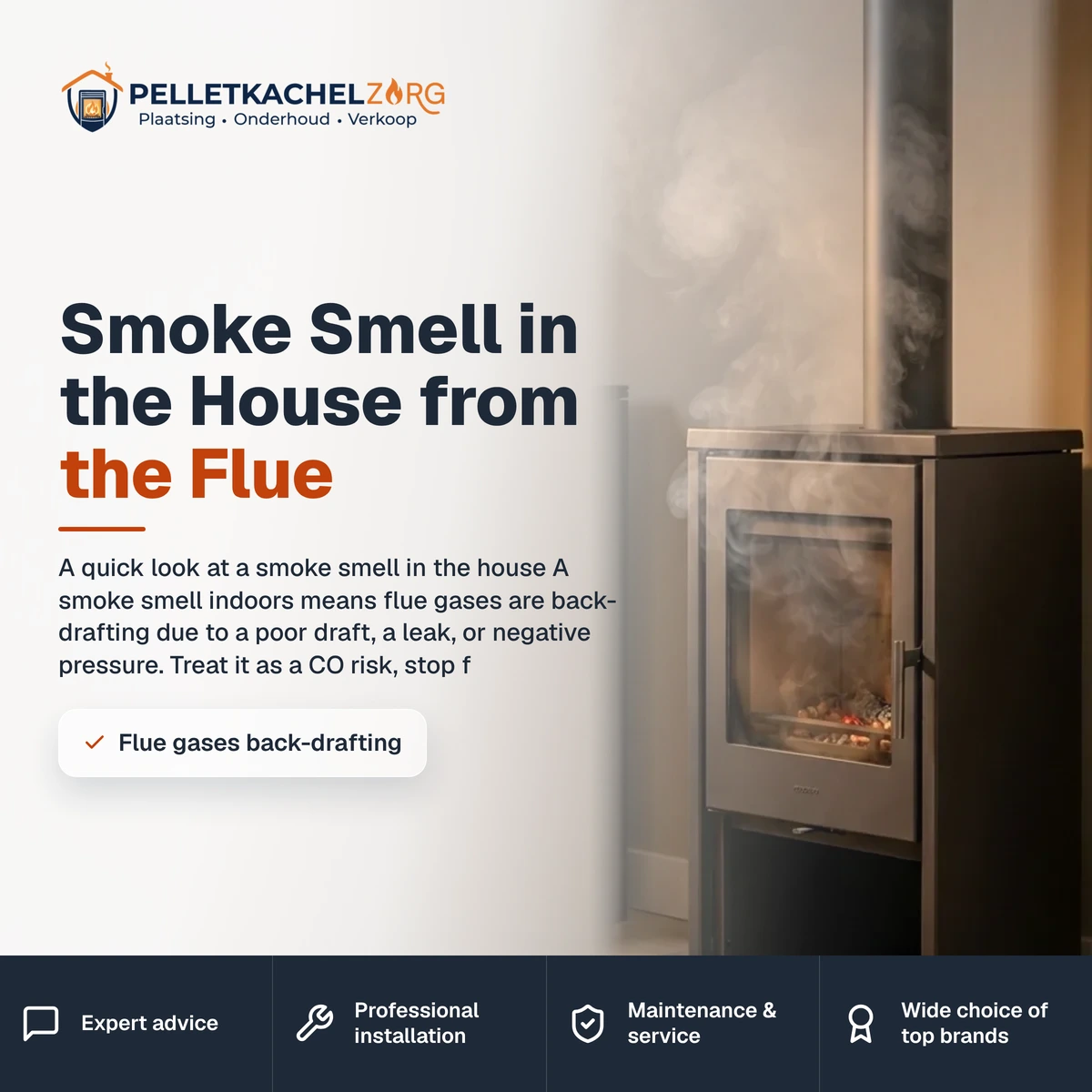
A smoke smell indoors means flue gases are back-drafting due to a poor draft, a leak, or negative pressure. Treat it as a CO risk, stop firing, and find the cause in the flue.
If you smell smoke inside, your flue is leaking somewhere. Ventilate and get it checked.
A smoke smell in the house almost always indicates that flue gases aren't completely venting outside. The cause is usually poor draft, a leak, a bad connection, negative pressure in the home, or creosote buildup.
Treat this smoke odor as a safety warning. The same path that lets smoke in also admits carbon monoxide. You can't smell or see CO, but it is deadly. Always find the cause and repair the flue before lighting a fire again.
Smoke odors generally have two types of causes. Sometimes it's a temporary airflow disruption you can fix yourself. However, a persistent smoke smell often points to a leak or defect in the flue, requiring a professional repair.
You can fix a simple cause yourself, but a leak in the flue should always be repaired by a professional.
Have your flue inspected
We detect leaks, poor connections, and draft issues with camera inspections. You receive a clear report detailing what needs to be done.
Safety first
We act immediately if CO is suspected. We install and inspect flues according to current safety standards.
Repair and advice
From a new seal to a completely new flue, we correctly repair the smoke outlet so you can safely use your stove again.
Work systematically and always prioritize your safety. By following the steps below, you can rule out the most common causes one by one.
Stop the fire immediately and open windows and doors as soon as you smell smoke. Check if your carbon monoxide alarm is going off.
Turn off mechanical ventilation, such as the extractor hood, bathroom fan, and tumble dryer. If the situation improves, negative pressure was the culprit.
Check if the stove is getting enough fresh air, for instance through a vent or an open air inlet in the room.
Inspect the visible stove pipe and connections for loose parts, soot buildup, or traces of condensed tar.
When in doubt, have the entire flue inspected with a camera. This will reveal any hidden leaks or blockages.
If one of these steps solves the issue immediately, you were dealing with a simple cause. However, if the smell of smoke keeps returning despite good ventilation and turning off exhaust fans, this strongly indicates a leak or blockage in the chimney flue itself.
Feel free to test a suspicion of poor draft with both a cold and a warm stove. If the chimney only starts drawing well after a few minutes, it just needed some time to heat up. If the draft remains weak even when the stove is hot, you should get the flue thoroughly inspected.
If you notice any of the following warning signs, stop using the stove right away, open your doors and windows, and leave the house if necessary. This checklist will help you make a quick decision.
Your CO detector goes off or beeps shortly after lighting the stove.
You experience headaches, nausea, dizziness, or unusual fatigue while the fire is burning.
Multiple people or pets feel unwell at the same time in the same room.
There is visible smoke or a strong burning smell in your living space.
Your symptoms disappear as soon as you step outside, only to return when you go back indoors.
These signals can indicate carbon monoxide buildup. Always take them seriously, even if the symptoms feel mild. Ventilating and leaving the room costs nothing and can prevent a lot of harm.
The smell of smoke and CO travel the same route into your home. Wherever flue gases escape, carbon monoxide can tag along, and you cannot see or smell that dangerous gas. Therefore, read why smoke inside the house is dangerous and learn how to reduce carbon monoxide risks with stoves and fireplaces.
Negative pressure is a very common and underestimated cause. Modern, well-insulated homes are airtight, which means powerful ventilation systems can force your stove to draft backwards. Ensuring enough fresh air supply or installing a ventilation grille in the room helps prevent this issue.
Built-up creosote can give off a sharp smoky smell even when the stove is cold and unlit. This is a clear sign that your chimney is due for a thorough sweeping. Do not put this off, because creosote buildup significantly increases the risk of a chimney fire.
A CO detector near your stove is not a luxury, but rather essential protection that warns you in time. Never underestimate a lingering odor, even if it seems weak.
If you have any doubts about a carbon monoxide leak, ventilate the area immediately, leave the room, and contact a professional or emergency services if needed. Do not try to find the source yourself while your symptoms persist. Your health always takes priority over fixing the chimney.
If the root cause is in the flue, an air freshener will not solve it. Check out what to do when smoke enters your house and why your chimney has a poor draft. For a pellet stove, bad draft and a smoky smell can sometimes be part of broader pellet stove issues and repairs.
The regulations regarding chimney flues and periodic sweeping also vary by region and municipality in Belgium, and by municipality in the Netherlands. A properly installed and maintained flue with a valid certificate prevents both smoke odors and disputes with your insurance company.
If you keep noticing a smoke smell in your house, do not wait it out and have your chimney flue inspected. Request a free quote or advice and enjoy your stove with peace of mind again.
We are happy to help. Contact us without obligation.
Yes, a smoke smell indoors can be dangerous because the same leaks can let carbon monoxide in. Stop using the stove, ventilate the room, and have the flue checked before lighting it again.
A smoke smell from an unlit stove is usually caused by creosote buildup in a cold flue or negative pressure drawing odors back into the home. A good draft and a clean flue often solve this.
Yes, an extractor hood or ventilation system can create negative pressure, pulling flue gases back into the home. Turn off the extractor and provide extra supply air to see if the smell goes away.
Costs depend on the cause, ranging from a new seal to a completely new flue. Have the flue inspected first so you get a targeted quote instead of a rough estimate.