
Flue gas expertise
We understand how carbon monoxide and fine dust spread through homes, allowing us to pinpoint the cause of smoke leaks effectively.
Have a pellet stove installed with the utmost care? Get a quote in 5 steps.
Have a pellet stove installed with the utmost care? Get a quote in 5 steps.
Have a pellet stove installed with the utmost care? Get a quote in 5 steps.

 Written by Dries Nijs2 min read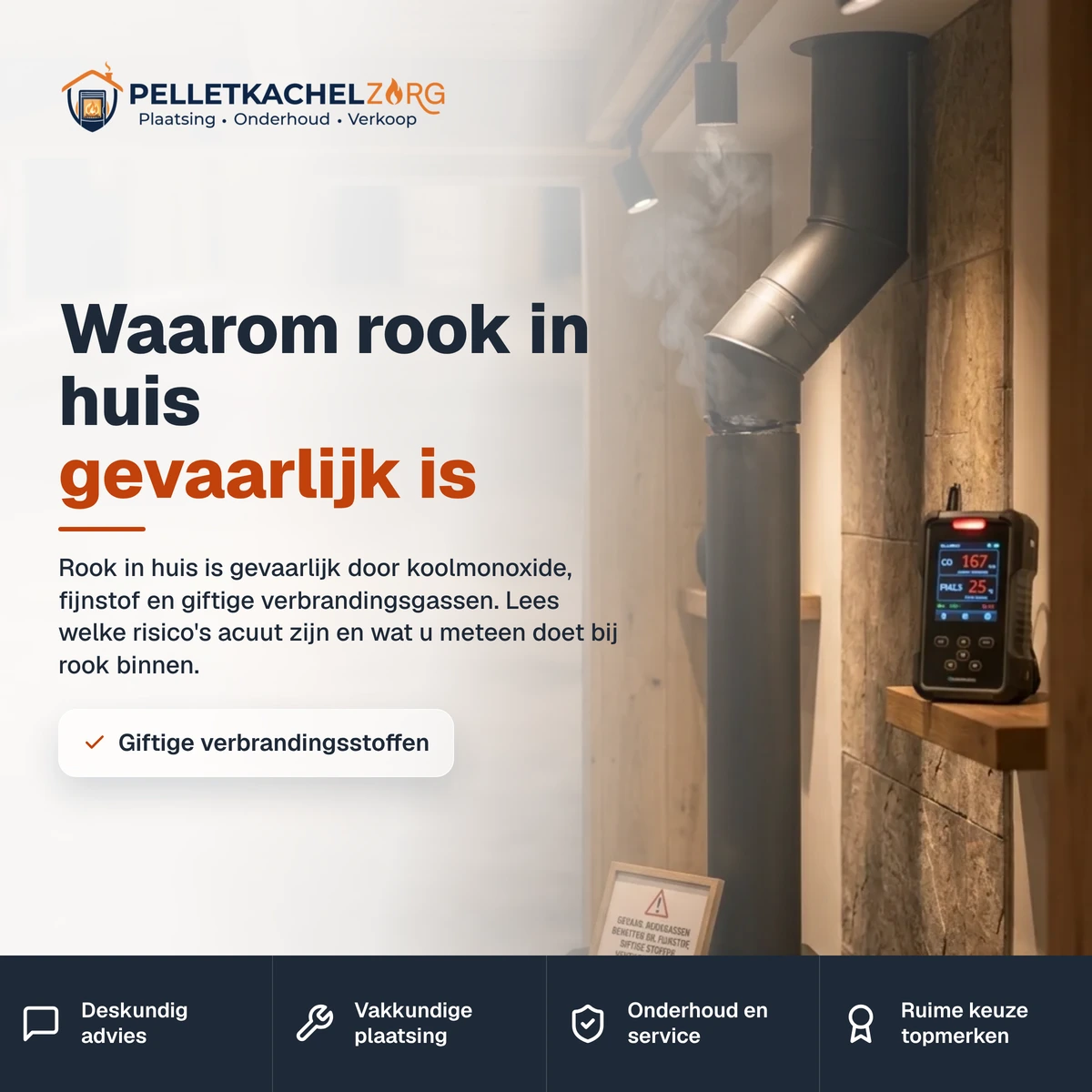
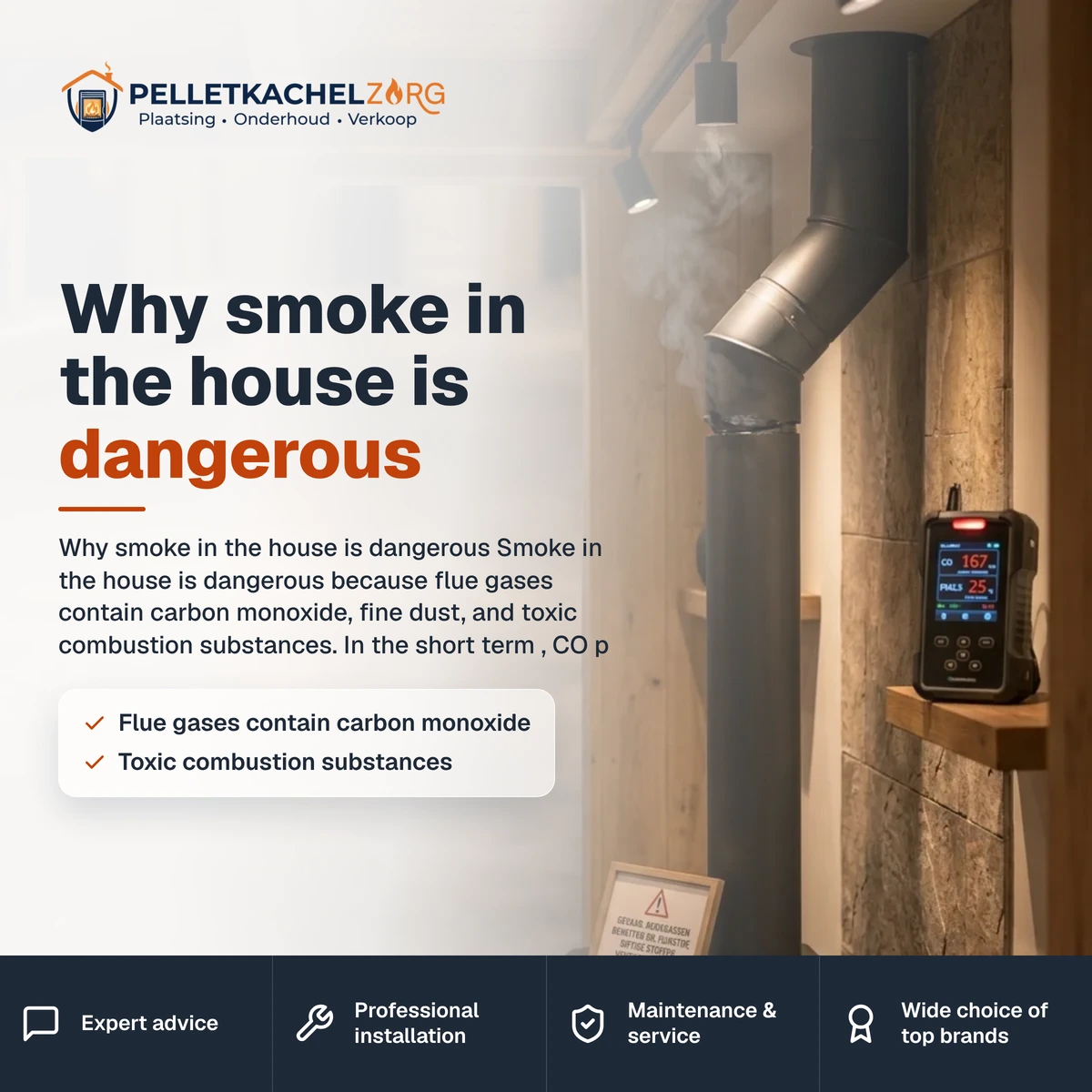
Smoke in the house is dangerous because flue gases contain carbon monoxide, fine dust, and toxic combustion substances. In the short term, CO poisoning and suffocation are the primary threats, while long term exposure causes respiratory and cardiovascular damage from fine dust and soot.
You cannot smell carbon monoxide, so even a faint smell of smoke should never be ignored. Ventilate immediately, turn off the appliance, and locate the cause.
Indoor smoke is dangerous because flue gases contain a toxic mix of carbon monoxide, fine dust, and harmful combustion products that quickly stress your body. In the short term, carbon monoxide (CO) poses the greatest threat, as this odorless gas can cause suffocation or severe CO poisoning. Over time, fine dust and soot damage your lungs and heart. The main danger is that you cannot always see or smell a hazardous situation. It is therefore vital to take any indoor smoke seriously and identify the cause. Read on to learn why indoor smoke is so dangerous and what steps you must take immediately.
Never rely on your nose alone: carbon monoxide has no smell, so treat any indoor smoke as a potential hazard.
Open windows and doors to ensure thorough ventilation.
Turn off the appliance and stop burning fuel immediately.
Evacuate all residents and pets outside if anyone feels unwell.
Call emergency services immediately if anyone experiences headaches, nausea, or dizziness.
Investigate the cause afterwards, such as a blocked or leaking flue pipe.
Have the appliance and chimney inspected before lighting it again.
Flue gas expertise
We understand how carbon monoxide and fine dust spread through homes, allowing us to pinpoint the cause of smoke leaks effectively.
Stove and flue inspection
We inspect your appliance, connections, and chimney for leaks or poor draught, detecting small defects before they become hazards.
CO alarm guidance
We advise on optimal placement and maintenance for carbon monoxide detectors, ensuring you get an early warning when it matters most.
Visible smoke or fumes entering the room instead of venting outside.
A persistent smell of smoke or burning, even if faint.
Headaches, nausea, or fatigue that clear up once you step outside.
Multiple residents or pets feeling unwell at the same time.
Soot stains around the stove, connections, or on nearby walls.
A CO alarm sounding or yellow flames instead of a clean blue flame.
Indoor smoke is dangerous because the underlying risk is often greater than it appears, especially with invisible carbon monoxide. A small puff of smoke can signal poor draught, a blockage, or a leak in the flue, pushing toxic gases inside. Vulnerable groups such as children, the elderly, and people with heart or lung conditions react faster and more severely. A reliable CO alarm offers timely warning, even overnight, making it essential safety equipment. Learn how carbon monoxide forms in our detailed guide on carbon monoxide dangers with stoves and fireplaces, and find out where to install your detector with the correct placement for a CO alarm.
Indoor smoke almost always has a specific cause, ranging from a blocked chimney to improper burning techniques or lack of fresh air supply. If the problem persists, finding the root cause is far more important than continuing to burn fuel. In our article about smoke blowing back into the house, you will find common causes and fixes. Prevention starts with good heating habits and dry fuel, as outlined in our guide on fire-safe heating with wood or pellets. Local regulations regarding chimney sweeping and maintenance may vary by region, so always consult your local authority, insurer, and the appliance manual for binding guidance. Regular inspections of your flue system and stove are the best way to keep combustion gases where they belong: outside.
If you have any doubts about the safety of your stove or chimney, have it checked today rather than taking unnecessary risks. Request a free quote or expert advice today.
We are happy to help. Contact us without obligation.
Yes, even a slight amount of smoke inside should be taken seriously. Flue gases contain odorless carbon monoxide, meaning a faint smoke smell can accompany dangerous CO levels. Ventilate immediately and inspect the source.
Watch out for headaches, nausea, dizziness, and fatigue that subside once you step outdoors. If multiple people or pets feel unwell simultaneously while a stove is burning, CO is likely present. Get outside and call emergency services immediately.
Children, elderly individuals, and people with heart or respiratory conditions react faster and more intensely to flue gases. Their bodies are less capable of handling carbon monoxide and particulate matter, making immediate ventilation and medical attention crucial.
Fine dust and soot particles penetrate deep into the lungs, causing long term strain on your respiratory system and heart. Repeated indoor exposure worsens asthma and increases the risk of cardiovascular disease, making smoke harmful even without immediate CO threats.