
Repairs by specialists
Our technicians repair pellet stoves of any brand, from igniters to exhaust fans. You will get an honest assessment of whether repairing or replacing makes sense.
Have a pellet stove installed with the utmost care? Get a quote in 5 steps.
Have a pellet stove installed with the utmost care? Get a quote in 5 steps.
Have a pellet stove installed with the utmost care? Get a quote in 5 steps.

 Written by Dries Nijs3 min read
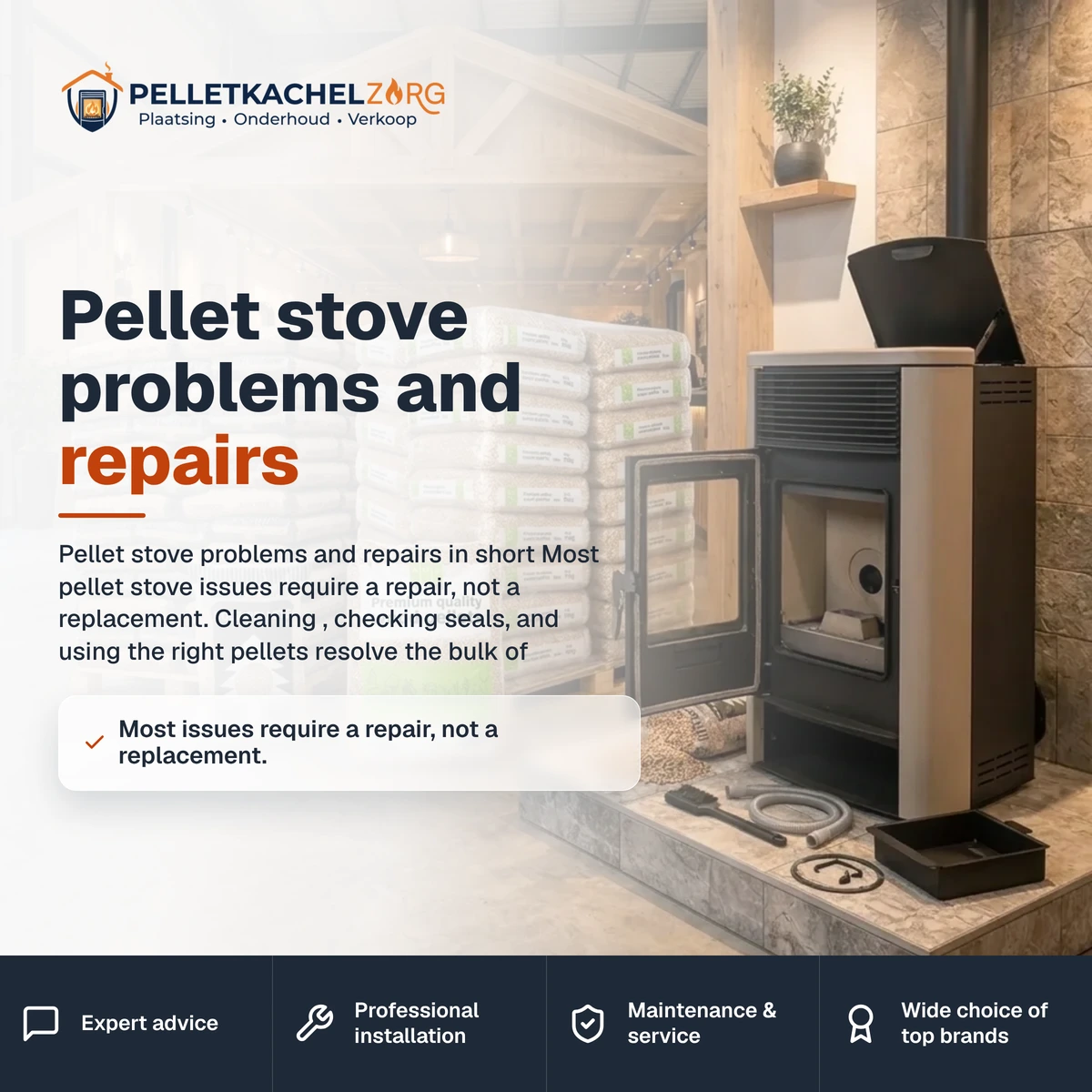
Most pellet stove issues require a repair, not a replacement. Cleaning, checking seals, and using the right pellets resolve the bulk of malfunctions, while motors, sensors, and error codes are best left to a professional.
If you suspect smoke or CO, stop firing immediately and have the stove inspected.
Pellet stove problems almost always call for a repair, rarely for a new stove. Most malfunctions are caused by dirt, a blockage, worn parts, or poor draft, and you can solve many of them yourself. Defective parts like an igniter, exhaust fan, or stubborn error codes belong to a professional. In this guide, you will read about the common complaints, the probable cause, and whether it is a DIY fix or professional work.
Safety comes first. If you smell smoke in the house or a CO alarm goes off, stop using the stove right away and ventilate the room.
Solve simple dirt and seal issues first, because the vast majority of pellet stove malfunctions disappear after a thorough cleaning.
Work from simple to complex for any malfunction. Check the pellets, burn pot, and seals first, then look at the air settings and flue, and only check the electronics as a last resort. This prevents you from replacing an expensive motor when a handful of ash was the real culprit.
Below are the eight most frequent complaints. For each problem, you will read the likely cause and whether it involves a DIY fix or professional work. The detailed articles delve deeper into each issue.
The stove will not start. Often the burn pot is dirty, there are too few or damp pellets in the hopper, or the igniter is weak. Clean the burn pot first and check the supply. Read why your pellet stove will not start for the complete approach.
The stove shuts down while burning. An empty hopper, damp pellets, or a dirty exhaust path are classic causes. A weakened exhaust sensor also plays a role. Find out more in a pellet stove that shuts down during operation.
The draft is poor and the flame stays low and lazy. Think of a clogged flue, a dirty exhaust fan, or insufficient combustion air in the room. Clean the exhaust path and check if windows and vents allow enough air in.
The stove produces a lot of soot and a dull, orange flame. Usually, this is due to poor-quality pellets, incorrect air settings, or a dirty heat exchanger. See a stove that burns poorly and produces excessive soot.
The glass turns black quickly. Incomplete combustion, a leaking door seal, or cheap pellets are the usual suspects. A good cleaning and a better choice of pellets often suffice. If the glass remains black despite cleaning, have the combustion settings checked.
The stove makes a lot of noise. A squeaking or humming fan, a dry bearing, or loose panels indicate wear or dirt. Have a persistent bearing checked in time, as a defective fan causes a poorer exhaust along with the noise.
An error message appears on the display. The code refers to a sensor, the ignition, or the exhaust temperature, speeding up the search for the cause. Reset the stove once, and if the code returns, have a professional read it.
You smell smoke in the house. This points to a leak in the flue or insufficient draft, and always takes precedence over comfort. Have the flue checked for leaks and draft before you fire it up again.
Repairs by specialists
Our technicians repair pellet stoves of any brand, from igniters to exhaust fans. You will get an honest assessment of whether repairing or replacing makes sense.
Safety is our priority
We check the combustion, seals, and exhaust system for leaks and CO risks. That way, you can heat your home with true peace of mind.
Thorough diagnostics
By reading error codes and using camera inspections where necessary, we find the real root cause. You never pay for unnecessary replacement parts.
Some warning signs tolerate no delay. If you see or smell any of the following, turn off the stove and only use it again after an inspection.
You smell exhaust gas or a burning odor in the living area
A CO detector sounds an alarm or keeps beeping
Smoke or flames come out of a seam in the flue
The stove keeps displaying error codes after multiple resets
You see soot deposits or brown traces around the door or pipe
Repairing pays off for almost any malfunction under ten years old. Parts like seals, sensors, the igniter, and even the exhaust fan are available separately and are affordable to replace.
Replacement only makes sense when the frame or heat exchanger is rusted through, if parts are no longer available, or if repair costs approach half the price of a new stove. A recurring issue like glass that quickly turns black is usually a setting or pellet issue, not a reason for replacement.
When repairing, also keep an eye on the age and brand. Parts for mainstream brands remain available for years, while exotic or very cheap stoves sometimes run out of spare parts after just a few seasons. A quick check of availability prevents disappointment.
Call a repairman as soon as a malfunction involves exhaust gases, CO, or a defective motor. These complaints affect combustion and exhaust, and you should not leave them to chance.
A display showing what an error code means gives you and the repairman a quick direction. Write down the exact code and what you did beforehand, so the repair goes more smoothly.
Regulations regarding maintenance and certificates differ per municipality and insurer. Check your manual, municipality, or insurer for what proofs they expect, especially after an incident.
You can prevent many repairs with an annual service. A thorough cleaning of the burn pot, heat exchanger, and flue keeps the draft optimal and saves the motors. Those who use quality pellets also see less soot and black glass.
A good repairman not only solves the symptom but looks for the root cause. This way, the same malfunction will not return, and you can continue to use your stove worry-free for the rest of the season.
If you cannot figure it out yourself or have doubts about safety, a professional will thoroughly inspect your stove and flue. Request a free quote or advice and briefly describe the malfunction and any error code.
We are happy to help. Contact us without obligation.
Yes, you can solve many pellet stove problems yourself. Cleaning the burn pot, glass, and ash pan, checking the seals, and choosing quality pellets will fix most complaints. For sensors, motors, and persistent error codes, it is better to call a professional.
The most frequent complaints are a stove that fails to start, one that shuts down while burning, and glass that quickly turns black. The cause is almost always dirt, a leaking seal, or poor pellets. A thorough cleaning is the first step.
Stop firing immediately if you smell exhaust gases, if a CO alarm goes off, or if smoke escapes from a seam in the flue. Turn off the stove, ventilate the room, and only use it again after a full inspection. Safety always comes before comfort.
Usually, yes. Parts like seals, sensors, and the igniter are affordable and widely available. Replacement only makes sense with rusted-through metal, unavailable parts, or if the repair costs approach half the price of a brand-new stove.