
Specialist in Pellet Stoves and Flues
We specialize in pellet stoves and flues in Limburg and surrounding areas. We quickly identify poor combustion and address the real cause.
Have a pellet stove installed with the utmost care? Get a quote in 5 steps.
Have a pellet stove installed with the utmost care? Get a quote in 5 steps.
Have a pellet stove installed with the utmost care? Get a quote in 5 steps.

 Written by Dries Nijs4 min read
A pellet stove that burns poorly or produces a lot of soot usually suffers from insufficient air or contamination. Consider a dirty burn pot, a clogged air intake, or inferior pellets. Often, a thorough cleaning solves most of the issues.
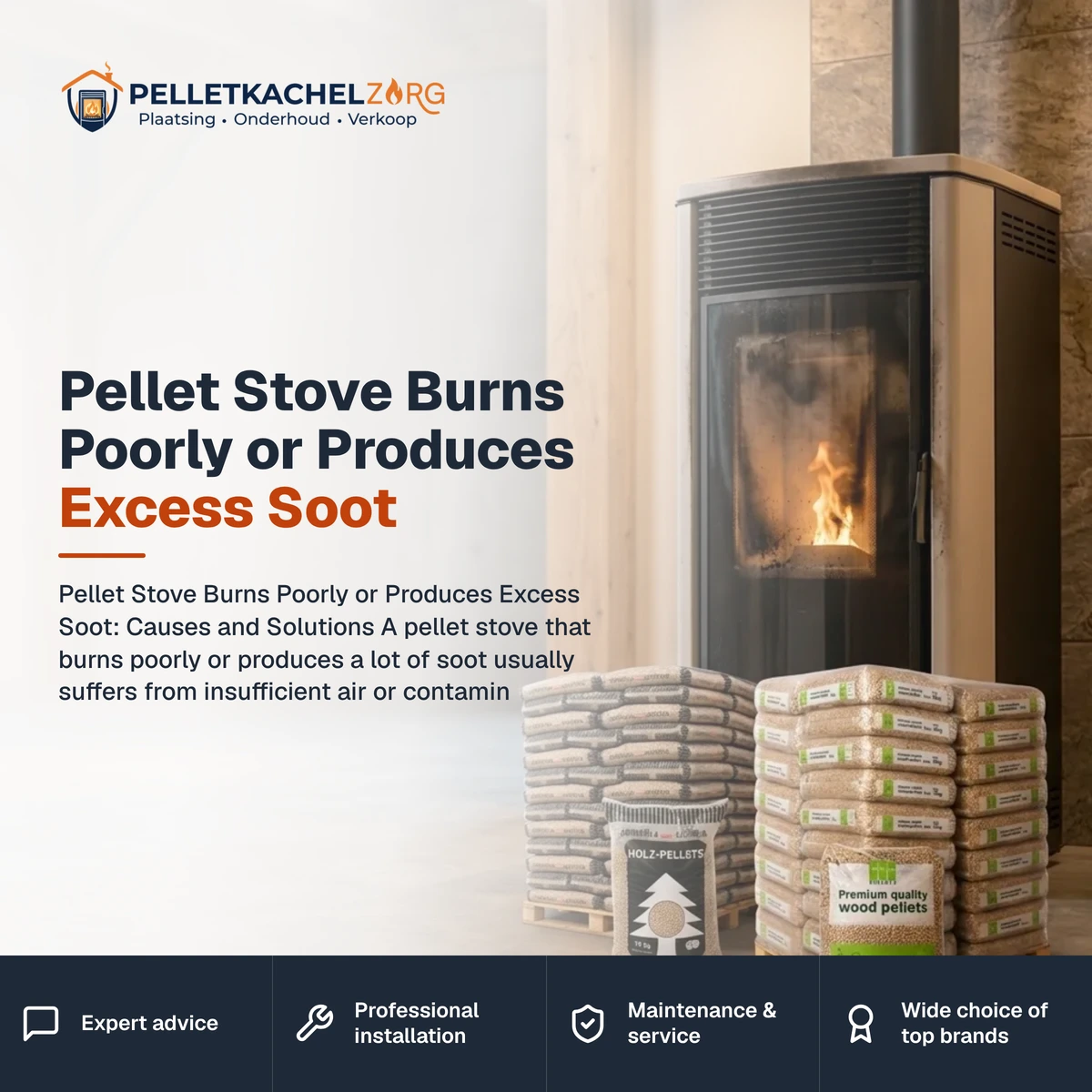
A lively yellow-orange flame is the best proof of healthy combustion.
A pellet stove burns poorly or produces excess soot almost always due to insufficient air or contamination. The most common causes are a dirty burn pot, a clogged air intake, a blocked heat exchanger, poor pellet quality, incorrect settings, and a dirty flue. Often, multiple causes are at play.
The flame immediately indicates the condition. A healthy flame is lively and yellow-orange, reaching high. A lazy, dark flame with a lot of soot indicates incomplete combustion. This article reviews the causes, with a concrete solution for each point.
As a rule of thumb, a lively yellow-orange flame means enough air, while a dark and lazy flame almost always means insufficient air or contamination.
Specialist in Pellet Stoves and Flues
We specialize in pellet stoves and flues in Limburg and surrounding areas. We quickly identify poor combustion and address the real cause.
Thorough Cleaning and Maintenance
A thorough cleaning of the burn pot, heat exchanger, and flue often restores the flame. We ensure your stove burns cleanly and efficiently again.
Honest, Tailored Advice
You receive clear advice on pellets, settings, and maintenance. No sales pitches, just concrete steps that suit your appliance.
Work through the points below in order. This way, you rule out simple causes first before addressing settings or the flue.
Empty the burn pot. Unburned pellets and ash block the air holes, depriving the flame of oxygen. Empty the pot with each refill and brush the holes completely clear.
Check the air intake. A clogged or blocked intake stifles combustion. Inspect the intake at the back of the stove and keep the immediate area dust-free.
Clean the heat exchanger and combustion chamber. Residue hinders heat transfer and draft, slowing the flame. Operate the cleaning rods and thoroughly vacuum the chamber.
Assess pellet quality. Moist or cheap pellets produce more ash, more soot, and a lazier flame. Choose dry, certified pellets and store the bags indoors and off the floor.
Adjust the settings. Too low an air supply or too high a pellet feed results in a smoky, sooty flame. Have the combustion parameters adjusted to match your stove and pellets.
Have the flue inspected. A dirty or poorly drafting flue retains smoke and soot, hindering combustion. Schedule a cleaning, especially if the problem persists.
Review these points before calling the service department. A yes to multiple questions often points to the cause.
Is the burn pot empty and are the air holes completely clear?
Is there unburned pellet or a lot of ash in the combustion chamber?
Has the glass turned black after a few hours of burning?
Does the air intake feel clear and dust-free?
Are the pellets stored dry and do they carry a certification mark?
Has the heat exchanger been recently cleaned?
Is there dark or thick smoke coming from the flue?
Are the air supply and pellet feed still set to the correct values?
Contamination is the common thread behind a poorly burning pellet stove. Ash and soot narrow the airways, depriving the flame of oxygen and creating even more soot. This creates a vicious cycle that only worsens without intervention.
The more often and intensively you burn, the faster the residue builds up. If you use the stove daily, it's best to empty the burn pot every day and clean the glass and chamber weekly. A short, regular routine prevents most soot problems and keeps efficiency up.
Much routine maintenance can be done yourself, from the burn pot to the heat exchanger. Our guide on what you can clean yourself on your pellet stove walks you through these steps. If the glass continues to darken quickly, read why the glass of a pellet stove quickly turns black, as this usually indicates the same underburning flame.
Fuel also plays a significant role. By choosing certified pellets with good quality-price ratio, you significantly reduce the amount of ash and soot, keeping the flame cleaner and more stable. Good pellets pay off in less maintenance and higher efficiency.
If the pellet stove continues to burn poorly after a thorough cleaning, the cause is deeper. A persistent problem often indicates a need for service or a flue inspection. If you notice the stove shutting off during burning, professional inspection is definitely required.
Also watch for warning signs beyond soot. Consider recurring error messages, a burning smell, or smoke lingering in the living space. In such cases, stop using the stove and have it checked first.
In Belgium and the Netherlands, chimney sweeping regulations vary by municipality and insurer. Always consult your manual and insurance policy as binding sources. If you're unsure about the condition of your appliance, have the pellet stove professionally cleaned in time and request a cleaning report.
If your pellet stove continues to burn poorly or produce excess soot after these checks, we are happy to assist. Request a quote or advice and we will review the stove and flue together.
We are happy to help. Contact us without obligation.
A dark, lazy flame almost always indicates insufficient combustion air. Usually, the burn pot or air intake is full of ash. Empty the pot, brush the holes clear, and check the air supply.
Excess soot is due to incomplete combustion, usually from contamination or moist pellets. Clean the burn pot and heat exchanger and use dry, certified pellets. If soot persists, have the flue inspected.
Yes, inferior or moist pellets produce more ash and soot and a lazier flame. Choose certified pellets and store them dry and indoors. This keeps combustion clean and efficiency high.
Call a professional if the problem persists after thorough cleaning. Persistent poor combustion indicates a need for service or a dirty flue. Also, if there's smoke in the house or error messages, inspection is needed.