

Safety first
We treat every flue gas extraction issue as a potential CO risk, giving honest advice on whether it is safe to light your stove.
Have a pellet stove installed with the utmost care? Get a quote in 5 steps.
Have a pellet stove installed with the utmost care? Get a quote in 5 steps.
Have a pellet stove installed with the utmost care? Get a quote in 5 steps.

 Written by Dries Nijs3 min read
A faulty flue gas fan shows through poor draught, smoke in the room, a pressure error stopping the stove, unusual humming or rattling, and loss of heating power. First check for soot build-up, as dirt often mimics a failure. If the issue remains, the motor or bearing needs a professional.
Smoke in the room or a pressure fault is not something to ignore, but an urgent safety signal.
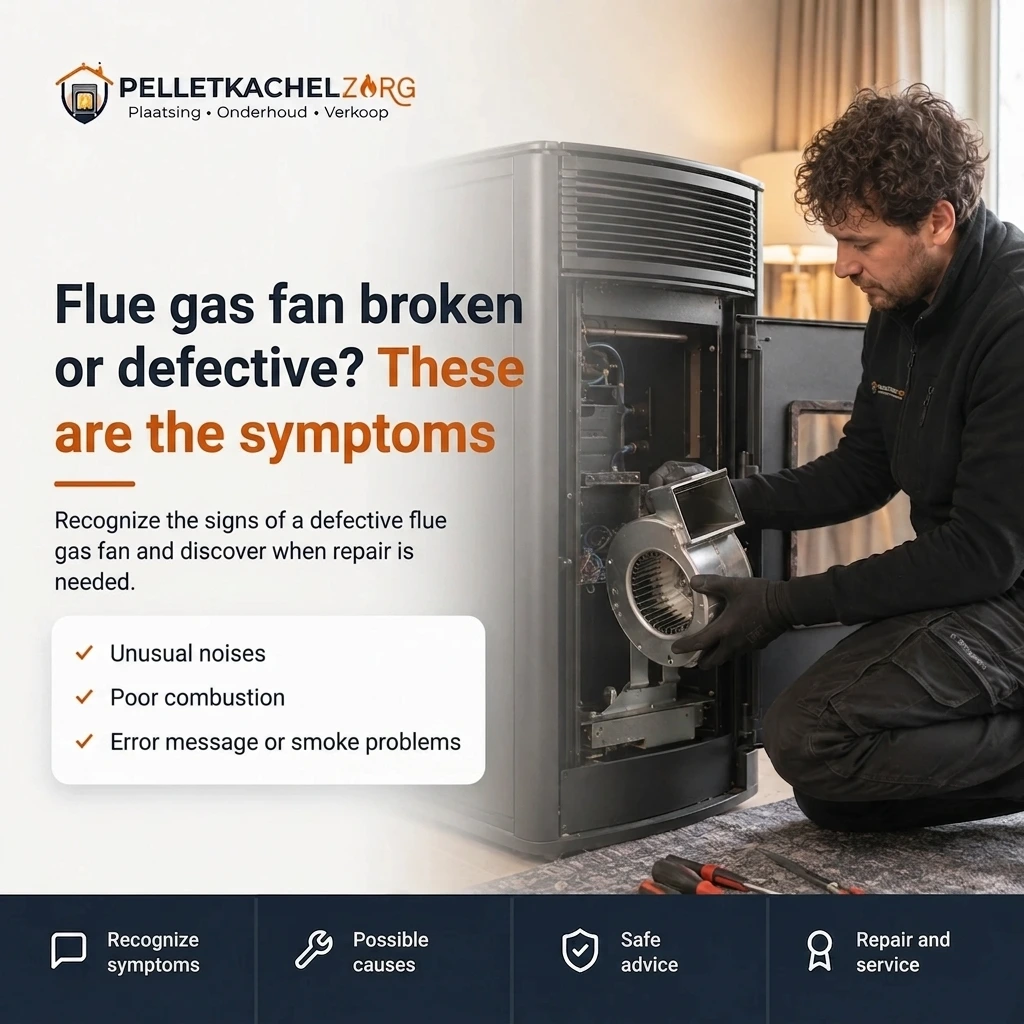
A faulty flue gas fan shows through poor draught, smoke in the room, a stove shutting down with a pressure error, unusual humming or rattling, and a unit that fails to reach full output. The flue gas fan draws combustion gases out of your pellet stove and expels them outside. If that fan malfunctions, toxic gases remain inside.
This makes it a key safety matter, as incomplete exhaust venting can release carbon monoxide into your home. First determine if the appliance is simply dirty or truly damaged. Soot build-up is easily cleaned, but a worn bearing or burnt-out motor requires expert help. This guide helps you identify the symptoms and take action.
Distinguishing between dirt build-up and a mechanical fault tells you whether to clean it yourself or call a technician. The summary below compares both situations.
Clean thoroughly first, if the symptoms return afterwards, the exhaust fan itself needs repair.
Safety first
We treat every flue gas extraction issue as a potential CO risk, giving honest advice on whether it is safe to light your stove.
Clean or replace
We diagnose whether deep cleaning is sufficient or if the fan is defective, ensuring you never pay for unnecessary repairs.
All major brands
Our technicians are experienced with all major pellet stove models and exhaust fans, ensuring accurate diagnosis and repair.
The following warning signs occur most frequently with a faulty flue gas fan. Multiple issues often happen at once, because poor exhaust flow affects the entire combustion process.
Poor draught, the flame appears small, dull or orange, and the stove warms up slowly. The glass window also turns black faster.
Smoke or smoke smell in the living room, especially during startup or right after shutdown, when the fan fails to extract gases properly.
The stove shuts down with a pressure or draught error, as the fan fails to create sufficient negative pressure, triggering the safety switch.
Unusual humming, rattling or grinding sounds, indicating bearing wear or fan imbalance. A noisy pellet stove often shares this exact root cause.
The stove fails to reach target heat or continually modulates back to low power, despite high thermostat settings.
The appliance cuts out after a few minutes, mimicking a pellet stove turning off while burning due to inadequate smoke extraction.
A single symptom can also stem from dirt or damp wood pellets. However, if you see smoke indoors or get repeated pressure errors, take it seriously and stop burning.
Is there an active CO detector in the room, test it before proceeding.
Has the stove cooled down completely and is the power plug removed before opening parts.
Are the burn pot, ash pit and flue gas passages visibly blocked with soot.
Is the door sealed properly and the rope gasket flexible, air leaks disturb vacuum pressure.
Does the fan spin freely without grinding noises when turned carefully by hand.
Does the error code or noise persist after a deep clean.
Always start by checking for blockages, as dust and ash buildup on the impeller blades are the most common cause of poor airflow. Clean the burn pot, heat exchanger and accessible flue channels according to your manual. If the fan runs quietly afterwards and heating power returns, there was no mechanical fault.
If the stove continues to display an alarm, check our guide on what to do when a pellet stove shows an error code to identify the exact fault. The code usually points directly to pressure or exhaust issues, helping the technician diagnose faster.
Rattling sounds, a seized motor or recurring pressure faults belong in professional hands. Electrical testing on the motor, replacing bearings or fitting a new exhaust extractor should be left to a qualified installer. This protects both your warranty and your household safety.
A failing flue gas fan directly impacts the extraction of toxic gases. If you notice smoke coming back into the house, or smell fumes, turn off the stove and ventilate the room immediately. Have the appliance inspected before reigniting it, as your health comes first.
Carbon monoxide is colourless and odourless, making it impossible to detect by smell alone. Learn how to prevent CO risks with stoves and fireplaces and make sure a working carbon monoxide alarm is installed nearby.
Regulations on chimney maintenance and safety checks vary by region. However, core safety rules remain universal: proper exhaust venting, timely maintenance and a fully functional fan. When in doubt, consult your user manual, insurance policy or local authority for official guidance.
Not sure if it is just dirt or a broken component, or does the pressure error keep returning. Request a free quote or advice and we will help you decide whether a deep clean is enough or if your flue gas fan needs replacing.
We are happy to help. Contact us without obligation.
Symptoms include poor draught, smoke in the room, pressure errors causing stove shutdowns or grinding sounds. If these persist after thorough cleaning, the fan needs repair or replacement.
No, stop using the stove immediately if you notice smoke indoors or persistent pressure errors. Proper flue gas extraction is compromised, creating a dangerous carbon monoxide risk.
Costs depend on stove brand, fan model and accessibility. Sometimes cleaning or replacing a bearing suffices, while other cases require a full replacement. Request a quote for an accurate estimate.
Humming or rattling usually points to a dirty or worn flue gas extractor. Carefully clean the blades first. If the noise continues, the motor or bearing likely needs replacement.


