
Certified cleaning and inspection
We clean your chimney or flue and inspect its condition. You receive a fully valid official certificate afterwards.
Have a pellet stove installed with the utmost care? Get a quote in 5 steps.
Have a pellet stove installed with the utmost care? Get a quote in 5 steps.
Have a pellet stove installed with the utmost care? Get a quote in 5 steps.

 Written by Dries Nijs4 min read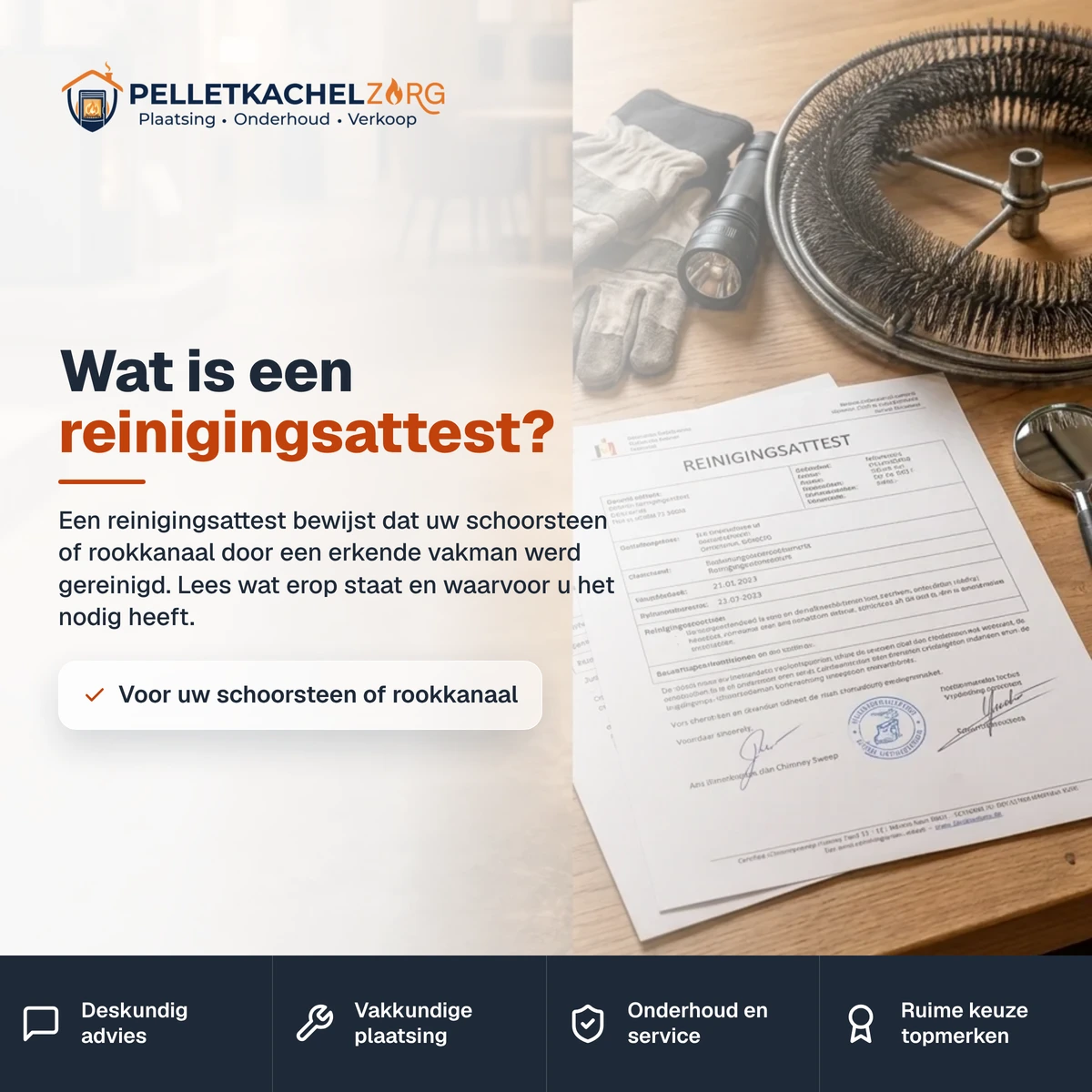
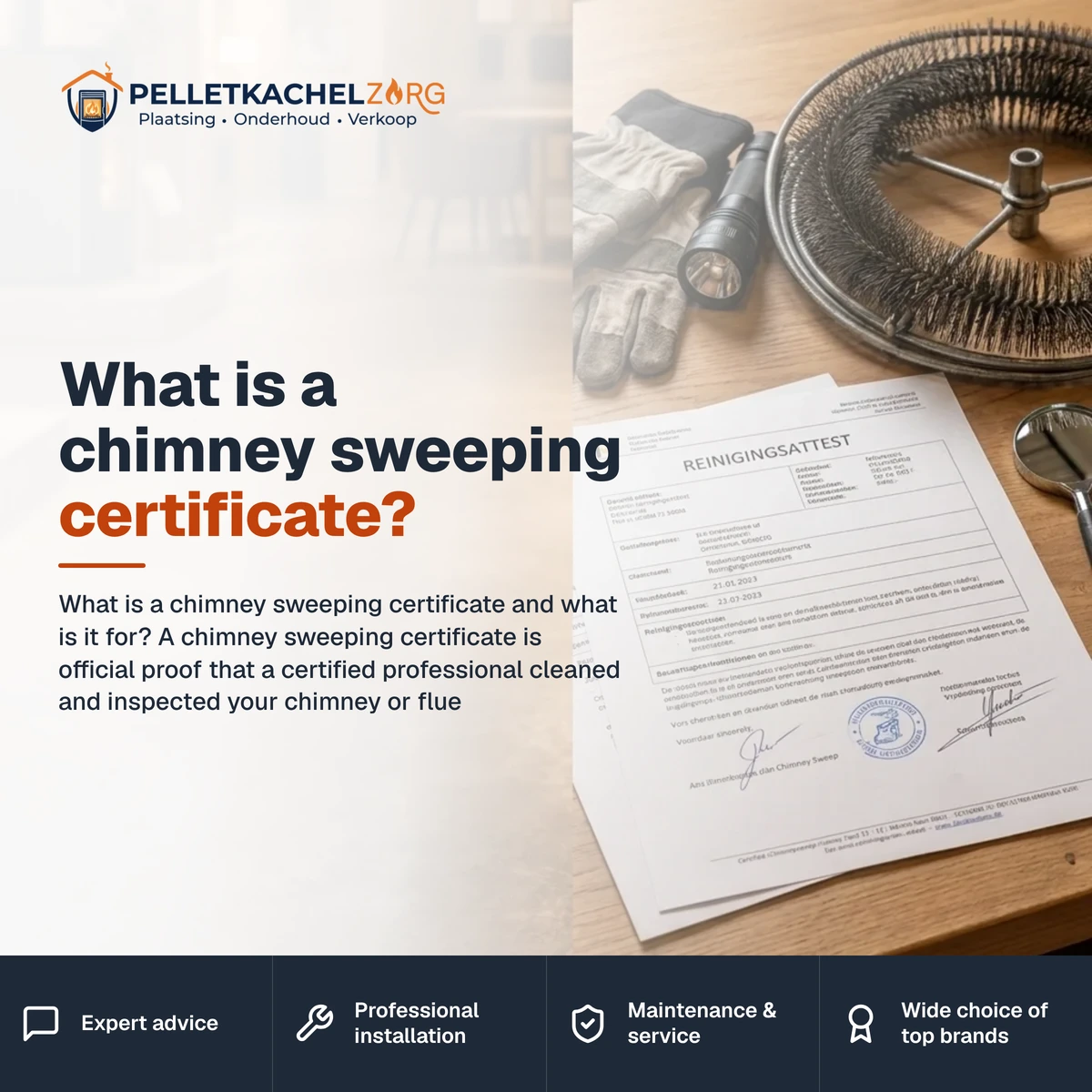
A chimney sweeping certificate is official proof that a certified professional cleaned and inspected your chimney or flue. It states the date, your details, and the findings, serving as evidence for your local council and home insurance.
No certificate often means no conclusive proof of maintenance after damage.
A chimney sweeping certificate is official proof that a certified chimney sweep or technician cleaned and inspected your chimney or flue. The document details the date, your personal details, the technician's info, and any findings during the cleaning. You use it primarily as proof for your local authorities and home insurance provider.
It is far more than a receipt. While proof of payment only shows you spent money, a chimney sweeping certificate confirms in writing that the flue was actually inspected and cleared. That distinction is crucial if anything goes wrong.
Without a certificate, proving you maintained your chimney after a fire is difficult. In this article, discover what belongs on a chimney sweeping certificate, who issues it, and how long it remains valid.
Many assume a paid invoice is enough proof of maintenance. In practice, insurers look at content, not price. A chimney sweeping certificate and an invoice tell different stories, and that difference matters following damage.
An invoice proves you paid, a sweeping certificate proves your flue was cleaned and checked.
Certified cleaning and inspection
We clean your chimney or flue and inspect its condition. You receive a fully valid official certificate afterwards.
Valid for your insurance
Our certificate details the date, contractor information, and findings: reliable proof for insurers and councils.
Clear regulations guidance
We explain the required sweeping frequency for your specific setup, ensuring you stay fully compliant.
A valid cleaning certificate always contains several essential details. If any of these are missing, its validity as legal proof may be compromised. Always check upon receipt that the document is fully completed.
The cleaning date and the property address.
Your name and details as the owner or resident.
The name, address, and accreditation of the chimney sweep or technician.
The type of flue cleaned, such as a traditional chimney, flue pipe, or pellet stove.
The method used and any findings, including notes on existing faults or defects.
The signature or stamp of the certified technician.
The technician's findings are often the most crucial section. If cracks, leaks, or heavy soot deposits are found, they must be recorded on the certificate. This gives you written proof of any necessary repairs and when they were reported.
A cleaning certificate is useful in more situations than you might think. It is not just a formality after your annual sweep, but a key document you may need at critical moments.
As proof for your home insurance following a chimney fire.
During an inspection or request from local authorities.
When selling or letting a property with a stove or fireplace.
As proof of annual maintenance for your own records.
In legal or liability disputes following smoke damage.
Keep your certificates safely alongside your other property documents. A complete sequence of annual certificates demonstrates consistent maintenance, protecting your position with insurers and landlords alike.
A cleaning certificate is typically valid for one year, as most insurers and local councils specify an annual sweep as standard practice. For heavily used wood burners, a second sweep during the heating season may be necessary. A cleaning certificate is similar to a sweeping certificate, though the two terms do not always mean the exact same thing.
Validity also depends on your appliance type and usage habits. Daily wood burning creates soot buildup faster than occasional pellet stove use. Ultimately, your insurance policy or local regulations dictate the required frequency.
To understand the exact legal distinctions between both documents, our detailed guide explains the difference between a cleaning certificate and a sweeping certificate. Additionally, learning how often a chimney needs sweeping will help you determine when a new certificate is required.
A sweeping proof and a cleaning certificate are very similar and often used interchangeably. A basic sweeping proof primarily confirms that sweeping was performed. A full cleaning certificate goes further by incorporating a thorough system inspection and diagnostic findings.
In practice, most insurance companies accept either document provided the core information is present: the date, the flue type, technician details, and the outcome. If in doubt, always request a fully detailed cleaning certificate.
Specific requirements for chimney certificates vary across regions and municipalities in Belgium, as well as local councils in the Netherlands. Some local authorities enforce strict sweeping intervals, while others leave requirements to home insurance policies. Your insurance contract remains the legally binding authority for your property.
Avoid relying on informal advice from neighbours; instead, check your specific paperwork. Review your policy conditions and contact your local council if you are unsure. This ensures you know the exact maintenance frequency and documentation required for your home.
In many regions, regular sweeping is a legal requirement, as covered in our guide on whether chimney sweeping is mandatory in Belgium. After a fire incident, insurance providers will demand valid documentation, which we detail in our article on insurance requirements following a chimney fire. Pellet stoves also follow specific guidelines, outlined in why a pellet stove cleaning certificate may be mandatory.
If you need your flue system inspected or require an official cleaning certificate, our expert team is ready to help. Request a free quote or expert advice today for total peace of mind.
We are happy to help. Contact us without obligation.
That depends on your local council and insurer. Many local authorities require annual sweeping, and insurance policies may demand a valid certificate after a claim. Always check your local regulations and policy terms.
A certified chimney sweep or qualified technician issues the certificate after cleaning. They record their credentials, the date, and their findings. Certificates from unaccredited parties are not always accepted.
A certificate is generally valid for one year, matching standard annual sweeping schedules. Frequent use may require more frequent cleaning. Always keep the latest certificate with your property records.
An invoice only proves payment, while a sweeping certificate confirms your flue was cleaned and inspected. After damage, insurers usually ask for the certificate, not just the invoice.