
Flue gas expertise
We understand how damp wood impacts flue draught and safety. Get honest advice on burning, seasoning and safe operation.
Have a pellet stove installed with the utmost care? Get a quote in 5 steps.
Have a pellet stove installed with the utmost care? Get a quote in 5 steps.
Have a pellet stove installed with the utmost care? Get a quote in 5 steps.

 Written by Dries Nijs3 min read
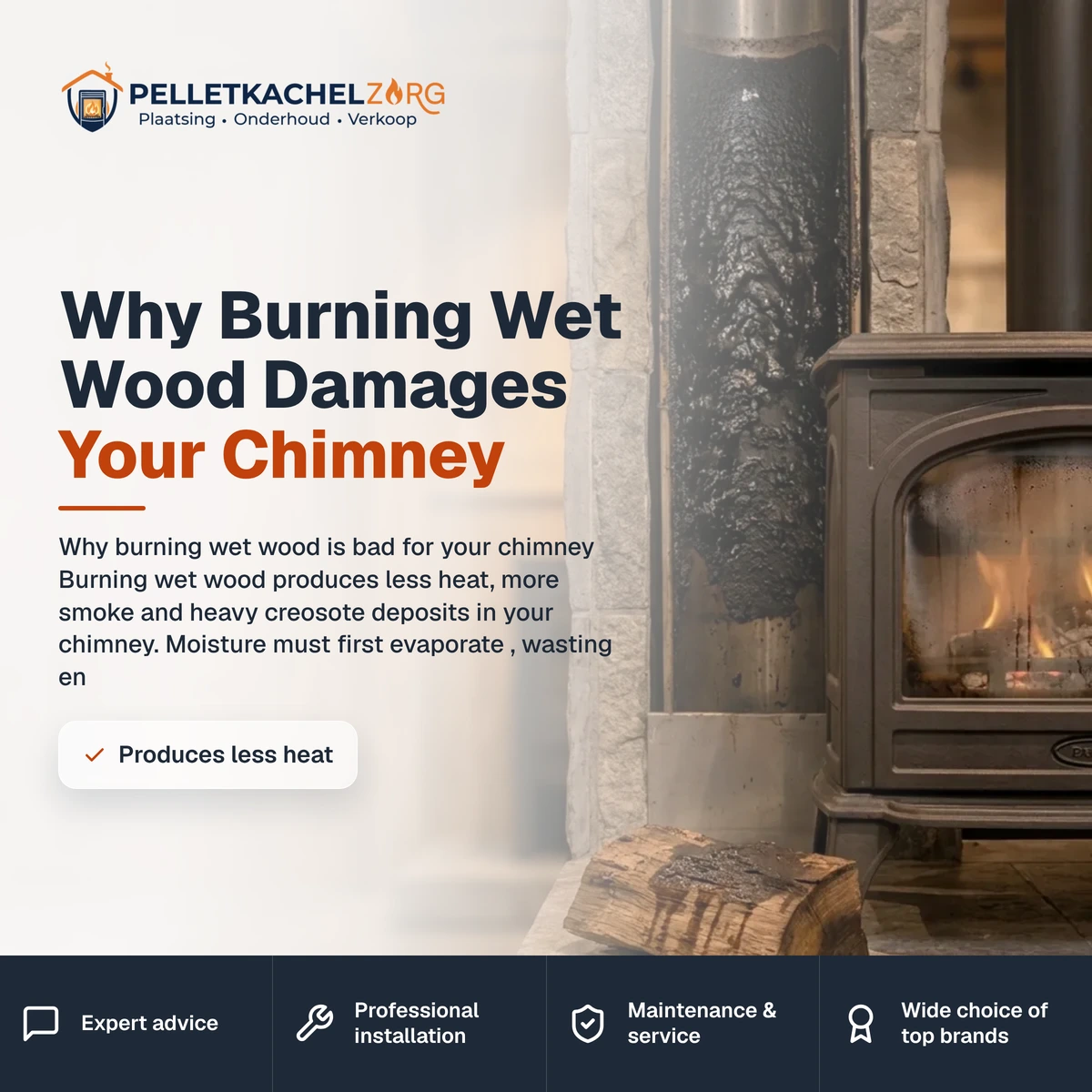
Burning wet wood produces less heat, more smoke and heavy creosote deposits in your chimney. Moisture must first evaporate, wasting energy, while creosote drastically increases chimney fire risks. Always burn wood with under 20 percent moisture.
Dry wood below 20 percent moisture is your cheapest fire protection.
Burning wet wood damages your chimney because it produces far less heat, generates excess smoke and fine particulates, and deposits creosote in your flue. This creosote layer is highly flammable, greatly increasing the risk of a dangerous chimney fire.
Burning damp wood wastes energy, as heat goes into evaporating water before the log catches fire. Ideally, moisture levels stay below 20 percent. This guide explains why and shows you how to identify seasoned firewood.
The wetter the wood, the more creosote accumulates and the higher the risk of a chimney fire.
Flue gas expertise
We understand how damp wood impacts flue draught and safety. Get honest advice on burning, seasoning and safe operation.
Chimney inspections
We inspect flues for creosote build-up and blockages, ensuring you know if sweeping or maintenance is required.
Fire-safe performance
A clean, well-drawing chimney lowers the risk of chimney fires, helping you burn wood safely and efficiently.
Reduced heat output: Energy heats up water content instead of warming your room.
Increased smoke and emissions: Incomplete combustion creates thick smoke harmful indoors and outdoors.
Accelerated creosote deposits: Flue gases cool too quickly, causing tar and residues to stick to chimney walls.
Faster clogging and soot: Stove glass turns black and your flue pipe clogs in no time.
High risk of chimney fires: Accumulated creosote can easily ignite inside the flue.
Dry logs feel significantly lighter than freshly cut wood.
You can see visible radial cracks on the ends of the logs.
Banging two logs together produces a clear, hollow sound rather than a dull thud.
Bark peels off easily and the wood turns a faded grey color.
A moisture meter confirms a reading safely below 20 percent.
Freshly felled timber contains high levels of moisture, sometimes making up half its total weight. When burned, this water transforms into steam first, consuming valuable heat energy. Consequently, the fire burns cooler and remains incomplete.
This lost energy never reaches your living space: it simply escapes through the chimney as steam. You end up burning more logs for far less warmth, causing the efficiency of your stove or fireplace to plummet.
These cooler flue gases carry unburned tar particles. As soon as they touch the colder chimney wall, they condense into a sticky, black film. Burning wet wood speeds up this tar formation significantly.
To understand this process better, read our article on how creosote forms in a chimney. This flammable build-up is the primary reason why burning wet wood makes your flue dangerous over time.
Fresh wood requires plenty of time to dry properly. Plan for 1 to 2 years of seasoning in a sheltered, well-ventilated outdoor area. Hardwoods like oak take much longer to dry than softwoods.
Split logs into smaller pieces, as thinner wood dries faster. Ensure air circulates through the stack and keep logs elevated off damp ground. Cover only the top to shield from rain while allowing moisture to escape from the sides.
If you occasionally burn damp wood, residue builds up fast. Check your system regularly for signs of a dirty chimney. Find more insights in our complete guide to preventing chimney fires.
Using dry wood is just one part of the equation: lighting techniques matter too. Discover proper firing methods in our guide on fire-safe burning with wood or pellets. Deciding between fuels? Check out wood briquettes vs firewood, which performs better.
An inexpensive moisture meter eliminates guesswork. Press the pins into a freshly split side of a log to check readings. If moisture stays under 20 percent, you get clean, efficient heat without creosote build-up.
Need professional guidance on your flue condition or heating habits? We are happy to help. Request a free quote or advice to enjoy safer, warmer fires next winter.
We are happy to help. Contact us without obligation.
Firewood is too wet when moisture levels exceed 20 percent. Wood under 20 percent burns cleanly and hot. Above 25 percent, wood produces heavy smoke, low heat and fast creosote build-up.
Allow at least 1 to 2 years of drying in a dry, ventilated area. Softwoods season faster than dense hardwoods like oak. Split, stacked logs under a sheltered roof dry best.
Yes, to an extent. Dry wood feels lighter, shows end cracks, and makes a ringing sound when tapped together. For full certainty, test logs using a digital moisture meter.
Yes. Burning damp wood leaves heavy creosote deposits inside the flue, which are highly flammable. This greatly increases chimney fire risks while releasing harmful smoke emissions.