
Tailored Advice
We help you choose between briquettes and firewood for your stove. Our advice is based on your appliance, space, and burning habits.
Have a pellet stove installed with the utmost care? Get a quote in 5 steps.
Have a pellet stove installed with the utmost care? Get a quote in 5 steps.
Have a pellet stove installed with the utmost care? Get a quote in 5 steps.

 Written by Dries Nijs3 min read
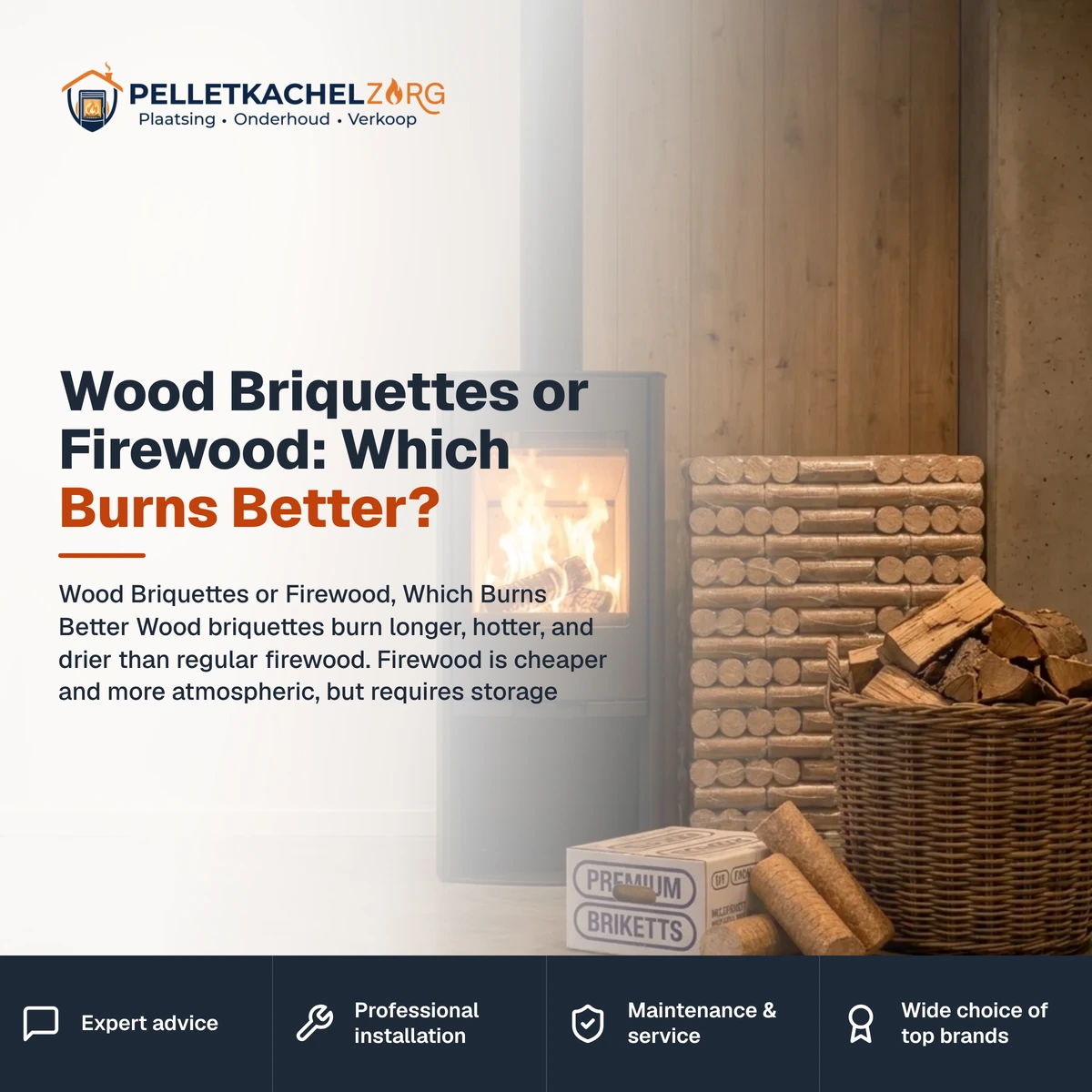
Wood briquettes burn longer, hotter, and drier than regular firewood. Firewood is cheaper and more atmospheric, but requires storage and drying time. Use dry material in both cases.
Burning dry gives the most heat and the least smoke, regardless of your choice.
Wood briquettes or firewood, briquettes generally burn longer, hotter, and drier than regular firewood. They are compressed and have low moisture content, providing consistent heat. Well-dried firewood is cheaper and offers more atmosphere, but requires storage space and drying time. This comparison applies to wood stoves and fireplaces, not pellet stoves. Below, you'll see the difference per point, from burn duration to price.
The main difference lies in density and moisture. Briquettes are pressed sawdust or wood residues without glue, compressed into a compact block with very little water. Firewood is natural logs that you let dry first. These properties determine almost everything, from heat output to ash residue.
Rule of thumb: always use dry material, as wet wood burns poorly and damages your chimney.
Tailored Advice
We help you choose between briquettes and firewood for your stove. Our advice is based on your appliance, space, and burning habits.
Safe Burning
A correct flue and dry fuel prevent smoke and deposits. We inspect and install according to regulations.
Experience with Wood and Pellets
We work daily with wood stoves, fireplaces, and pellet stoves. You can be sure your installation is correct.
Which fuel burns better depends on what you find important. If you're looking for long, consistent heat with little effort, briquettes win. If it's about atmosphere and a low price, firewood remains attractive. The points below help you weigh your options.
Burn duration: briquettes smolder longer and keep a stove warmer in the evening, while firewood burns up faster.
Heat: compressed briquettes provide a constant high output, which is pleasant on cold days.
Ash residue: briquettes usually leave less ash, making cleaning quicker.
Storage: briquettes take up little space and stay dry on a pallet, while firewood needs a ventilated stacking area.
Price: firewood is often cheaper per heat unit, briquettes cost more but burn more efficiently.
Atmosphere: an open flame with crackling logs is unmatched for ambiance.
In practice, many users opt for a mix. They start the fire with some firewood and kindling, then add briquettes for a steady, long-lasting glow. This way, you combine atmosphere with efficient heat output.
Whether you choose briquettes, firewood, or a combination, the quality of your fuel is most important. Check the points below before lighting your stove.
Moisture content below 20 percent, measure this with an inexpensive moisture meter
Store briquettes dry, moisture causes them to expand and crumble
Let firewood dry for at least 1 to 2 years, split and covered
Never burn painted, glued, or treated wood
Combining is allowed, briquettes and firewood can be used in the same stove
If unsure about quality, choose certified briquettes
Dry material always wins because moisture must evaporate before the wood truly gives off heat. This costs energy, reduces your efficiency, and causes more smoke and deposits. Read why wet wood is bad for your chimney, then you'll understand the importance of low moisture content.
If you want less smoke and higher efficiency, the overview on choosing fuel for less smoke and better efficiency can help. Briquettes score well here due to their low moisture content and consistent composition.
Wet or fresh wood does the opposite. It smokes heavily, provides little heat, and deposits as soot and creosote in the flue. Over time, this increases the risk of a chimney fire. Dry briquettes offer a predictable and safe alternative.
Not all briquettes are the same; the pressing form and wood type determine how long and how hot they burn. A comparison of the difference between RUF, Pini Kay, and Nestro briquettes clarifies which type suits your stove. Round and rectangular briquettes behave differently in the fire.
Hardwoods like oak and beech provide a longer, steady glow, while softwoods burn faster and more intensely. Many briquettes are made from hardwood residues, explaining their long burn duration. Choose consciously based on how you burn.
Also, ensure your exhaust is correct, as a wood stove has its own requirements. Check which flue you need for a wood stove and follow the basic rules on safe burning with wood or pellets. A correct flue and dry fuel go hand in hand for safe, economical burning.
Finally, consider storage. Briquettes are best kept on a pallet in a dry area, away from moisture and condensation. Stack firewood split and covered, with space for air between the pieces. This way, your fuel retains its heat value until it reaches the stove.
If you're unsure between wood briquettes or firewood for your situation, get tailored advice. Request a quote or advice and we'll help you with fuel, stove, and flue.
We are happy to help. Contact us without obligation.
Yes, wood briquettes generally provide more and consistent heat than regular firewood. This is due to their low moisture content and high density. Well-dried firewood comes close but remains more variable.
No, wood briquettes are usually more expensive per piece than firewood. Per heat unit, locally bought firewood is often more economical. However, briquettes burn more efficiently, making the difference smaller in practice.
Yes, you can safely combine briquettes and firewood in the same wood stove or fireplace. Many people start with firewood and add briquettes for a long, steady glow. Always use dry material in both cases.
No, wood briquettes are not suitable for a pellet stove. A pellet stove operates with small compressed pellets and an automatic feed. Briquettes and firewood are intended for wood stoves and fireplaces.