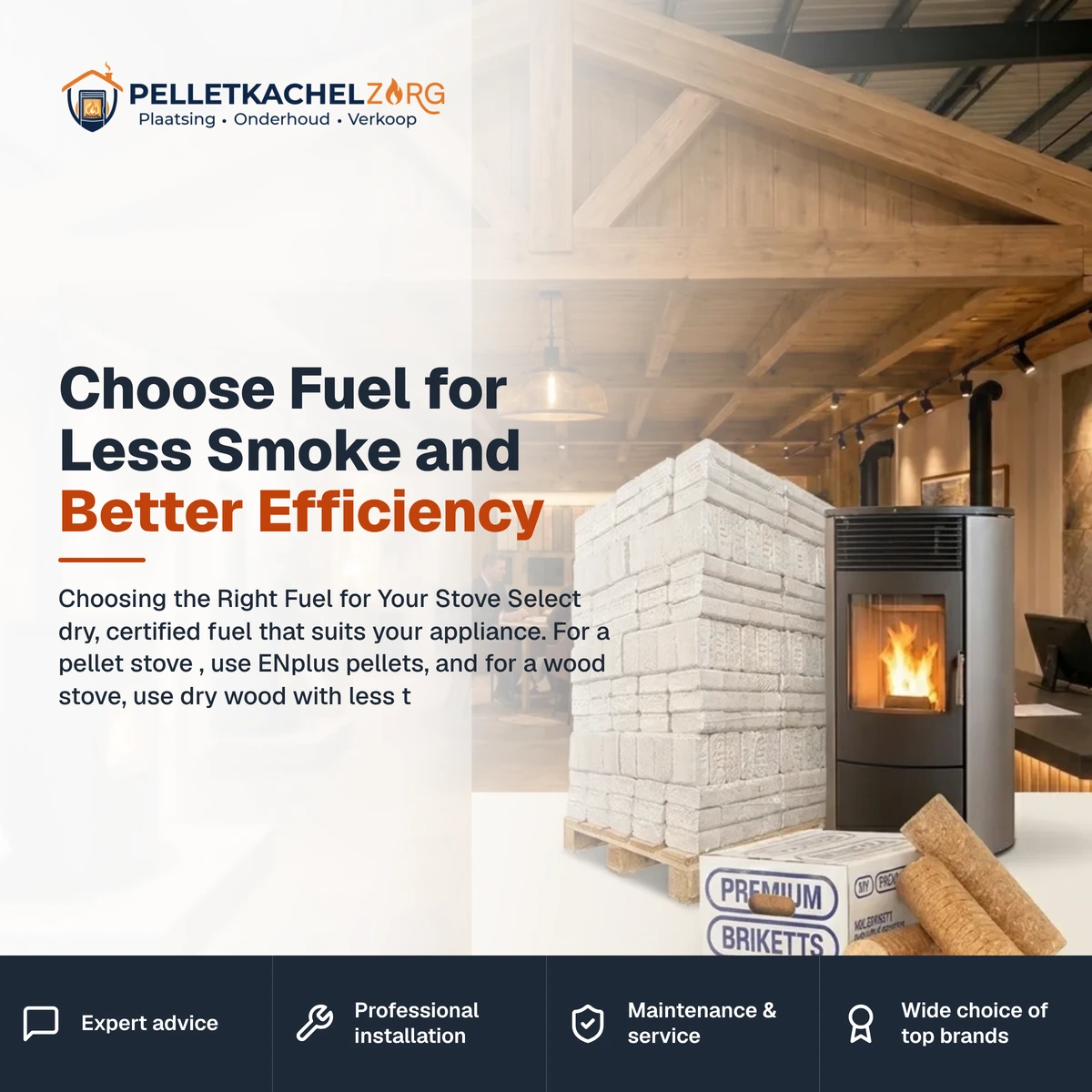


Choose Fuel for Less Smoke and Better Efficiency
 Written by Dries Nijs4 min read
Choosing the Right Fuel for Your Stove
Select dry, certified fuel that suits your appliance. For a pellet stove, use ENplus pellets, and for a wood stove, use dry wood with less than 20 percent moisture or compressed wood briquettes. Moist or treated wood produces a lot of smoke and soot.
Dry fuel provides more heat and keeps your chimney clean.
The key is simple: fuel with low moisture and no contaminants burns cleanly and completely. Anything wet, treated, or of unknown origin costs you heat and pollutes your flue. It's best to clearly distinguish between these two groups.
Clean Fuel vs. Incorrect Fuel
Clean Fuel
ENplus pellets of class A1 or A2 for your pellet stove
Dry wood with less than 20 percent moisture
Compressed wood briquettes without glue or binders
Certified, with a quality mark and recognizable origin
Incorrect Fuel
Moist or freshly cut wood that is not yet dry
Painted, varnished, or treated wood
Waste wood, chipboard, plywood, and pallet wood
Old or damp pellets that disintegrate
Dry, certified fuel is the cheapest way to get more heat and a clean chimney.
For less smoke and better efficiency, choose dry, certified fuel that suits your appliance. Use ENplus pellets for a pellet stove, and dry wood with less than 20 percent moisture or compressed wood briquettes for a wood stove. Moist wood, waste wood, and old pellets produce a lot of smoke, soot, and creosote.
Choosing the right stove fuel directly affects your heat, consumption, and chimney cleanliness. Here's how to make that choice effectively.
Five Rules for Choosing the Right Fuel
First, choose based on your appliance, as a pellet stove and a wood stove each require their own fuel.
Check the moisture content and only burn wood with less than 20 percent moisture, measured with a simple moisture meter.
Always look for a valid ENplus certification and low ash content in pellets.
Choose wood or briquettes from hard deciduous trees like beech, oak, or ash for longer burn times.
Buy in quantities you can use within the season and store everything dry and airy.
What Not to Burn in Your Stove
Wet or fresh wood that hasn't dried for at least a year
Painted, varnished, glued, or impregnated wood
Chipboard, plywood, MDF, and treated demolition wood
Cardboard, paper, plastic, or household waste
Pellets that have become damp or disintegrate into dust
How to Recognize Dry Fuel and Good Pellets
You can recognize dry wood by its light weight, cracks at the ends, and hollow sound when you tap two pieces together. A moisture meter provides certainty and is inexpensive. Anything over 20 percent should be dried longer.
Good pellets are smooth, shiny, and break cleanly rather than crumbling. A lot of dust at the bottom of the bag indicates lower quality or moisture damage. A valid ENplus number on the packaging confirms the origin and class.
It's best to buy briquettes with a specified moisture content and density. Hard, smooth briquettes without visible binders burn longer and leave less ash. This keeps your appliance and flue cleaner for longer.
Why Dry Fuel Provides Efficiency and a Clean Chimney
Dry fuel burns more completely, so you get more heat from the same amount. Moist wood loses a large part of its energy to evaporating water. This water vapor cools the flue gases and leads to incomplete combustion, resulting in a lot of smoke.
Some of the heat is lost before you feel it in your home. Wet wood can significantly reduce efficiency compared to well-dried wood. You burn more, pay more, and heat your home more slowly.
With cool, moist smoke, tar and soot settle on the walls of your flue. This forms creosote, the main cause of chimney fires. In how creosote forms in a chimney, you can read about this process step by step.
If you want to understand why moisture causes so much damage, why wet wood is bad for your chimney explains the consequences clearly.
The Right Appliance with the Right Fuel
The best stove fuel doesn't exist independently of the appliance. A pellet stove is designed for pellets with a fixed diameter and low ash content. If you use wood or cheap pellets, the auger will jam and efficiency will drop quickly.
Always store pellets indoors in a dry place, as they absorb moisture and then disintegrate. Moist pellets cause malfunctions, more ash, and black glass. A good bag in the wrong place is still lost.
A wood stove is a bit more forgiving but also doesn't like large or moist logs. Small, split, dry wood ignites faster and burns hotter. This way, your appliance quickly reaches the right temperature and the smoke remains clear instead of thick and gray.
A wood stove requires pieces of wood or briquettes of the right size. If you're unsure between the two, wood briquettes vs. firewood on burn duration compares both options.
For a pellet stove, which pellets are best for your pellet stove helps you make a concrete choice. Safe burning also starts with the basic rules from safe burning with wood or pellets.
Remember that the best efficiency always comes from the combination. A good appliance with wet or incorrect fuel performs poorly, and top fuel in a poorly adjusted appliance does the same. Therefore, choose both consciously to complement each other, and you'll get more heat from less fuel year after year.
If you're unsure which fuel and appliance suit your home, we can assist you without obligation. Request a quote or advice and you'll know exactly where you stand.
Need Advice on Fuel or a New Appliance?
We are happy to help. Contact us without obligation.
Related articles


Frequently asked questions
For a pellet stove, choose ENplus pellets of class A1 or A2. They have low ash content, a fixed diameter, and controlled origin. This ensures your appliance burns cleanly and the auger doesn't jam.
Firewood should have less than 20 percent moisture. Freshly cut wood never achieves this and must dry for at least one to two years in a well-ventilated, covered area. A cheap moisture meter checks this in seconds.
No, painted, varnished, glued, or impregnated wood should never be burned in a stove. It produces toxic smoke, a lot of soot, and damages your appliance and flue. Only burn clean, untreated, and dry wood.
Compressed wood briquettes have very low moisture content and high density, allowing them to burn long and evenly. When equally dry, they generally offer more stable efficiency than loose firewood. The choice mainly depends on your burning habits.