
Knowledge of the standards
We work according to the applicable NBN standards for flue gas discharge. You get an installation that is technically sound and verifiable.
Have a pellet stove installed with the utmost care? Get a quote in 5 steps.
Have a pellet stove installed with the utmost care? Get a quote in 5 steps.
Have a pellet stove installed with the utmost care? Get a quote in 5 steps.

 Written by Dries Nijs3 min read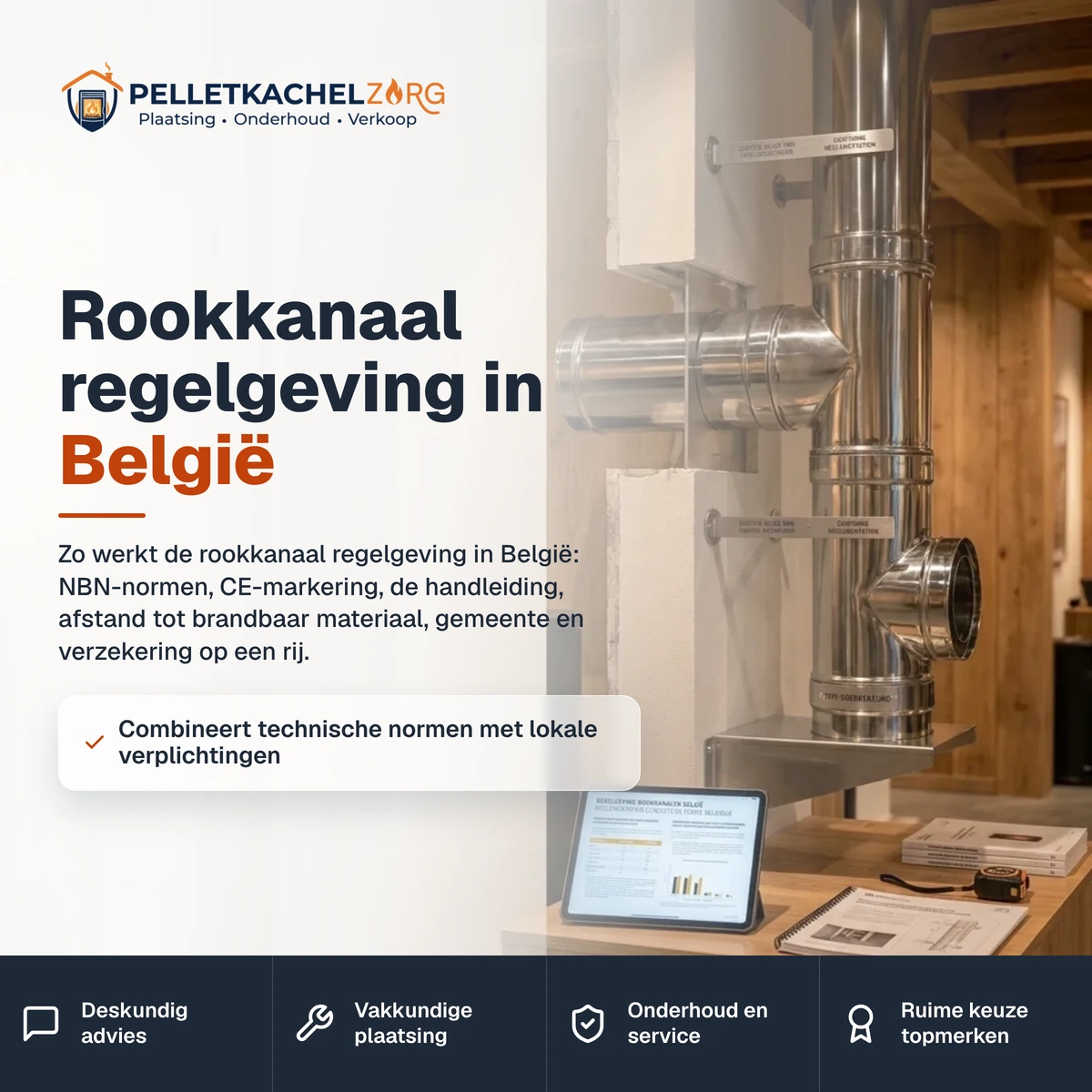
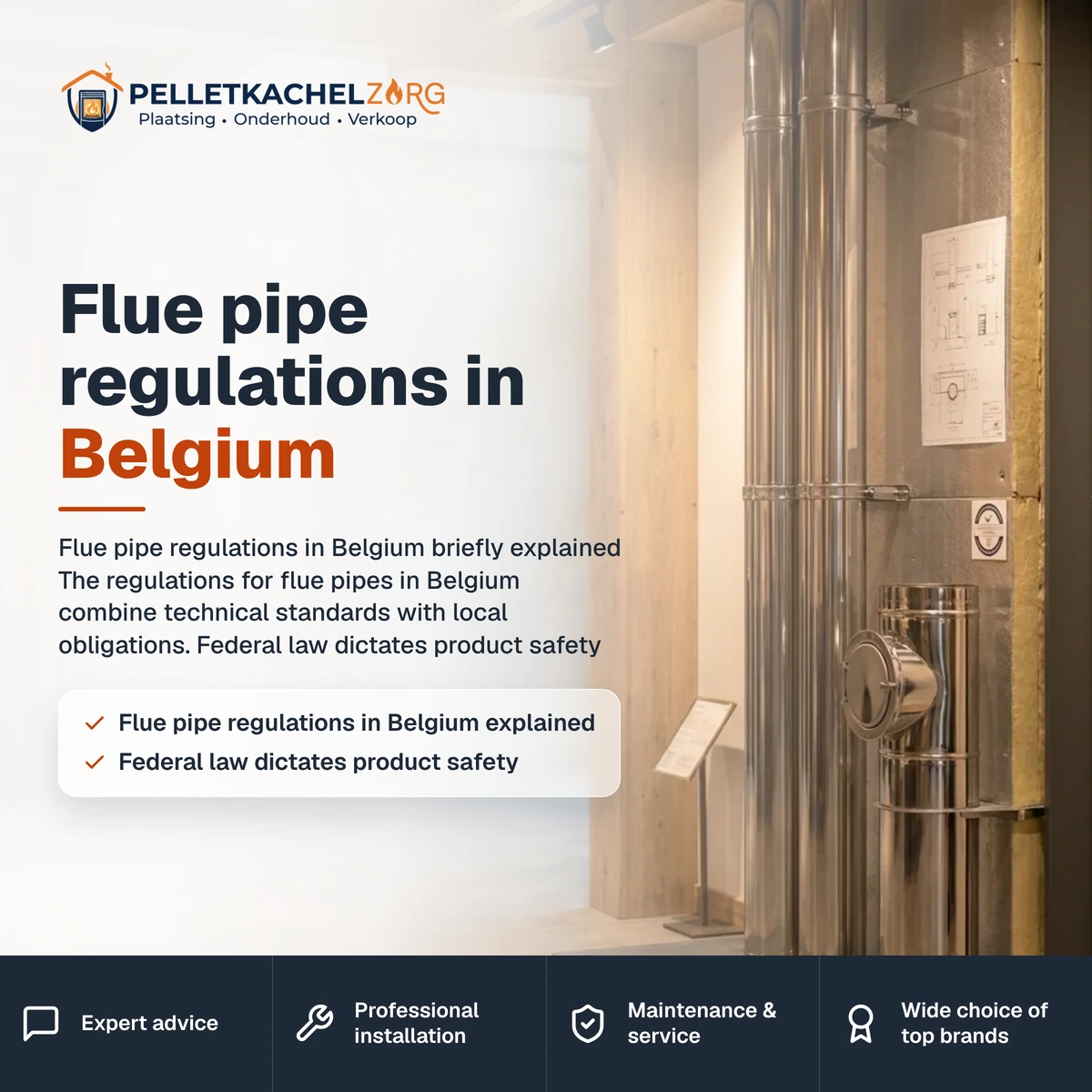
The regulations for flue pipes in Belgium combine technical standards with local obligations. Federal law dictates product safety, the regions govern construction and environmental rules, and your municipality and insurance company impose additional requirements.
Always follow the strictest requirement to ensure compliance with standards, local authorities, and your insurance.
The flue pipe regulations in Belgium rely on a multi-layered framework, as no single authority determines everything. Technical requirements are based on NBN standards and the CE marking of the materials. Practical obligations come from your region, municipality, and fire insurance company. These layers complement each other to ensure your installation is safe and fully insured. Below, you will find out how everything connects.
It is important to know that this flue pipe legislation is not just one single law. It is a combination of European product rules, national standards, regional building codes, and your insurance policy conditions. Understanding this difference helps avoid technical errors and administrative surprises.
It helps to ask two separate questions. First, what do the technical standards require for the materials and installation? Second, what proof or permissions do your municipality and insurance company ask for? The block below compares both sides.
Always adhere to the strictest rule, because standards, municipal laws, and insurance policies complement rather than replace each other.
Knowledge of the standards
We work according to the applicable NBN standards for flue gas discharge. You get an installation that is technically sound and verifiable.
Correct installation
We install every flue pipe strictly according to the stove and material manuals. This keeps your insurance coverage intact.
Clear advice
We explain exactly what steps your municipality or region requires. You will know in advance what needs to be reported or inspected.
The flue pipe rules in Belgium can be boiled down to a handful of fixed principles. Following these points covers most risks, regardless of the region or municipality where your home is located.
The federal government sets product safety rules via CE marking and European standards.
The regions regulate construction, energy, and environmental issues, meaning rules differ in Flanders, Wallonia, and Brussels.
Your municipality may require a notification or permit for visible changes to the facade or roof.
The NBN standards describe how to safely discharge flue gases and what safety distances apply.
Your insurer links coverage to proper installation and a valid maintenance certificate.
Use the following checklist as a starting point before using a stove or flue pipe. Each point refers to a specific requirement from the standards or a condition set by local authorities or insurers.
Flue pipe with CE marking and suitable temperature class
Installation according to the stove and flue pipe manuals
Clearance from wood, plaster, and insulation respected
Chimney outlet free of obstacles and at a sufficient height
Required notifications or permits checked with the municipality in advance
Maintenance or sweeping certificate kept for insurance purposes
Technical standards and local obligations are two distinct layers. The standards determine the technical specifications of your flue pipe, from diameter to temperature class and clearance from combustible materials. These requirements apply identically across the entire country.
The CE marking plays a key role here. A certified flue pipe indicates its temperature class, pressure class, and soot fire resistance. This confirms the material is tested for your stove's specific flue gases. Always combine components from the same system, as mixing parts voids the certification.
The installation manual is just as important. The manufacturer translates the standards into concrete clearances to combustible materials and the correct connections for your appliance. The chimney outlet is also included here, as the height and free space around the exit largely dictate the draft and safety.
Read more details about this technical aspect in our explanation of the NBN standards for flue gas discharge and in our overview of flue gas discharge for pellet stoves.
Regulations vary per region and municipality because building and environmental matters are regional competencies. Flanders, Wallonia, and Brussels each maintain their own construction and energy frameworks. Moreover, your municipality can impose extra requirements for facades, roofs, and chimney outlets.
Fire insurance adds another distinct layer. Your policy usually demands a correct installation and a valid maintenance or sweeping certificate. Following a chimney fire or smoke damage, the insurer will check if everything was executed according to standards and the manual. Without this proof, you risk receiving lower or denied compensation.
Never rely on general assumptions, but verify your plans locally. For an up-to-date overview, read about the flue pipe rules for 2026 and explore the broader explanation of the rules for flue pipes in Belgium. If you have doubts about a specific job, it is best to check when you need a professional for your flue pipe.
If you want certainty that your flue pipe meets all standards and local conditions, we are happy to review it with you. Request a free quote or advice.
We are happy to help. Contact us without obligation.
The legislation is layered. The federal government sets product safety rules via CE marking, the regions regulate construction and environmental matters, and your municipality can require a permit. Insurers also add their own conditions.
NBN standards serve as the technical benchmark for safe flue gas discharge. They are often considered binding through building codes and insurance policies. Always follow them, even if not explicitly written into law.
That depends on your municipality and region. Visible changes to a facade or roof sometimes require notification or an urban planning check. Always consult your municipality beforehand, as local rules vary.
Your insurer typically wants to see a properly installed flue pipe and a valid maintenance or sweeping certificate. In the event of damage, they verify if standards and manuals were followed. Always keep your documents safe.