
Flue Expertise
We install and inspect flues daily in Limburg and surrounding areas. This ensures the critical part of your installation is correct.
Have a pellet stove installed with the utmost care? Get a quote in 5 steps.
Have a pellet stove installed with the utmost care? Get a quote in 5 steps.
Have a pellet stove installed with the utmost care? Get a quote in 5 steps.

 Written by Dries Nijs4 min read
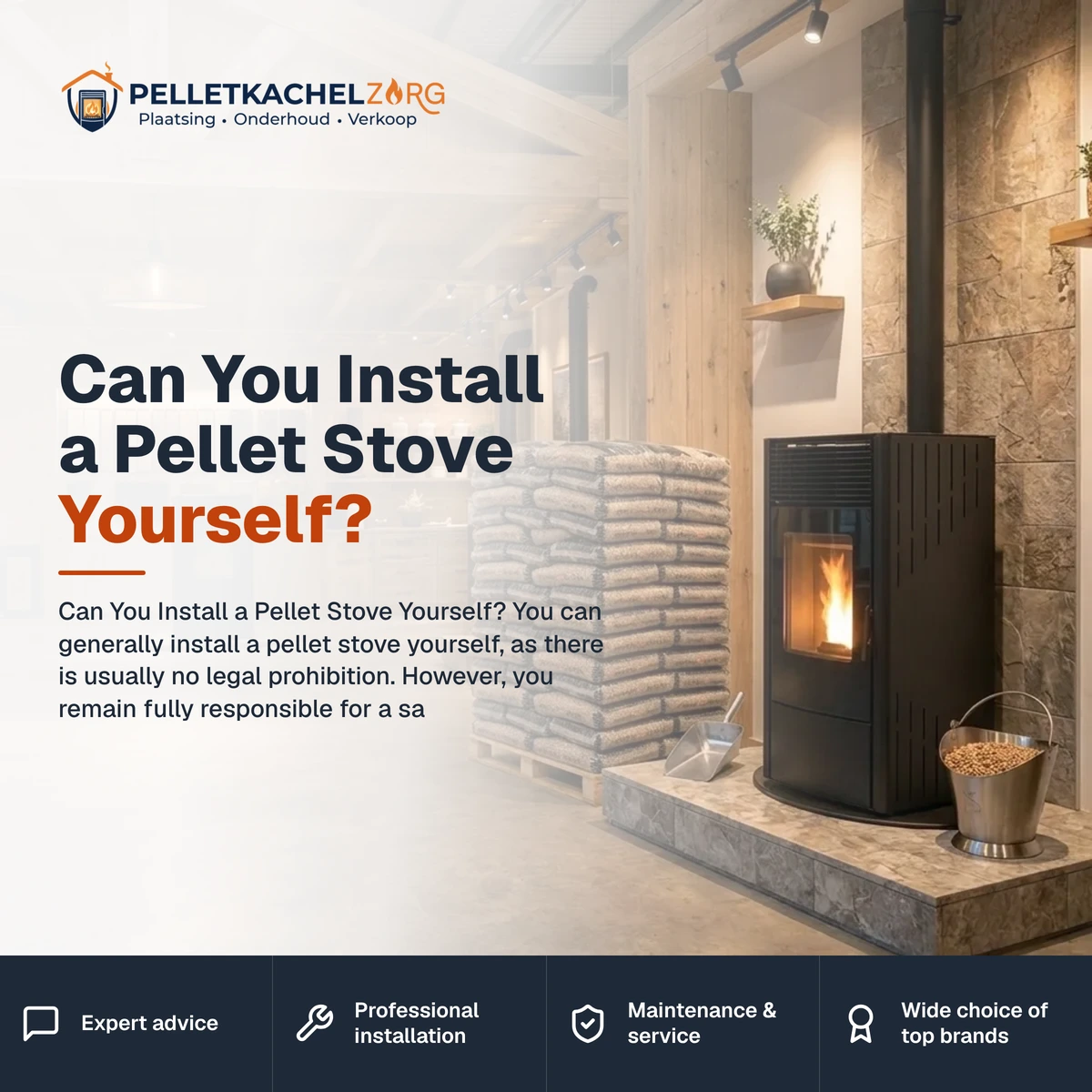
You can generally install a pellet stove yourself, as there is usually no legal prohibition. However, you remain fully responsible for a safe and compliant installation.
You can often set up the appliance yourself, but it's better to have a professional handle the flue and inspection, especially for insurance purposes.
You can generally install a pellet stove yourself, and the answer to the question can you install a pellet stove yourself is usually yes, as there is typically no legal prohibition. There is rarely a general rule prohibiting individuals from doing so, but you remain fully responsible for a safe and compliant installation. This means you must adhere to the manufacturer's instructions, applicable standards, and your insurer's requirements, even if you are not a certified installer. Setting up the appliance and connecting it to an existing, correct channel is achievable for a handy DIYer. However, the flue, penetrations, and final inspection are critical points, as mistakes there can be dangerous and costly. This article outlines what you can reasonably do yourself, where the limits are, and when it's better to hire a professional.
Rule of thumb: you can often place the appliance yourself, but leave the flue and inspection to a professional, as that's where the safety and insurance risks lie.
Flue Expertise
We install and inspect flues daily in Limburg and surrounding areas. This ensures the critical part of your installation is correct.
Compliance Certificate with Installation
After a correct installation, you receive proof of a compliant setup. This helps with your insurance and potential grants.
Inspection and Safe Distances
We check diameter, draft, and distance to combustible materials according to standards. You can heat safely and without surprises.
A DIY pellet stove installation doesn't start with the appliance, but with an honest assessment of your situation and the existing channel. Follow the steps below in order and don't skip the inspection and certification.
First, check if there is a suitable existing flue that matches your pellet stove in terms of diameter, material, and draft.
Read the manufacturer's manual thoroughly, as it is binding for the connection size, allowed setups, and safe distances.
Place the appliance on a stable, non-combustible surface and respect the prescribed distance to combustible materials as specified by the manufacturer.
Connect the stove to the flue with the correct seals and provide a condensate trap where necessary.
After installation, test the draft and operation, and check for any smoke or odor leaks at the appliance or connections.
Have the entire setup inspected and certified if necessary, so you have proof of correct installation.
You need to install a new flue or drill through the roof or facade
The existing chimney is old, cracked, or unsuitable for a pellet stove
You are unsure about the diameter, draft, or safe distances
You cannot find reliable proof that the channel is compliant
Your grant or insurance requires installation by a certified installer
The flue determines whether your pellet stove operates safely and efficiently, and this is where DIYers often encounter problems. A pellet stove has a lower flue gas temperature than a traditional wood stove, making condensation and moisture more significant factors, and the construction of the channel is crucial. An incorrect diameter, insufficient draft, missing condensate trap, or poorly executed penetration can lead to smoke backflow, soot formation, or, in the worst case, a chimney fire. An existing chimney is not always immediately suitable, as sometimes a stainless steel liner is needed to make the channel fit and smoke-tight. If you want to handle this part yourself, first carefully read what to consider when installing a flue yourself, as the standard and manufacturer determine the connection size and construction. If you're unsure about the draft, materials, or a penetration through a combustible wall, that's the time to call in a professional. This ensures the exhaust meets standards and you can provide proof of correct installation later.
A permit is usually not required for the appliance itself, but the flue deserves attention, especially when creating a new penetration through the roof or facade. In Belgium, regulations vary by region and sometimes by municipality, and for the flue, relevant NBN standards apply, while in the Netherlands, it can vary by municipality through the zoning plan or building regulations. Always check with your municipality and see if a permit is required for your situation before making a penetration. Also, your fire insurance matters, as with a self-installed setup, the insurer may ask for proof of correct, compliant installation after damage, and a compliance certificate from a professional helps with that. Pay attention to grant conditions, as some grants explicitly require installation by a certified installer. In any case, keep invoices, product certificates, and inspection proof, so you can present a complete file if needed.
In summary, you can often install the appliance yourself, but leave the flue, penetrations, and inspection to a specialist if in doubt, ensuring your installation is safe and insured. A good compromise is to install the appliance yourself and have only the flue and final inspection done by a professional, keeping costs manageable while ensuring a compliant exhaust. Want certainty about your specific situation? Request a free quote or advice and feel free to discuss what you can do yourself and what we can handle for you.
We are happy to help. Contact us without obligation.
Yes, in most cases you can install a pellet stove yourself, as there is usually no legal prohibition. However, you remain fully responsible for a safe, compliant installation. You can often set up the appliance yourself, but it's better to leave the flue and inspection to a professional.
A compliance certificate is not always legally required, but it is highly recommended. In case of damage, your insurer may ask for proof of correct installation, and a certificate from a professional shows that your installation is compliant.
Your coverage generally remains intact, but in case of damage, the insurer may ask for proof of a correct, compliant installation. If you cannot provide that, you risk disputes or reduced compensation. A compliance certificate and an inspected flue reduce that risk.
A permit is usually not required for the appliance itself, but for the flue or a new penetration, it may be different. Regulations vary by region and municipality, so always check with your municipality before starting.