

Knowledge of fuel and stove
We know which pellets burn clean in your specific stove type. You get advice perfectly matched to your appliance and usage.
Have a pellet stove installed with the utmost care? Get a quote in 5 steps.
Have a pellet stove installed with the utmost care? Get a quote in 5 steps.
Have a pellet stove installed with the utmost care? Get a quote in 5 steps.

 Written by Dries Nijs4 min read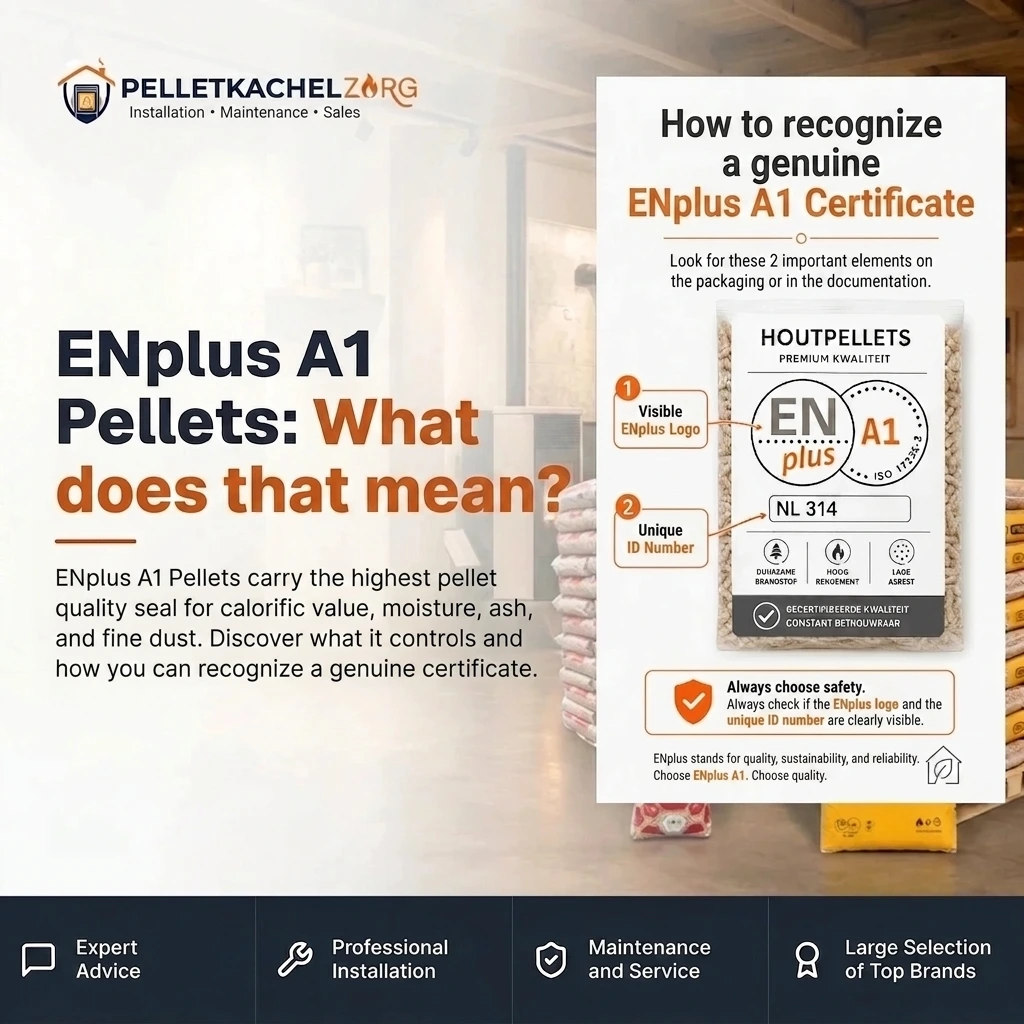
ENplus A1 is the international quality certification for wood pellets in the highest domestic class.
It guarantees strict requirements for heating value, moisture, ash, diameter, and fine dust. This ensures you buy verifiable quality.
Look for the ENplus A1 logo and the ID number; together, they make the quality verifiable.
ENplus A1 pellets are wood pellets carrying the international ENplus quality mark in the highest domestic class, A1. That certification guarantees the pellets meet strict standards for heating value, ash content, moisture content, diameter, and fine dust. For you, this means a cleaner burn, less maintenance, and a predictable yield in your stove. In this article, you will learn exactly what the ENplus pellet certification controls and how to recognize a genuine certificate.
The biggest difference lies in certainty. With ENplus A1, you know exactly what you are getting, whereas with uncertified pellets, you do not. The comparison below places the most important points side by side.
Controlled heating value and low moisture content
Low ash and minimal fine dust in the bag
A fixed certificate number on the packaging
Verifiable origin and production under supervision
Unknown wood type and varying composition
More moisture, more ash, and often more grit
No ID number to verify the quality
Greater risk of malfunctions and rapid fouling
Choose pellets with a visible ENplus A1 logo and a valid ID number, so you buy quality you can truly verify.
Knowledge of fuel and stove
We know which pellets burn clean in your specific stove type. You get advice perfectly matched to your appliance and usage.
Correct and safe installation
Good fuel works best with a proper flue. We install and inspect according to the applicable standards.
Honest and verifiable advice
We explain choices clearly, without sales talk. You always know why a solution fits your needs.
The certification doesn't just look at a single metric, but at a combination of properties. These standards are checked during both production and trade. Here are the key elements it covers.
Heating value: a high and stable calorific value, ensuring your stove delivers predictable heat.
Moisture content: capped at around ten percent, because dry material burns cleaner and more efficiently.
Ash content: a low ash content, which means less residue and less frequent cleaning.
Diameter and length: six millimeter pellets with a consistent length, suited for most domestic stoves.
Fine dust: minimal dust in the bag, reducing the risk of jams in the pellet feed.
Origin and sustainability: verified raw materials and production under independent supervision.
This combination explains why A1 pellets burn so reliably. Each point may seem small on its own, but together they determine the efficiency, the cleanliness of the burn, and the lifespan of your stove.
A low moisture content is crucial here. Damp material wastes energy evaporating the water, dropping efficiency and causing more buildup. Dry, dense pellets provide more heat per bag and keep your flue gases cleaner.
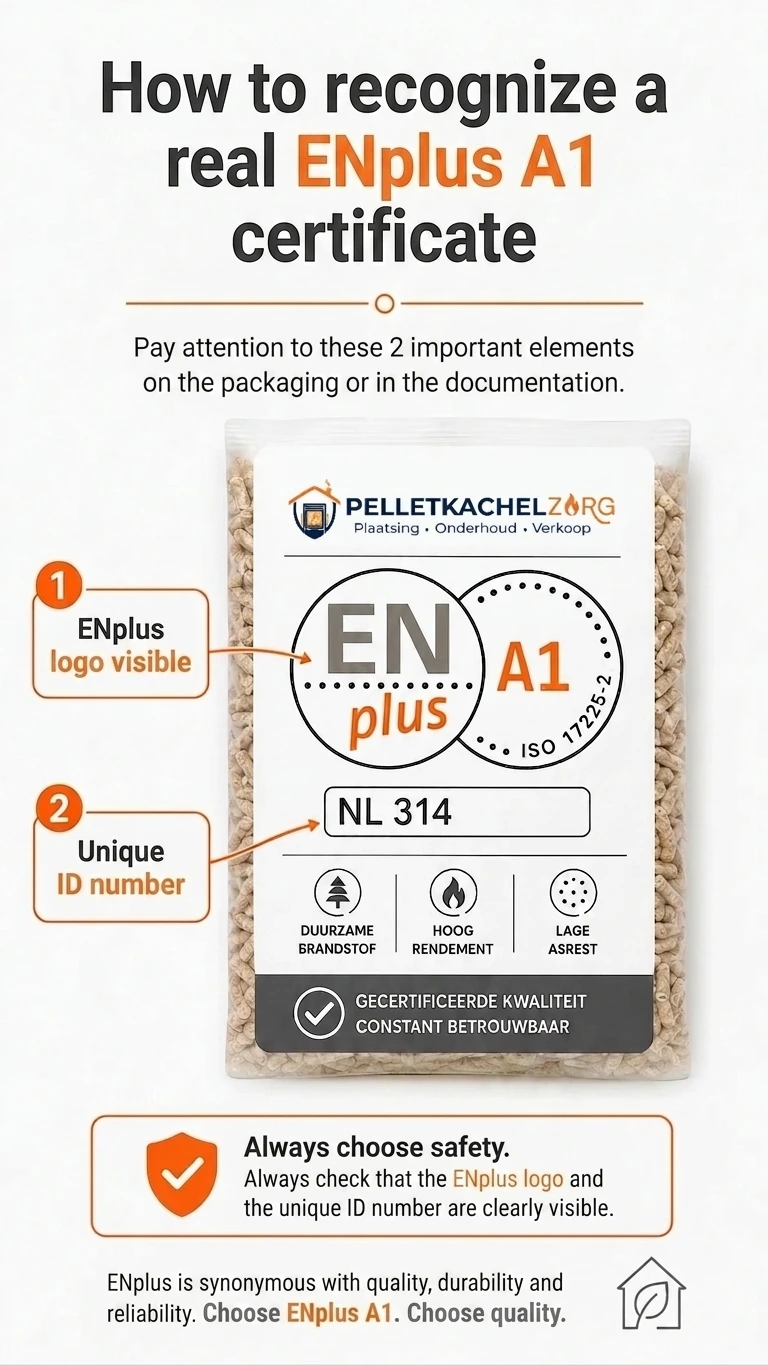
A quality mark is only valuable if it is authentic.
Always run through these points before buying a pallet or a batch of bags.
A visible ENplus logo clearly stating A1 on the bag
A unique ID number, typically ENplus followed by a numeric code
A clear mention of the diameter, usually six millimeters
A tightly sealed bag without much dust at the bottom
When in doubt: check the ID number in the official ENplus register
The quality mark simplifies your choice because it allows you to compare brands based on hard data rather than promises. You don't need a lab analysis, you just check the logo and the ID number. For more background, read our article on which pellets are best for your pellet stove.
This reduces the risk of making a bad purchase. Especially if you buy pellets by the pallet, consistent quality is paramount. If you also want to keep an eye on costs, read how to buy the best pellets based on quality and price, without sacrificing performance.
An added benefit is reduced maintenance. Because A1 pellets produce very little ash and fine dust, your firebox stays cleaner for longer and the stove performs consistently throughout the heating season.
The certification pays off practically as well. A uniform diameter and low dust mean your stove's auger feeds the pellets evenly. That results in a steady flame, fewer error codes, and a quiet heating season free of surprises.
ENplus has three classes, and A1 is the cleanest option for domestic use. A2 allows for slightly more ash and a marginally higher moisture content, often due to a different wood mix. Class B is intended for industrial applications and has no place in a regular living room stove.
For most households, A1 is the safest bet. A2 can work in stoves designed for it, but you risk more residue. Always follow your appliance's manual, as that remains the definitive guide.
Color alone tells you little about the class. You can read why darker doesn't automatically mean worse in the difference between white and brown pellets. Storage is also critical, as even A1 pellets absorb moisture. That's why you should check out how to keep wood pellets dry and consider how many pellets a pellet stove uses per day.
A final point: the logo should be on the bag, but always verify the ID number. A logo without a valid number offers no real guarantee. Loose bags without clear branding or with a lot of dust at the bottom are best avoided, even if the price is tempting.
If you're torn between brands or between A1 and A2, it's better to get expert advice than to guess. A quick check of the certification and your stove's manual prevents unnecessary malfunctions and extra maintenance costs.
Want certainty about the right fuel or a clean, safe installation? Request a free quote or advice, and we will gladly help you figure it out.

We are happy to help. Contact us without obligation.
Yes, A1 is the cleanest domestic class. A1 has a lower ash content and stricter requirements than A2, resulting in fewer residues and less cleaning. A2 remains usable, but A1 generally provides a cleaner combustion.
The ID number is usually located near the ENplus A1 logo on the packaging. It consists of ENplus followed by a numeric code and refers to the producer or trader. Without that number, the certification is not verifiable.
You can use them in almost any domestic pellet stove, as six millimeter A1 pellets are the standard. Always check your stove's manual for the recommended diameter and fuel, as this is binding.
Not automatically. A higher price guarantees nothing without a quality mark. Look for the ENplus A1 logo and the ID number, because they demonstrate verified quality much better than the price tag alone.


