
Advice from Pellet Specialists
We work daily with pellet stoves and chimneys in the region. You get practical advice based on experience, not sales talk.
Have a pellet stove installed with the utmost care? Get a quote in 5 steps.
Have a pellet stove installed with the utmost care? Get a quote in 5 steps.
Have a pellet stove installed with the utmost care? Get a quote in 5 steps.

 Written by Dries Nijs4 min read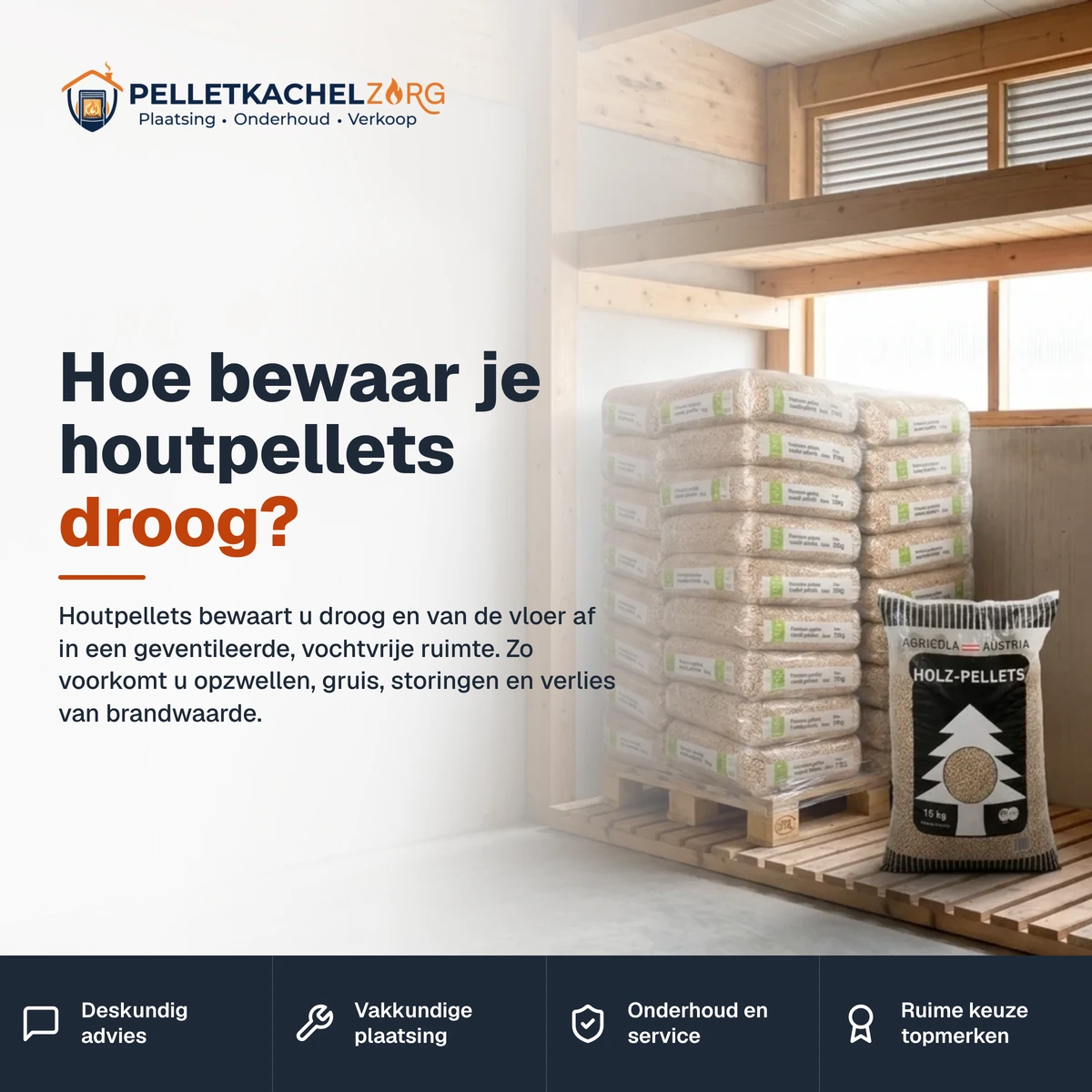
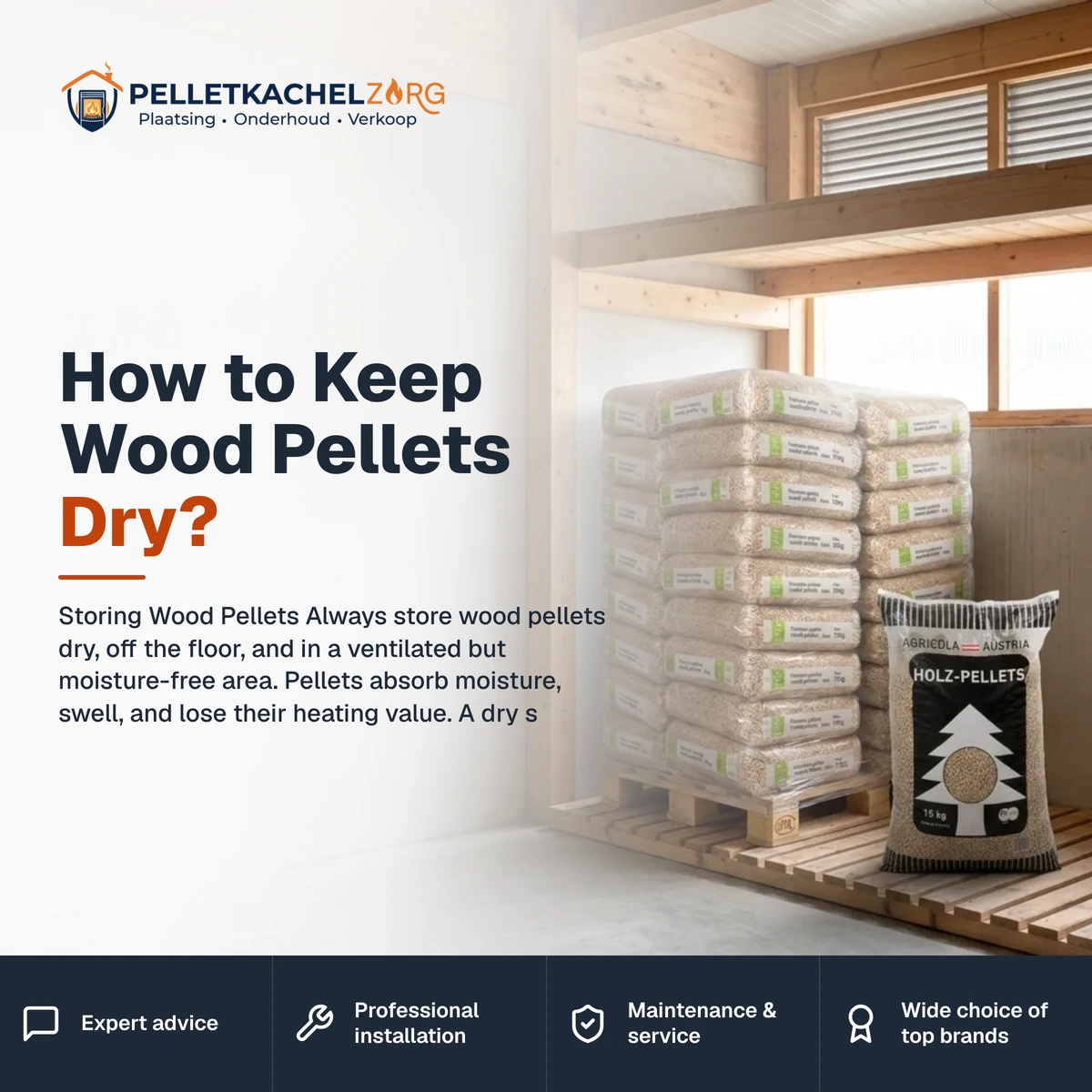
Always store wood pellets dry, off the floor, and in a ventilated but moisture-free area. Pellets absorb moisture, swell, and lose their heating value. A dry storage keeps them hard and ready to burn.
Never buy more pellets than you can store dry.
Always store wood pellets dry and off the floor, in a ventilated but moisture-free area. Pellets are compressed sawdust without glue, which makes them absorb moisture like a sponge. Once they get damp, they swell, crumble into dust, and lose some of their combustion value. A dry storage keeps your pellets hard, intact, and ready to burn, reducing malfunctions, ash, and waste.
It may seem like a small detail, but the storage location affects how well your stove performs. Good pellets left damp for months lose the very qualities you pay for. Taking storage seriously means getting more heat from each bag and requiring less maintenance.
As a rule of thumb, store pellets like you store flour: cool, dry, and well-sealed.
Advice from Pellet Specialists
We work daily with pellet stoves and chimneys in the region. You get practical advice based on experience, not sales talk.
Quality Above All
We install and maintain installations according to current standards. This ensures your stove burns safely, efficiently, and with minimal malfunctions.
Fast Service Nearby
In case of a malfunction or question, we are quickly available in your area. You don't have to wait days for help with your stove.
With a few simple habits, you can keep your supply in top shape all season long. These steps work for both individual bags and entire pallets.
Place the bags on a pallet or plank, never directly on concrete or tiles, as moisture can seep up.
Keep the bags sealed and reseal an opened bag with tape.
Choose a dry, ventilated indoor space, like a storage room, utility room, or dry garage.
Avoid a damp basement, a garden shed with condensation, or a spot against a cold exterior wall.
Do not store pellets outside on the ground, even under a tarp, as condensation can form underneath.
Place a moisture barrier between the floor and the pallet if the surface feels cold.
Use older bags first to keep your supply fresh and ready to burn.
Moisture can slowly creep in, often without you noticing right away. Therefore, check these points occasionally, especially if the bags have been in storage for a while.
The pellets feel soft or crumbly instead of hard and smooth
There's a lot of fine dust or powder at the bottom of the bag
The pellets smell musty or look dull and swollen
The stove suddenly produces more ash, more soot, or has more frequent malfunctions
The bags feel damp or have condensation inside
If you recognize one or more of these signs, move the supply to a dry place and use the affected bags first. Severely crumbled dust should not be burned, as it unnecessarily pollutes your stove.
Moist pellets burn poorly and strain your entire installation. They swell and break down into dust, clogging the feed screw and causing the stove to receive insufficient fuel.
This dust and powder accumulate in the hopper and feed screw. The stove then doses irregularly, resulting in an unstable flame and sometimes complete shutdown.
This often leads to malfunctions. If the stove suddenly stops feeding fuel, read why a pellet stove is not feeding pellets.
Damp pellets also contain more water, which must evaporate first. This reduces heat, increases ash formation, and causes your stove to get dirty faster. You end up burning more bags to achieve the same indoor temperature.
Extra ash and soot also mean more frequent emptying of the fire pot, cleaning the glass, and cleaning the heat exchanger. Over time, this can shorten the lifespan of parts.
Good, dry fuel starts with the right choice. Therefore, also see which pellets are best for your pellet stove to start with a solid foundation.
Never store more pellets than your dry space can handle. A full pallet is economical, but only if you can keep all the bags moisture-free. A pile of bags in a damp corner will ultimately cost you more than you save.
Therefore, first measure your dry storage space and adjust your purchase accordingly. This way, you can buy with peace of mind, instead of stuffing pellets somewhere they will absorb moisture.
If you're unsure about the quantity, weigh storage space against price through buying pellets by the bag or by the pallet.
A good purchase and dry storage go hand in hand. Those who have both in order can burn with consistent quality all season without surprises.
Your annual supply depends on your burning habits. You can estimate with how many pellets a pellet stove uses per day. This way, you buy enough for the season without bags waiting damp for months.
Also pay attention to the quality you purchase, as good pellets store better and burn cleaner. Feel free to compare the best pellets on quality and price.
Want to make sure your stove and chimney are ready for the heating season? Request a quote or advice without obligation.
We are happy to help. Contact us without obligation.
Pellets don't really spoil, but they lose quality once they absorb moisture. When stored dry, they remain good for years. Moist pellets crumble and burn poorly. Store them dry and use older bags first.
Yes, a dry garage is fine for storing pellets, as long as there is no rising moisture or condensation. Place the bags on a pallet, off the floor, and keep them sealed. A damp, unheated garage against a cold exterior wall is less suitable.
Wood pellets stored dry can easily last several years. The key is moisture-free storage, as moisture is the only real enemy. Once pellets become damp, their heating value quickly decreases.
Slightly damp pellets that still feel hard can sometimes be burned, but crumbled or swollen pellets should not be used. They produce more ash, more malfunctions, and lower efficiency. Severely affected dust should be discarded.