
Tailored advice
We assess on-site whether the roof or the wall is the better exit. You get a choice that suits your home and appliance.
Have a pellet stove installed with the utmost care? Get a quote in 5 steps.
Have a pellet stove installed with the utmost care? Get a quote in 5 steps.
Have a pellet stove installed with the utmost care? Get a quote in 5 steps.

 Written by Dries Nijs4 min read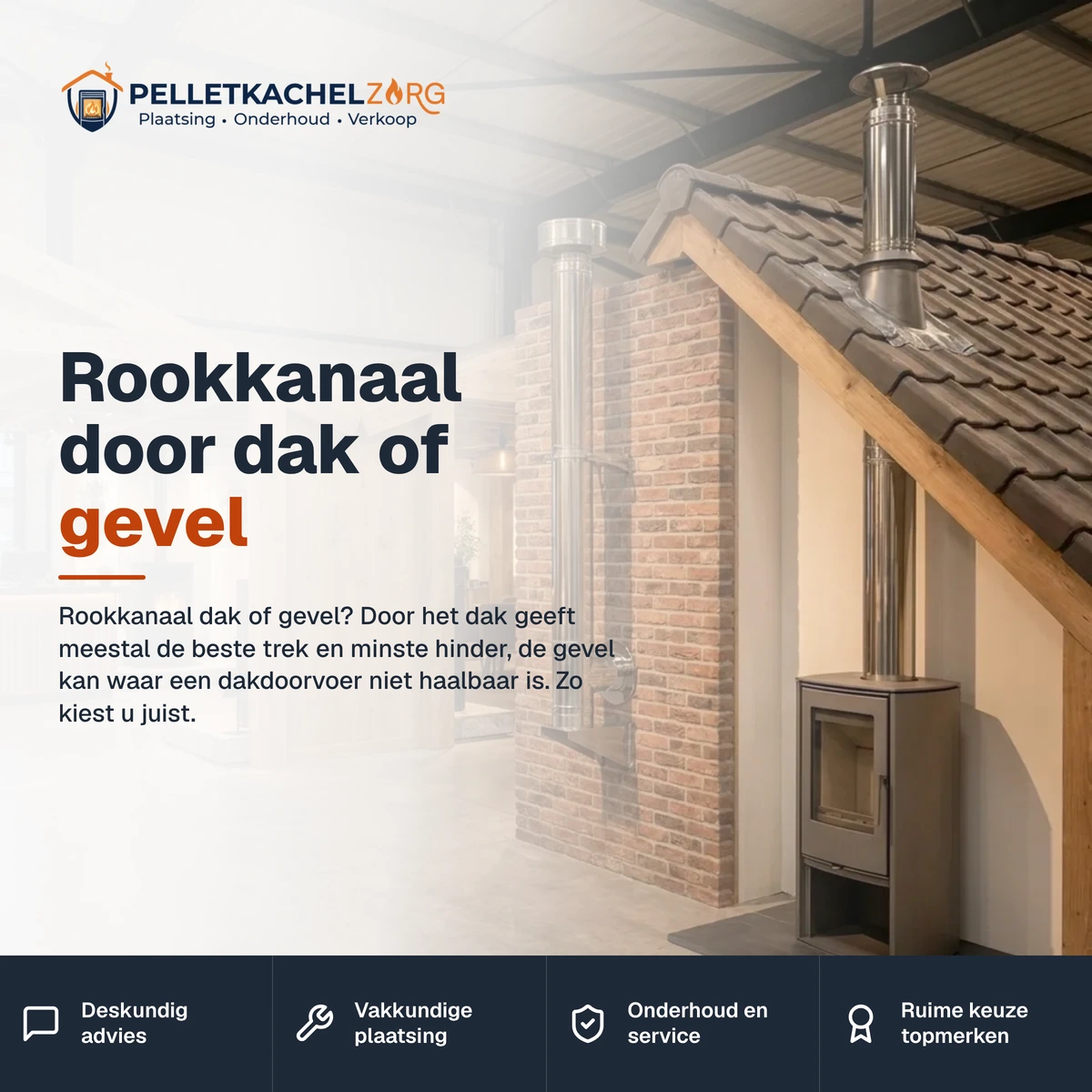
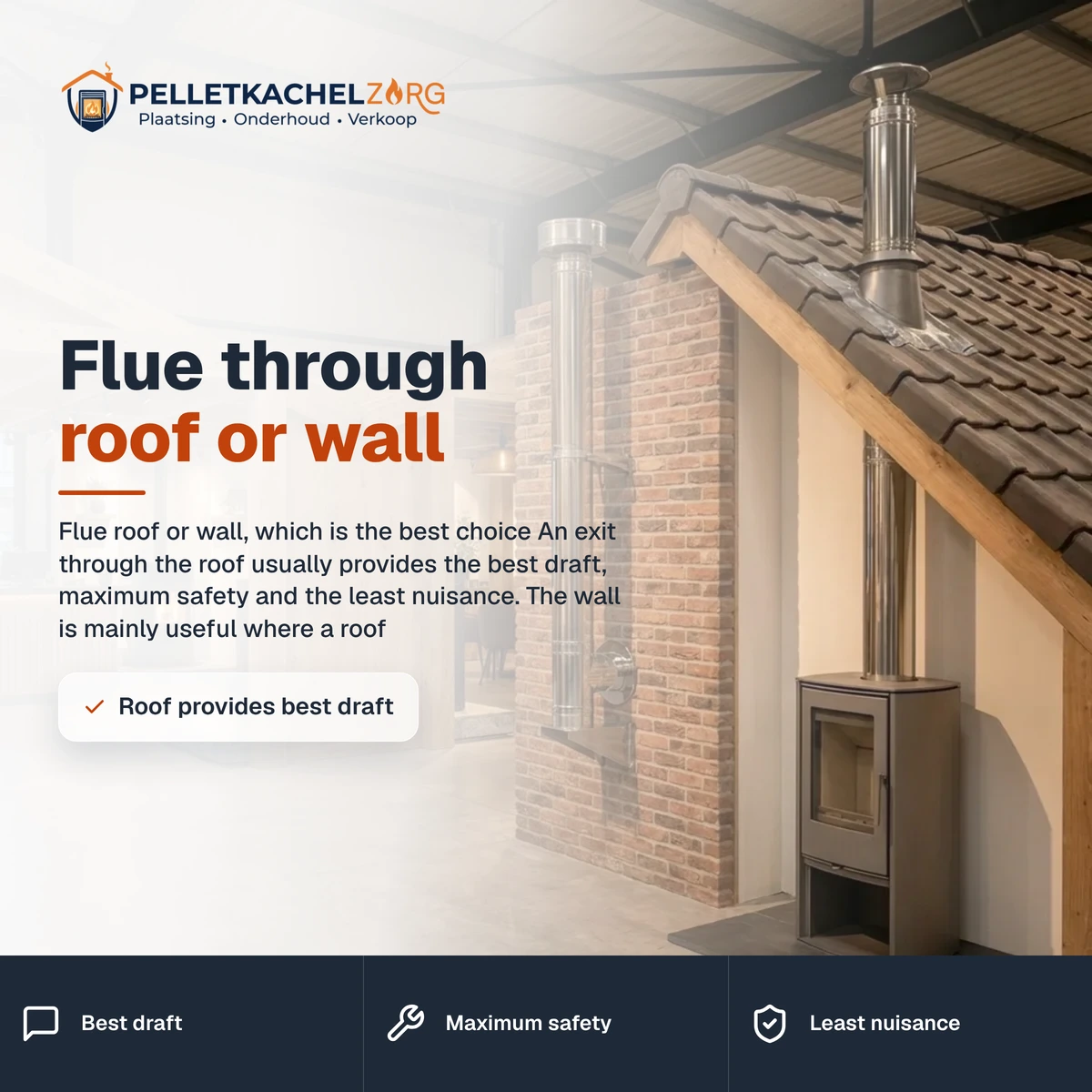
An exit through the roof usually provides the best draft, maximum safety and the least nuisance. The wall is mainly useful where a roof passage is not feasible, but it more often clashes with requirements regarding height, distance and smell.
If the roof is an option, choose the roof. Only use the wall as a last resort.
When choosing between a roof or wall flue, an exit through the roof usually gives the best draft, the most safety and the least nuisance. A wall exit is primarily a solution where a roof passage is practically unfeasible. The wall variant more frequently faces issues with regulations around height, distance to windows and neighbors. Odor nuisance also plays a role more quickly. Below you can read which passage choice is wise in which situation.
If a roof exit is technically possible, choose the roof, and only use the wall if the roof is truly not an option.
Tailored advice
We assess on-site whether the roof or the wall is the better exit. You get a choice that suits your home and appliance.
Safe exhaust first
Draft, distance and materials are calculated correctly. This way you prevent smoke nuisance, odor complaints and problems later on.
According to regulations
We take the requirements of the local council, region and manufacturer into account. The manual and local rules remain binding.
First, check if a roof penetration is possible, as this generally offers the safest and most stable flue exhaust.
Evaluate your building situation. For apartments, extensions, or listed buildings, an external wall exit might be your only option.
Consider the chimney draft. A higher termination point above the roof ridge works much more reliably than a low wall exit.
Check your surroundings. Keep a safe distance from windows, skylights, ventilation inlets, and your neighbors' property lines.
Keep potential odor issues in mind. While a wall exit might be permitted for a pellet stove with an exhaust fan, a roof flue is usually highly recommended.
Weigh the costs. A short wall flue might be cheaper upfront, but making the wrong choice can lead to expensive modifications or complaints down the line.
Is a roof penetration technically and structurally feasible?
Is the termination point far enough away from windows, neighbors, and air inlets?
Does the chimney reach high enough to ensure a good and stable draft?
Is your stove suitable for a wall exit, considering forced ventilation versus natural draft?
What do your local authorities and your insurance company say about the chosen flue exit?
Is twin wall insulated flue pipe required for the exterior section?
A roof terminal generally wins because smoke is released higher up and further away from walls and windows. A tall, vertical chimney draws better and is much less sensitive to wind. This ensures a stable draft and minimizes smoke nuisance.
With a wall exit, flue gases are released much lower and closer to the property. The wind can easily push these fumes back towards windows or patios. As a result, you are more likely to notice smells, and adverse winds might even push smoke indoors. A roof flue carries the gases far away from your living space.
A pellet stove features an exhaust fan that forces the flue gases out. This means a short wall flue is often technically feasible. However, a roof exit is still highly recommended in most cases, as it makes your stove less dependent on wind conditions and safe distances to windows and neighbors.
Maintenance is another crucial factor. A roof chimney is usually straight and easy to sweep from the top down. A wall flue with external bends requires extra attention during chimney sweeping and when managing condensation.
The choice between a roof and a wall goes beyond just the exhaust method. You can read more about this decision in our guide on choosing a flue through the roof or through the wall. Also, the exterior section often requires insulated pipes, so be sure to check when a twin wall insulated flue is required.
Regulations regarding flue terminations vary significantly by local authority and region. A wall exit permitted in one area might be restricted or completely banned elsewhere. Never make absolute legal assumptions on your own.
Always consider your neighbors and the potential for nuisance. A wall exit placed near a neighbor's garden, patio, or window is much more likely to cause complaints. Ensuring a safe distance and a smart direction for the flue terminal will prevent a lot of disputes later on.
During a renovation, take the existing layout into account. Sometimes there is an existing chimney you can reuse for a roof exit, which makes the choice incredibly easy. If there is no chimney, the feasibility of installing a new roof penetration usually determines whether a wall exit becomes the backup plan.
Finally, your home insurance plays a major role. A properly installed and certified flue will protect you in the event of damage. A termination point that does not comply with regulations or the stove's manual can lead to serious disputes if a problem occurs. The manufacturer's manual and local building codes are always the binding authorities.
Always verify your plans against local regulations and applicable standards for smoke extraction. You can read more about this in our guide on flue regulations in Belgium. If you are still considering a wall exit, be sure to check the key considerations for a flue installed along the facade.
If you are unsure about feasibility or chimney draft, have your situation assessed beforehand. To find out when to call in an expert, read our article on when you need a professional for your flue system.
Are you torn between a roof and a wall exit for your flue? We will gladly assess your situation and help you choose the safest exhaust method. Request a free quote or advice today.
We are happy to help. Contact us without obligation.
Usually, yes. An exit above the ridge generally provides the strongest, most stable draft and the least nuisance for yourself and the neighbors. The wall is mainly a solution where a roof passage is practically unfeasible.
This is possible in some cases, because a pellet stove with a flue gas fan has a forced draft. However, the roof is still often recommended, and the local council, region or manufacturer can restrict or prohibit a wall exhaust.
This varies per situation and per local regulation, so always have it checked. An exit too close to windows, ventilation inlets or the neighbors quickly causes odor and smoke nuisance and sometimes complaints.
You do not choose entirely freely. The building situation, the draft, the type of appliance and local rules help determine what is allowed and what is sensible. Therefore, have the choice assessed in advance by a professional.