
Certified Systems
We use double-walled flue systems that meet current standards, ensuring a safe and airtight exhaust.
Have a pellet stove installed with the utmost care? Get a quote in 5 steps.
Have a pellet stove installed with the utmost care? Get a quote in 5 steps.
Have a pellet stove installed with the utmost care? Get a quote in 5 steps.

 Written by Dries Nijs4 min read
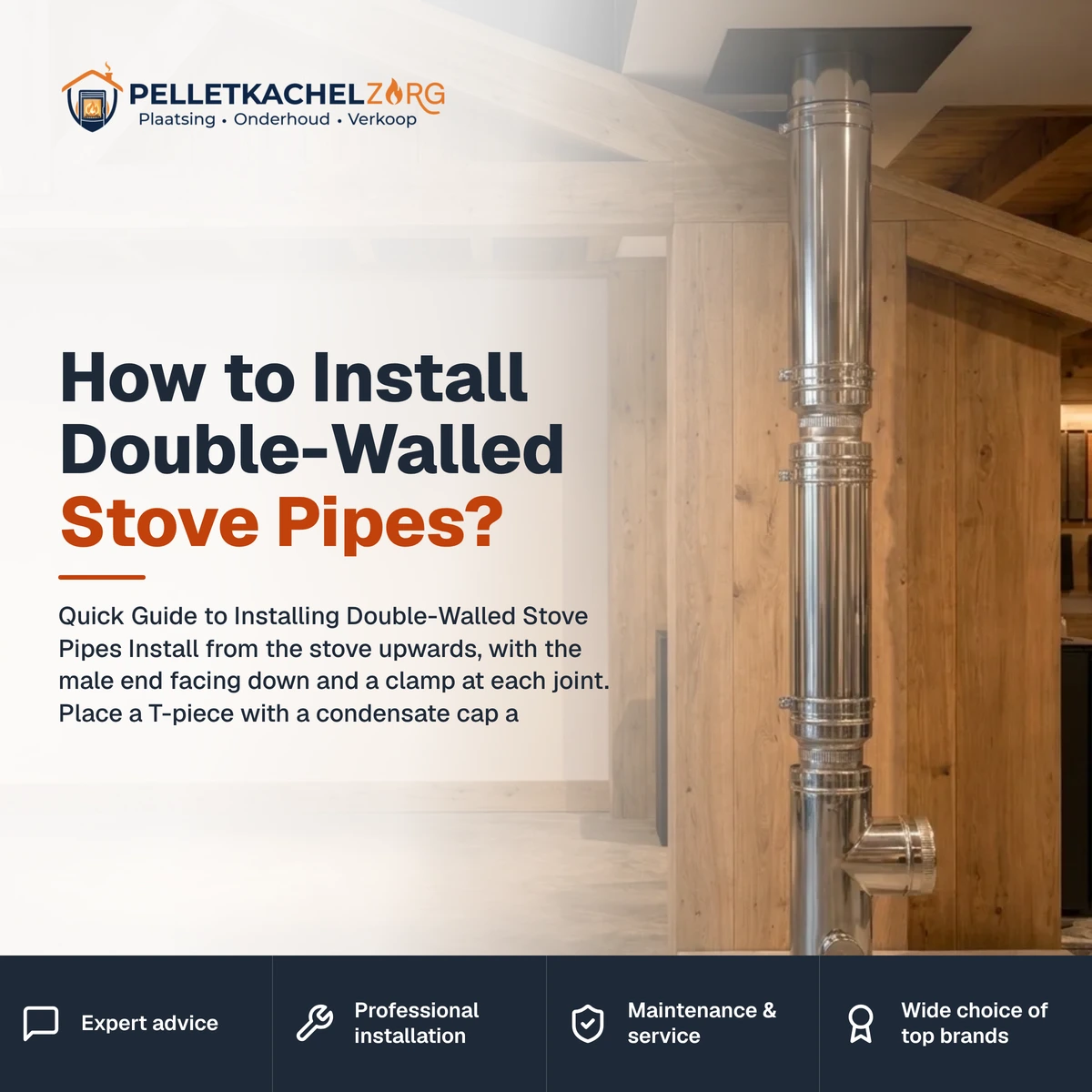
Install from the stove upwards, with the male end facing down and a clamp at each joint. Place a T-piece with a condensate cap at the bottom and bracket the channel every 1 to 2 meters.
Male end down keeps condensate inside and your flue safe.
Install a double-walled stove pipe from bottom to top, with the male end always facing down, a clamp at each joint, and a T-piece with a condensate cap at the bottom. This keeps condensate inside the channel and ensures a safe, airtight flue. Always work from the stove upwards and follow your system's manual.
A double-walled, insulated flue keeps the exhaust gases warm, improving the draft. The correct installation direction and solid fastening determine whether the system operates safely for years. Below, you'll find out when you can do this yourself and how to proceed step by step.
Before starting, take the time to map out the route and measure the heights. This way, you'll know how many pipes, bends, and brackets you need and avoid running out of materials halfway through. A well-prepared installation is faster and safer.
Rule of thumb: male end down and a clamp at each joint, keeping condensate inside and preventing disassembly.
Certified Systems
We use double-walled flue systems that meet current standards, ensuring a safe and airtight exhaust.
Installation by the Book
Our installers maintain the correct distances and certified pass-throughs, providing an installation that complies with manuals and standards.
Advice and Inspection
If you're unsure about your installation or draft, we inspect your flue and provide concrete advice. You'll know exactly where you stand.
Check the manual and determine the correct diameter and route. Prepare all parts and maintain the prescribed distance from combustible materials.
Start at the stove with a connecting piece or a transition from single to double-walled. Place a T-piece with a condensate cap at the bottom to collect condensate and soot.
Slide each pipe with the male end down into the female end of the previous pipe. This way, condensate runs inside towards the cap and not along the outside.
Secure each joint with a clamp. Ensure the clamps are tight and the seams are neatly closed.
Bracket the channel every 1 to 2 meters and at each bend or pass-through. This supports the weight and keeps everything straight.
Use a certified pass-through set with the correct distance from combustible materials for wall or roof pass-throughs. Seal according to the manual.
Finish with a roof pass-through or draft cap and check the draft. Test burn and check for any smoke or odor leaks.
Double-walled pipes in the correct diameter and lengths
T-piece with condensate cap and a connecting or transition piece
Clamps for each joint
Wall brackets or distance brackets every 1 to 2 meters
Certified wall or roof pass-through with the correct spacer
Sealing tape or heat-resistant sealant as per the manual
Drill, level, measuring tape, and safety equipment
A sturdy ladder or scaffolding for work at height
After installation, check if the entire channel is airtight. Inspect each clamp and feel for any smoke or odor leaks during a test burn. Seal pass-throughs and connections with a heat-resistant tape or sealant as prescribed by the manufacturer.
A good draft is as important as a neat installation. Sufficient height, minimal bends, and the correct diameter ensure that smoke exits smoothly. If you notice poor draft or smoke backing up, check the cap, connection, and any constrictions.
The installation direction determines whether condensate is safely collected. With a double-walled stove pipe, slide the male end downwards so moisture stays inside the channel and drains to the T-piece. If reversed, condensate leaks along the outside, causing stains or corrosion.
The condensate cap at the bottom of the T-piece should be periodically removed to drain moisture and soot. This prevents blockages or moisture from flowing back to the stove. Always place the T-piece in an easily accessible location for simple maintenance.
Choose the right size, as an incorrect diameter disrupts the draft. Check which diameter stove pipe you need. A T-piece with condensate cap at the bottom makes cleaning and draining easy.
Always follow your system's manual and applicable standards. In Belgium, the NBN standards apply to flue systems, while the Netherlands uses similar practical guidelines. Requirements vary by region and municipality, so check with your local authority or insurer.
A correct installation also matters for your fire insurance. In case of damage, the insurer may ask if the flue was installed and maintained according to standards. Keep the manual, purchase receipts, and any installation certificates safe.
Always maintain the prescribed distance from combustible materials for stove pipes and check which parts you need for a flue before you start.
If you're unsure about the pass-through, draft, or construction, stop and call an installer. A mistake in the flue can lead to fire or carbon monoxide, so better to be safe than sorry.
Want to ensure a safe, compliant installation? Request a free quote or advice and have your double-walled flue installed or inspected by a professional.
We are happy to help. Contact us without obligation.
The male end should always face downwards. This way, each pipe slides into the one below, keeping condensate inside the channel towards the T-piece. If reversed, moisture leaks along the outside.
Place a bracket every 1 to 2 meters, and also at each bend and pass-through. This supports the structure's weight and keeps the channel straight and stable. Always follow your system's manual.
Yes, each joint between two pipes requires a clamp. The clamp seals the seam airtight and prevents pipes from coming loose or smoke gases from escaping. Check after installation that each clamp is secure.
You can often install a straight and easily accessible route yourself, provided you follow the manual and maintain the distance from combustible materials. For pass-throughs through walls or roofs, work at height, or inspections, it's better to hire a professional.