
Correct condensation drainage
We install the lowest point with a T-piece and condensation cap properly, keeping moisture completely out of your stove and flue.
Have a pellet stove installed with the utmost care? Get a quote in 5 steps.
Have a pellet stove installed with the utmost care? Get a quote in 5 steps.
Have a pellet stove installed with the utmost care? Get a quote in 5 steps.

 Written by Dries Nijs4 min read
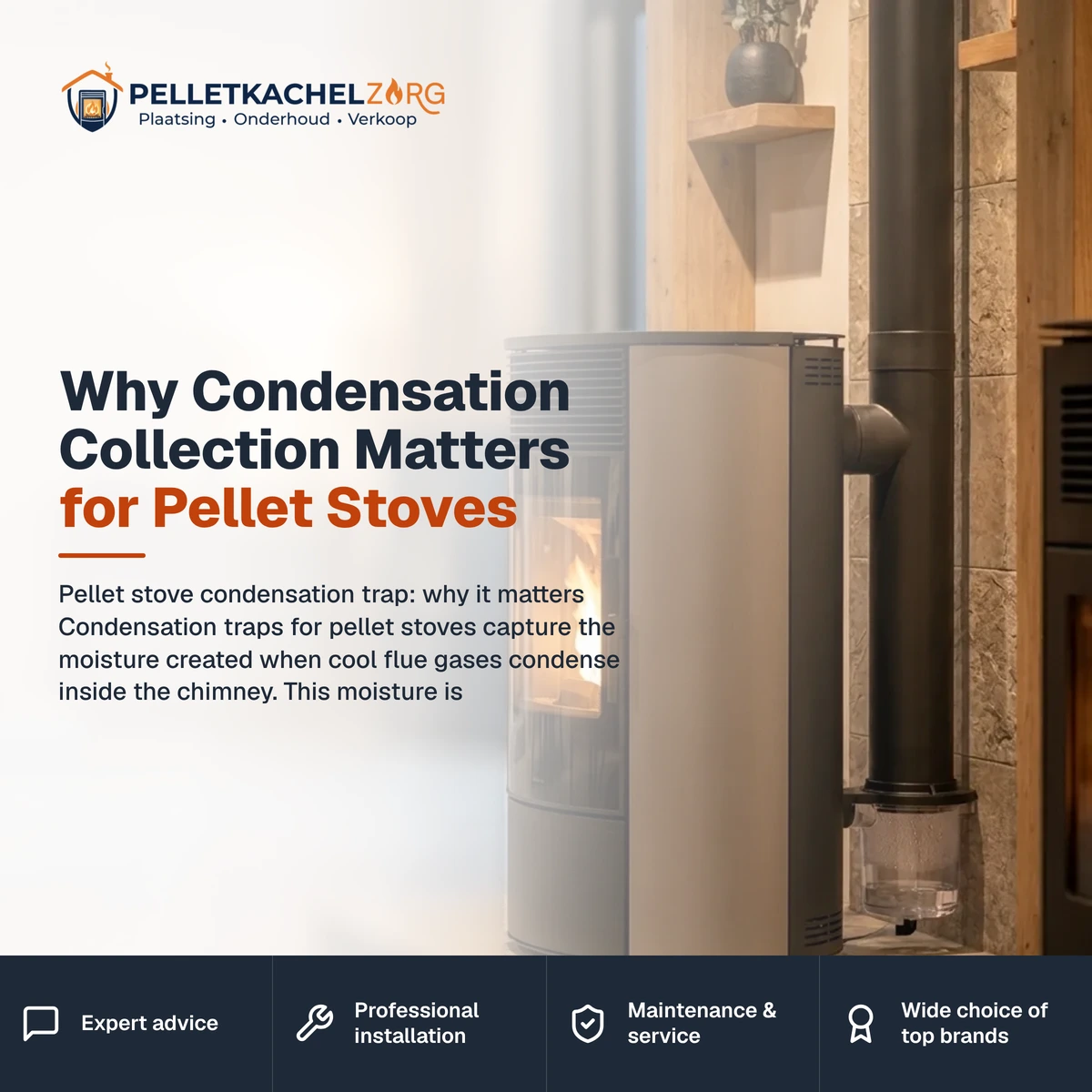
Condensation traps for pellet stoves capture the moisture created when cool flue gases condense inside the chimney. This moisture is slightly acidic and, without collection, causes rust, leaks, and deposits. A T-piece with a condensation cap at the bottom and an insulated flue keep the issue under control.
Every pellet flue that cools down needs a condensation collector at the bottom.
Condensation traps are crucial for pellet stoves because these appliances produce lower flue gas temperatures than traditional wood stoves. As a result, the flue gases cool down faster inside the chimney, turning water vapour into damp, slightly acidic condensation. Without a collection point at the bottom, this moisture settles in the lower sections and damages your flue. A proper pellet stove drain prevents rust, leaks, and persistent deposits.
The difference between a flue with and without a condensation collector becomes clear over time. The overview below compares the outcomes side by side, showing you exactly what is at stake.
Rule of thumb: any pellet flue prone to cooling down must have a condensation collection and drainage point at the base.
Correct condensation drainage
We install the lowest point with a T-piece and condensation cap properly, keeping moisture completely out of your stove and flue.
Chimney flue expertise
Our installers understand NBN standards and local practical requirements in Limburg and surrounding regions. You get a setup built to last.
Honest upfront advice
You learn in advance which flue type and components your situation requires. No unexpected costs afterwards.
Pellet stoves intentionally extract as much heat from combustion as possible, meaning flue gases leave the appliance cooler than with a wood stove. While this lower temperature benefits efficiency, it brings flue gas to the dew point faster, causing water vapor to condense. With wood burning, flue gas usually stays hotter, leading to less moisture buildup.
In addition, pellet stoves frequently modulate down to lower output levels rather than burning continuously at full power. During these low power cycles, flue gas temperatures drop further, making chimney flue condensation more likely. A properly installed and insulated flue mitigates this issue.
Condensation occurs in several consecutive steps, from combustion to moisture settling against the inner wall. The process below highlights where intervention is possible.
The pellet stove burns wood pellets containing low levels of moisture, releasing water vapor into the flue gases.
Pellet stoves operate efficiently and extract high amounts of heat from combustion, so flue gases leave at lower temperatures than wood stoves.
Inside the flue pipe, these gases cool down further, especially along long runs or unheated sections.
Once temperatures drop below the dew point, water vapor condenses against the flue wall as chimney condensation.
This condensation is slightly acidic and collects at the lowest point, where it can quietly cause damage if left unmanaged.
Brown or yellow moisture streaks along the outside of the stove pipe
Rust patches or wet seams near the bottom of the flue pipe
A musty or slightly acidic odor near the stove
Damp spots on walls or floors around the pipe penetration
Water leaking from the condensation cap, or a missing cap entirely
If you recognize one or more of these signs, act quickly. Condensation works slowly but persistently, and prolonged moisture exposure increases the risk of permanent rust or unnoticed leaks.
Moisture is collected at the lowest point of the flue pipe using a T-piece with a condensation cap. Inside this T-piece, water drains downward instead of flowing back into the stove. The cap seals this collection point and allows you to drain moisture manually or route it to a fixed outlet. To better understand this component, see how a T-piece with condensation cap works.
Sizing is equally important, as a flue pipe that is too wide or too narrow impacts draft and cooling rates. If you are unsure about the right size, read about what stove pipe diameter you need.
Check the condensation collection system during annual maintenance. A stuck cap, clogged drain, or overflowing collector can force moisture into places it should not go. Keeping this section accessible makes inspection and emptying straightforward.
An insulated twin-wall flue keeps flue gases warmer for longer, significantly reducing moisture condensation. Conversely, a cold single-wall pipe in an unheated space acts as a cooling fin, increasing condensation buildup. Whether a single-wall or twin-wall pipe is right depends on your installation path, see the difference between single-wall and twin-wall flue pipes. To determine which option fits your setup, check which flue pipe you need for a pellet stove.
The layout of the pipe route also plays a role. Numerous bends, long horizontal runs, and pipes passing through unheated areas increase cooling and condensation risks. A straight, vertical run with minimal cold sections works best.
Specific regulations vary by region and municipality in Belgium and per municipality in the Netherlands. Always follow the stove manufacturer manual, local building standards, and advice from your installer or insurer. If in doubt, have the condensation drain professionally installed, as errors at the lowest point are difficult to correct later.
A professional installer will also evaluate whether existing flues or wall penetrations can handle extra moisture. In existing chimneys or renovation projects, this is not always guaranteed, so a quick preliminary check prevents costly repairs later.
In short, condensation collection is not an option but a core requirement for a pellet flue system that performs reliably for years. It protects your stove, walls, and floors from moisture damage.
Are you unsure if your flue pipe properly collects and drains condensation? Request a free quote or advice to have your installation inspected.
We are happy to help. Contact us without obligation.
In almost all cases yes, because the cool flue gases from a pellet stove nearly always cause condensation. A T-piece with a condensation cap at the bottom collects this moisture. Your installer will determine the precise position.
Yes, flue condensation is slightly acidic and degrades metal, joints, and finishes. Without a collector, it leads to rust, leaks, and moisture stains. Therefore, moisture must be collected and drained at the bottom.
Condensation drains to the lowest point of the flue system, usually the T-piece beneath the stove connection. A condensation cap catches the moisture there, allowing you to drain it off or route it to a waste pipe.
Yes, an insulated twin wall flue keeps flue gases warmer, reducing water vapour precipitation. It does not eliminate it entirely, so a bottom condensation trap remains necessary. Your installer can advise on the ideal setup.