
Safety First
We assess diameter, insulation, and safety clearances as a total system to prevent smoke leaks, carbon monoxide risk, and chimney fires.
Have a pellet stove installed with the utmost care? Get a quote in 5 steps.
Have a pellet stove installed with the utmost care? Get a quote in 5 steps.
Have a pellet stove installed with the utmost care? Get a quote in 5 steps.

 Written by Dries Nijs4 min read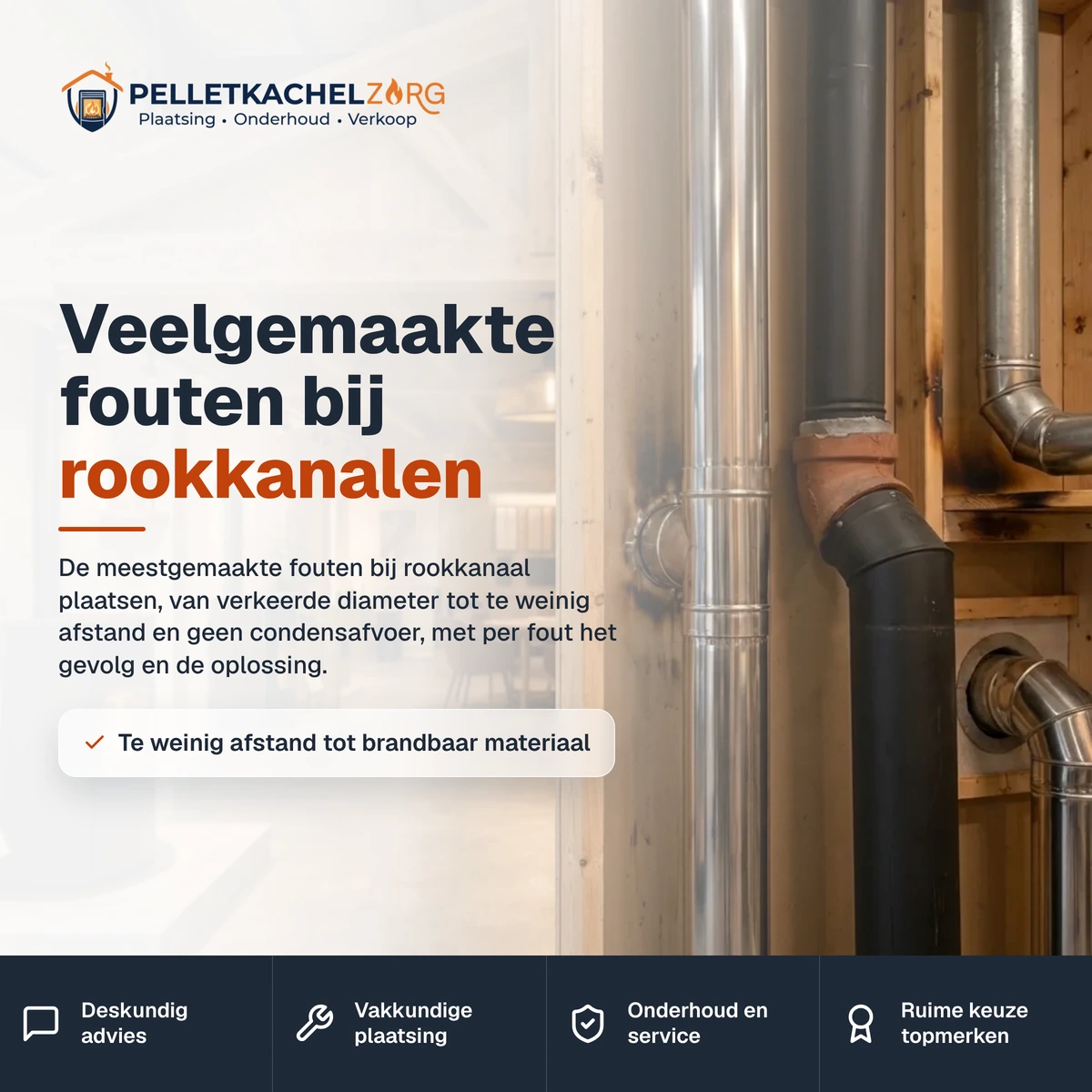
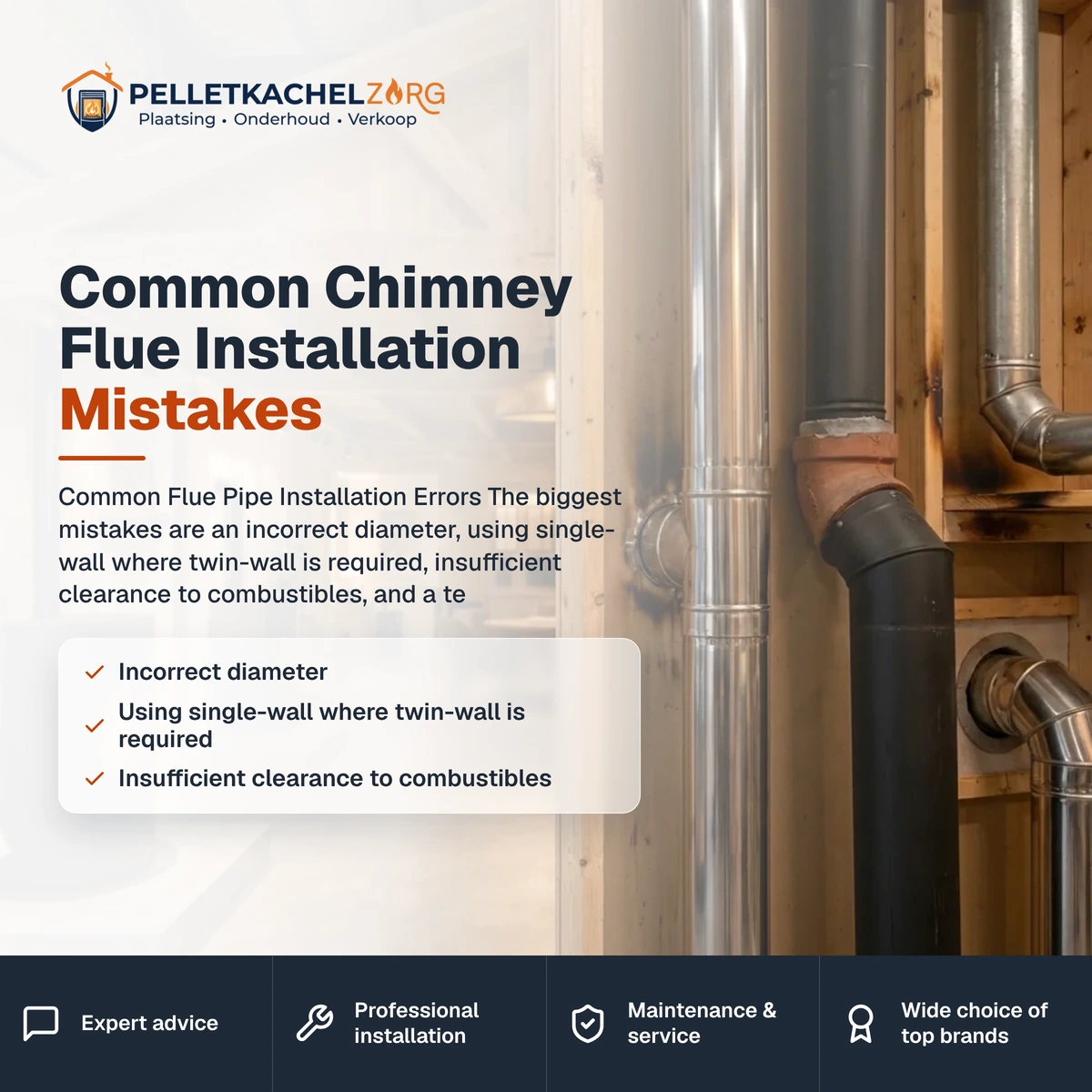
The biggest mistakes are an incorrect diameter, using single-wall where twin-wall is required, insufficient clearance to combustibles, and a terminal placed too low. A missing wall penetration collar, lack of condensate drain, and too many bends are also common issues.
Check diameter, insulation, clearance, and terminal height together, because every detail affects your safety.
The most frequent flue installation mistakes include using the wrong diameter, placing single-wall pipe in cold areas, inadequate clearance to combustible materials, and positioning the terminal too low. Missing wall sleeves, no condensate drainage, and excessive bends are also widespread errors.
Every single one of these errors compromises draft, safety, or both. Below, you will find the consequences and solutions for each mistake, alongside a comparison between incorrect and proper installation. This ensures you know what to check before lighting your stove for the first time.
2>Incorrect vs Correct Flue Installation at a GlanceMany issues are already visible during assembly. The comparison below pairs typical errors with correct practices so you can quickly evaluate your system.
A flue is only safe when smoke, heat, and moisture all move in the right direction: always check diameter, insulation, and clearances together.
Safety First
We assess diameter, insulation, and safety clearances as a total system to prevent smoke leaks, carbon monoxide risk, and chimney fires.
Proper Fitting
Every penetration, offset bend, and terminal is fitted according to regulations, delivering a system with reliable draft that stays dry.
Inspection & Advice
Unsure about your current flue setup? We inspect existing installations and provide clear, professional guidance on necessary upgrades.
These are the most common flue installation mistakes we encounter. Below is a quick overview of what goes wrong and how to fix it.
Incorrect diameter. A flue that is too narrow or too wide disrupts the draft, leading to soot buildup or blowback. Match the stove's outlet size to determine what stove pipe diameter you need.
Single-wall where twin-wall is required. Single-wall pipe in cold areas cools down flue gases, causing poor draft and condensation. Switch to insulated twin-wall as soon as the flue passes through cold spaces or goes outdoors.
Insufficient clearance to combustibles. Placing a flue pipe too close to timber or plasterboard can cause overheating and fire risks. Always maintain the required clearance to combustible materials for stove pipes.
Missing or incorrect penetration sleeve. Passing through a wall or roof without a proper fireproof sleeve creates a major safety hazard. Seal every penetration properly and airtight using the correct kit.
Flue terminal too low. Terminating too close to the ridge or an adjacent structure causes downdrafts and smoke inside. Ensure the terminal extends sufficiently above the roofline.
No condensation trap. Without a collector, moisture runs down into the stove and corrodes the pipework. Install a T-piece with a trap at the base, and read why condensation collection is essential for pellet stoves.
Too many bends. Every elbow and horizontal run restricts natural draft. Keep the flue run as straight and short as possible, limiting changes in direction.
Review these points before lighting your stove for the first time. If you have doubts about any item, have the flue inspected first.
Diameter matches the stove outlet, with no narrow bottlenecks.
Insulated twin-wall pipe used through unheated spaces and outdoors.
Safe clearance to wood and plasterboard maintained, or fireproof sleeve installed.
Flue terminal positioned high enough above the roof or ridge.
T-piece with condensation trap fitted at the base.
Minimal bends, avoiding long horizontal runs.
All joints tightly connected and secured with locking bands, no play.
Have the installation inspected before lighting for the first time if unsure.
An incorrectly fitted flue is dangerous because it fails to discharge smoke, carbon monoxide, and extreme heat safely. Poor draft or bad terminal placement forces flue gases back into the house, and carbon monoxide is completely odorless and invisible.
Soot and condensation buildup caused by wrong piping also significantly increase the risk of a chimney fire. Fitting a carbon monoxide alarm near your stove is not a luxury, but an essential safety precaution.
Initial signs of flue problems are often subtle: a faint smoke smell during ignition, glass turning black rapidly, or draft dropping in windy weather. Take these warning signs seriously and stop using the stove until the cause is identified.
Many of these issues stem from choosing the wrong pipe type. If you are unsure about the setup, check the difference between single-wall and twin-wall flue pipes before ordering materials.
When in doubt, have your flue system inspected or hire a qualified installer, as regulations vary. Local building codes and national standards dictate installation guidelines, and specific requirements depend on your location.
Your insurer and the appliance manual remain binding sources of authority. Following an incident, improper installation or missing certification can invalidate your insurance coverage.
If the installation exceeds your technical skills or confidence, learn when to stop and call a professional installer. Getting it right from the start saves costly repairs and avoids safety risks.
Want to ensure your flue system is safe and correctly installed? Request a free quote or advice and we will review it with you.
We are happy to help. Contact us without obligation.
The most common error is selecting the wrong diameter or running single-wall pipe through unheated zones. Both disrupt chimney draft, causing soot buildup, condensation, or smoke spills indoors. Always match the appliance flue outlet size and use insulated pipe where temperatures drop.
Signs include poor chimney draft, smoke smells inside, dirty stove glass, or moisture collecting at the base of the pipe. Unstable performance during windy weather also points to a low cowl terminal height. If you notice these symptoms, have the system inspected before burning again.
A short horizontal section is permissible, but extended horizontal runs and multiple bends reduce updraft. Keep the flue system as vertical and straight as possible, and install a condensate collector at the base to prevent moisture draining back into the stove.
Minor adjustments like adding wall brackets can be DIY tasks, but sizing, wall penetrations, and cowl heights require technical building knowledge. If in doubt, book a chimney inspection or consult a professional installer to eliminate safety hazards.