
Certified Materials
We use double-walled, insulated ducts and duct sets with a valid certificate. This ensures your roof duct meets the standard.
Have a pellet stove installed with the utmost care? Get a quote in 5 steps.
Have a pellet stove installed with the utmost care? Get a quote in 5 steps.
Have a pellet stove installed with the utmost care? Get a quote in 5 steps.

 Written by Dries Nijs2 min read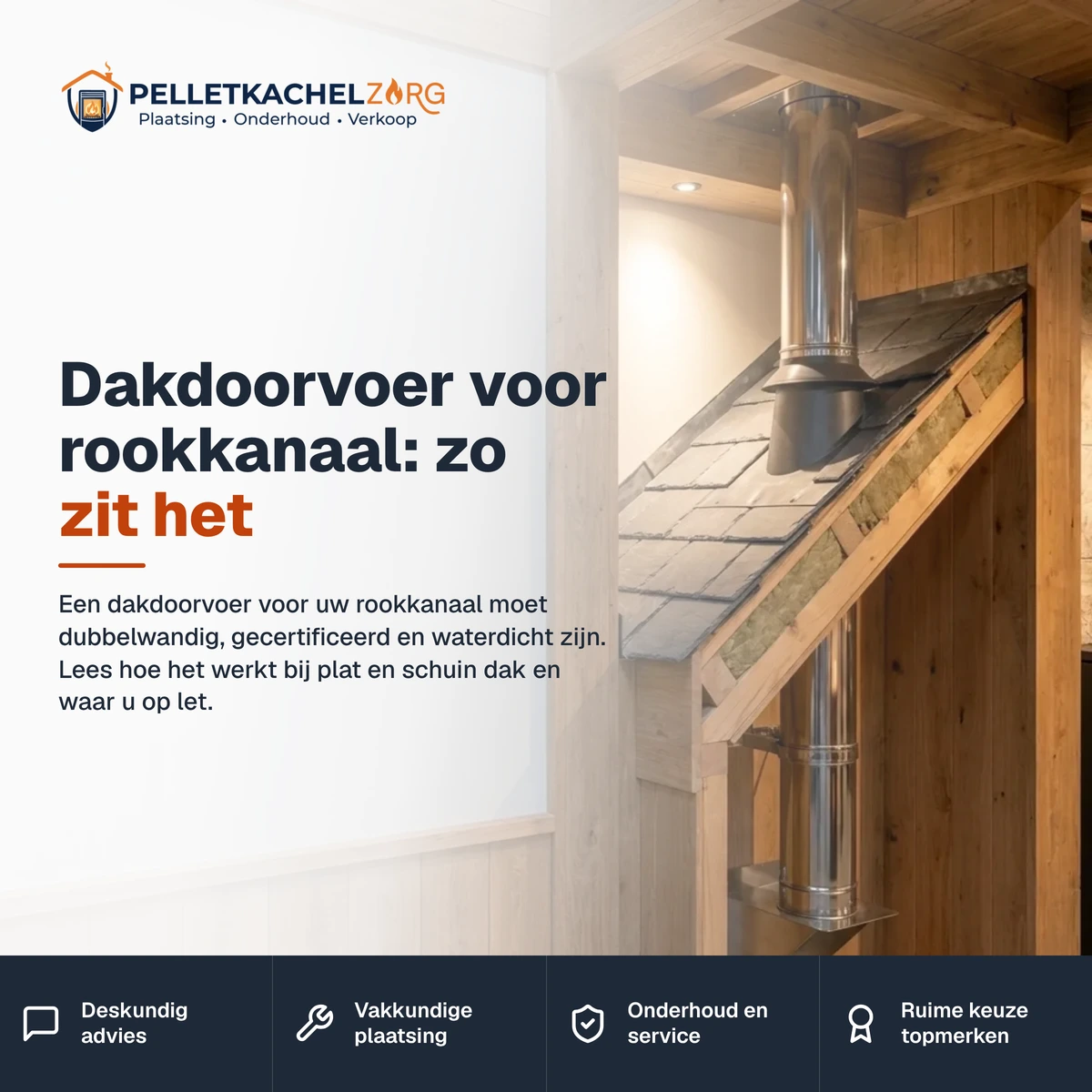
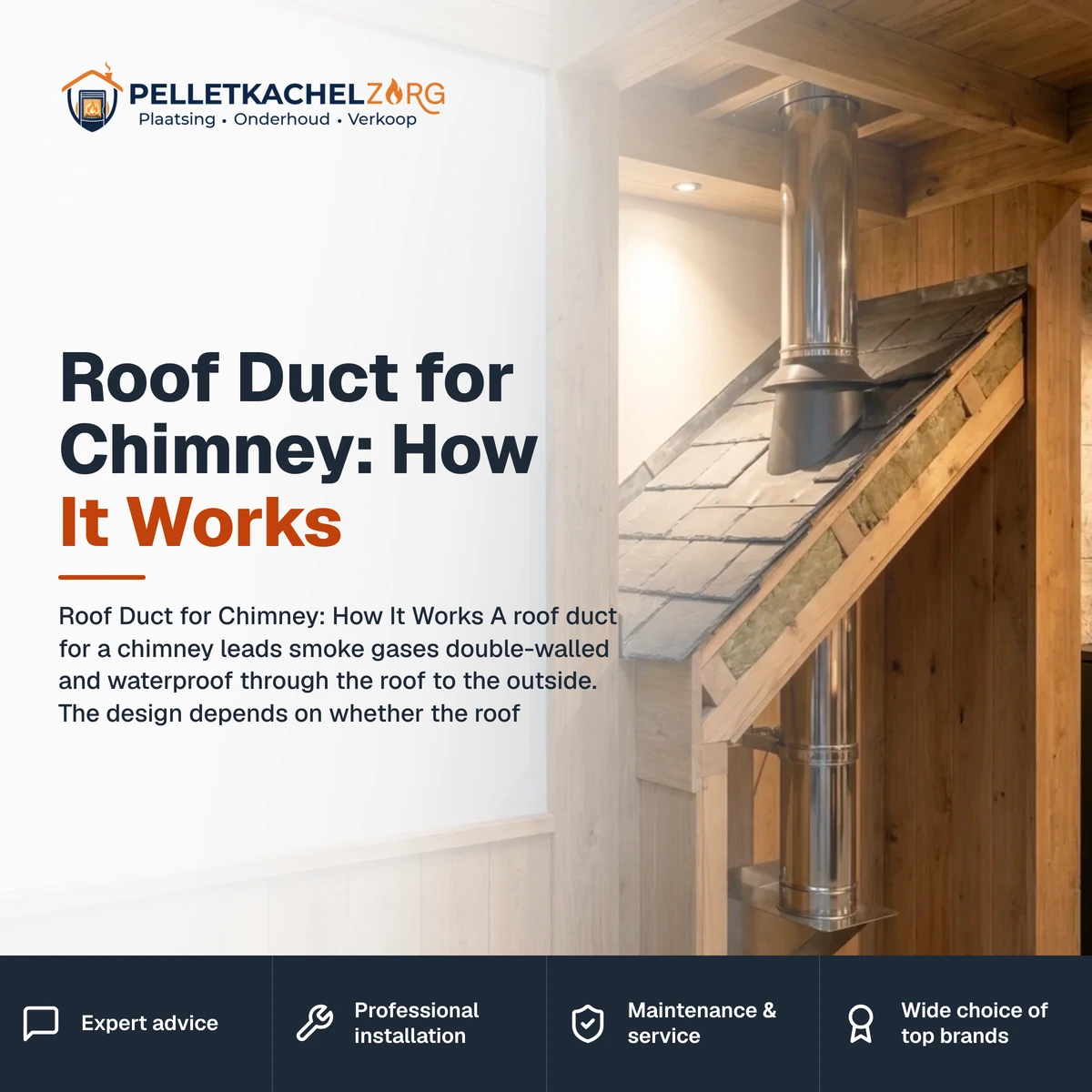
A roof duct for a chimney leads smoke gases double-walled and waterproof through the roof to the outside. The design depends on whether the roof is flat or sloped, and the height above the ridge determines the draft.
Choose certified, install waterproof, and have it inspected if in doubt.
A roof duct for your chimney is the certified part that safely leads smoke gases through the roof to the outside. You almost always choose a double-walled, insulated duct with a suitable duct set. The design varies between a flat roof and a sloped roof, and the height above the ridge determines the draft. The waterproof finish and the safe distance from combustible wood are also crucial.
As a rule of thumb, the duct extends far enough above the ridge and roof surface to ensure free, stable draft.
Certified Materials
We use double-walled, insulated ducts and duct sets with a valid certificate. This ensures your roof duct meets the standard.
Waterproof Finish
Lead flashing, plates, and storm collars are expertly installed. Your roof remains waterproof around the duct.
Inspection and Certification
We check height, distance, and draft before the stove is used. If in doubt, we have the entire setup inspected.
Determine the route and diameter, and check which diameter stove pipe you need so the duct fits your stove.
Ensure the duct is double-walled, insulated, and certified for your appliance.
Choose the duct set that matches your roof type, either flat or sloped.
Create the opening with the prescribed fire-safe distance from beams and insulation.
Install the duct, the flashing or plate, and the storm collar waterproofly.
Set the duct at the required height and finish the top with a cap.
Have the entire setup inspected if in doubt before using the stove.
Double-walled, insulated duct with a valid certificate
Duct set suitable for a flat or sloped roof
Sufficient height above ridge and roof surface for good draft
Waterproof finish with lead flashing or plate and storm collar
Correct fire-safe distance from wood, insulation, and roof sheathing
Accessible top for later sweeping and inspection
A double-walled duct is almost always necessary because the insulation keeps the smoke gases warm and the outside cool. This maintains stable draft and reduces the risk of condensation and creosote. If you want to understand the difference between single-walled and double-walled ducts better, you can read about it separately.
Around the duct, maintain the prescribed distance from combustible parts. Adhere to the distance to combustible materials from the manual and use a non-combustible collar where necessary. The exact measurement varies per duct and manufacturer.
The precise heights and distances are set in the standard and in the duct's manual, not in a general rule of thumb. In Belgium, the NBN standards apply, sometimes with additional municipal or regional requirements. In the Netherlands, it varies by municipality, and insurers pay attention to correct, certified installation.
If you're unsure about the route, first decide whether you vent through the roof or along the wall. Then check when a double-walled duct is mandatory and have the connection inspected if in doubt.
If you want to ensure a safe, waterproof, and compliant roof duct, have the setup checked or installed by a professional. Request a quote or advice and feel free to discuss your roof type and duct.
We are happy to help. Contact us without obligation.
The height depends on your roof type and the duct's manual. For a flat roof, measure from the roof surface; for a sloped roof, from the ridge. Adequate height ensures free, stable draft.
In almost all cases, yes. A double-walled, insulated duct keeps smoke gases warm and the outside cool, maintaining stable draft and limiting condensation. Always follow the manufacturer's and standard's requirements.
Use a lead flashing or plate suitable for your roof type, supplemented with a storm collar around the pipe. The flashing connects to the roofing, and the storm collar prevents rain from running down the pipe.
You often can, but you're responsible for the height, distance, and waterproofing. Follow the manual and standards precisely. If in doubt, have the work inspected or installed by a professional.