
Experts in troubleshooting
We fix shutting-down pellet stoves every day. You receive a clear diagnosis without paying for unnecessary parts.
Have a pellet stove installed with the utmost care? Get a quote in 5 steps.
Have a pellet stove installed with the utmost care? Get a quote in 5 steps.
Have a pellet stove installed with the utmost care? Get a quote in 5 steps.

 Written by Dries Nijs3 min read
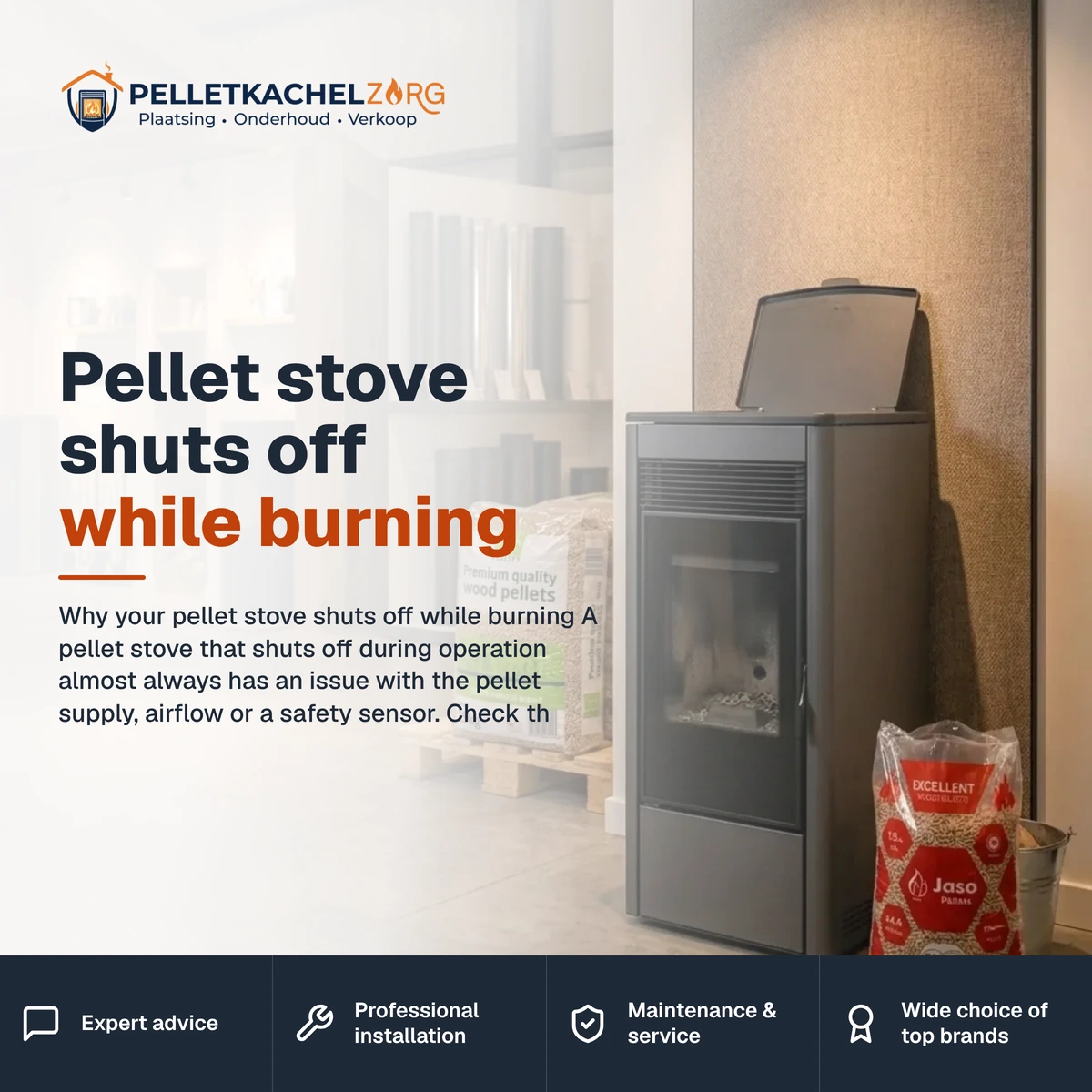
A pellet stove that shuts off during operation almost always has an issue with the pellet supply, airflow or a safety sensor. Check the hopper, burn pot and air intake before looking into the electronics.
Repeated shut-offs or a recurring error code mean it is time for professional maintenance.
A pellet stove shuts down while burning when combustion is interrupted by a lack of pellets, insufficient airflow or a triggered safety sensor. The cause is usually an empty or bridged hopper, a dirty burn pot, a clogged air intake or a flue with poor draft. Overheating or a dirty exhaust fan are also common culprits.
The good news is that you can troubleshoot most of these issues yourself before calling a technician. Work systematically, moving from the pellets to the exhaust system. Below, you will find out where to start, which solution matches which cause, and when maintenance is truly necessary.
A pellet stove that shuts off is rarely broken. Instead, it is signaling that a safety limit has been reached. The control board senses a weak flame, low temperatures or abnormal pressure, and shuts the stove down to keep you safe. Your job is to restore those optimal conditions.
A shutting-down pellet stove usually falls into one of two categories. Either the fuel is not reaching the burn pot properly, or there is an issue with the airflow or a sensor. This breakdown helps you point your troubleshooting in the right direction.
If your pellet stove always shuts off at the exact same time, write down the error code and the timestamp. This often points straight to the root cause.
Experts in troubleshooting
We fix shutting-down pellet stoves every day. You receive a clear diagnosis without paying for unnecessary parts.
Certified maintenance
After a service, we completely clean the stove and the exhaust system. You will receive a certificate for your insurance.
Tailored advice
We inspect your stove, flue pipe and pellets together. This ensures the same malfunction does not keep returning.
Go through the steps in order and only restart the stove once you have completed every check. This helps you eliminate causes one by one.
Check the hopper first. Refill it if it is empty and stir the pellets to break up any bridging.
Empty the burn pot and brush the holes clear so the combustion air can flow through again.
Inspect the air intake and the flue pipe for ash, soot, bird nests or other blockages.
Clean the ash pan and the heat exchanger, as buildup restricts the draft and airflow.
Make sure the door and ash pan close airtight. Even a small gap can disrupt the pressure sensor.
Restart the stove and note whether the same error message reappears.
If the stove reaches its normal temperature after this routine, the cause was almost certainly dirt buildup or the pellets themselves. If it keeps shutting down, you will need to look at the draft, the fan and the sensors.
Run through these points before restarting your stove. If everything is in order and the stove still fails, the problem lies deeper and requires further inspection.
Hopper filled and pellets dry and loose
Burn pot empty and holes unblocked
Air intake and flue pipe clear of blockages
Ash pan and heat exchanger cleaned
Door and ash pan seal completely airtight
Error code and time recorded
If the stove continues to shut down after these checks, the issue is often deeper within the feed system or the exhaust. If the auger turns but no pellets drop into the burn pot, read why your pellet stove is not feeding pellets.
If you see a weak flame with a lot of soot buildup, it is usually an airflow problem, as explained in our guide on a pellet stove that burns poorly or produces a lot of soot. If the unit shuts down with a noisy or vibrating motor, check the symptoms of a defective exhaust fan.
If the stove cuts out shortly after reaching full power, suspect overheating or pressure loss. A clogged heat exchanger, blocked air intake or poor exhaust draft can push the temperature or pressure outside safe margins, prompting the safety system to turn the unit off.
If your pellet stove keeps shutting off or an error message persists, it needs a service. A technician will measure the draft, clean the heat exchanger and flue, and inspect the sensors and fan. This resolves underlying faults before they break your stove entirely.
If you are unsure about a code on the display, see what an error code on your pellet stove means. If you do not know whether it is time for a major service, read when to get your pellet stove professionally cleaned.
The exact rules for maintenance and certificates vary by municipality, region and insurance company. In Belgium, the NBN standards apply to the flue system, while in the Netherlands, the municipality and insurer are decisive. Always consult your own policy and the manufacturer's manual as the binding source.
If you cannot resolve the malfunction or prefer not to open the stove yourself, have it inspected by a professional. Request a free quote or advice and prevent a minor issue from turning into a costly repair.
We are happy to help. Contact us without obligation.
Usually due to a shortage of pellets, insufficient combustion air or an active sensor. Check the hopper, burn pot and air intake, and clean the ash pan and heat exchanger. If the issue returns, have the stove inspected.
Yes, a burn pot full of ash or clinkers blocks the combustion air and ignition. The flame will die out and the stove will stop working. Empty the burn pot and brush the holes clear every time you empty the ash.
An error code points to a specific cause, such as low temperature, pressure loss or overheating. Write down the code and the time, and look up the meaning in your manual. If the code persists, maintenance is required.
If the stove continues to shut down after cleaning and checking, professional maintenance is recommended. A technician will measure the draft, test the sensors and clean the exhaust system. This prevents damage and unsafe situations.