
Testing before replacing
Checking speed and draft first: identical error codes are sometimes caused by a 10 euro part.
Have a pellet stove installed with the utmost care? Get a quote in 5 steps.
Have a pellet stove installed with the utmost care? Get a quote in 5 steps.
Have a pellet stove installed with the utmost care? Get a quote in 5 steps.

Our services
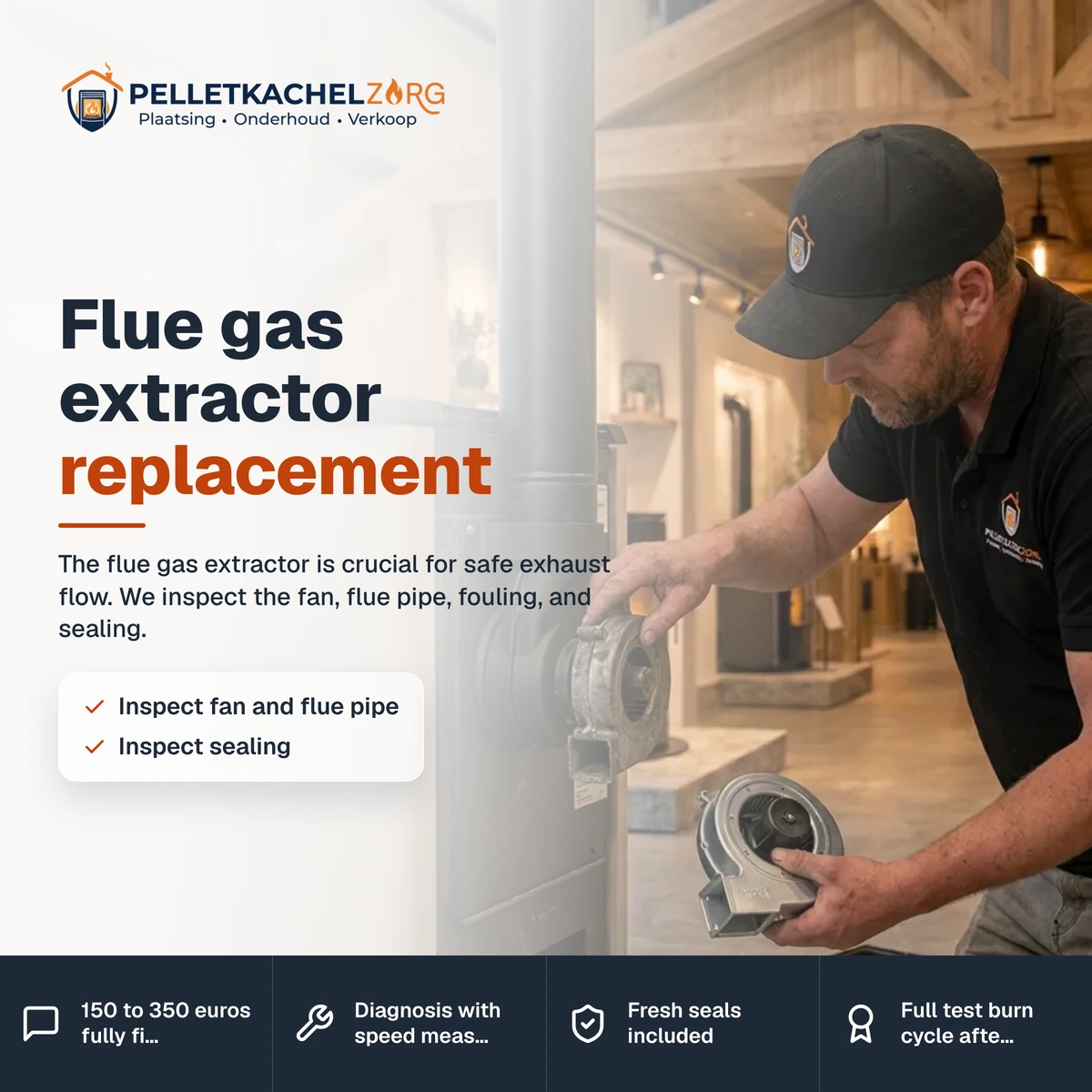
The flue gas extractor is crucial for safe exhaust flow. We inspect the fan, flue pipe, fouling, and sealing.
The flue gas extractor fan draws combustion gases out of the stove and creates the negative pressure required for the entire appliance to operate. If it fails, the stove shuts down: without proper extraction, safe combustion is impossible. After 8 to 12 years or tens of thousands of operating hours, the bearings wear out, making replacement necessary: €150 to €350, fully installed and tested.
The tricky part: an extractor fan usually signals its failure weeks in advance. Recognizing the sound allows you to schedule a replacement at your convenience rather than being left in the cold.
A fan never dies silently: first it rattles, then it squeals, and only then does it leave you out in the cold.
It starts with a soft rattling or humming during startup that disappears once the stove warms up. Gradually, it turns into a continuous squealing or grinding bearing noise. Eventually, error codes appear: pressure fault, speed out of range, or a stove that shuts down mid-burn, typically during the coldest period of the week.
Even without noise, there are clear indicators: slower ignition, increased smoke at startup, and soot buildup accumulating faster than usual. Recorded a short video of the sound on your phone? Send it over, our technicians can identify bearing wear immediately, and a short clip is often enough for an initial phone assessment. Feel free to compare the sound to last winter, your memory is a reliable guide.
We read the error codes and measure the actual fan speed against the manufacturer's specifications. This ensures we rule out a clogged pressure switch or blocked flue pipe before replacing parts. This check takes 5 minutes and frequently saves an unnecessary 350 euro expense.
We source the exact fan based on your stove's make and model, using original or certified equivalent parts. Provide your stove details in advance, and our technician will have the replacement ready in the van.
We remove the worn fan, clean soot from the housing and flue passageway, and fit the new unit with fresh high-temperature gaskets. A leaking fan flange is a common source of air leaks, so sealing receives extra attention. We also thoroughly brush and vacuum the housing area, ensuring the new fan blades remain balanced in a clean environment.
The stove runs through a full ignition and heating cycle while we monitor speed, draft, and combustion efficiency. Where necessary, we calibrate parameter settings to match the new extractor fan, ensuring airflow and pellet delivery are perfectly balanced.
Expect to pay €150 to €350 fully installed, depending on the make and model. This total includes the extractor fan, new sealing gaskets, labor, and final testing. Models equipped with an integrated speed sensor require a specific encoder version, which sits at the upper end of the price range.
Combining fan replacement with an annual service (€120 to €200) saves on additional call-out fees, leaving you to pay only for the part itself. View complete maintenance pricing in our overview of maintenance costs.
Pellet stoves feature 2 distinct fans, and distinguishing between them is helpful. The flue gas extractor fan is located at the rear near the flue outlet to extract exhaust gases, while the convection blower fan sits at the front or bottom to circulate warm air into the room.
Noise that varies with heat output indicates an issue with the room blower fan, which costs slightly less at 100 to 250 euros installed. Our 5-minute diagnostic pinpoints precisely which component requires attention. Both fans can also be replaced during a single visit to eliminate duplicate call-out charges.
Soot and ash buildup are the primary causes of wear: deposits on the fan blades disrupt balance, causing vibration that damages the bearings. A stove serviced annually operates with clean fan blades and easily reaches 10 to 12 years of service, whereas neglected units may require fan replacement after just 5 to 6 years.
Dust in the installation area also plays a role: a clean surrounding environment extends component lifespan. Learn more about optimal service intervals in our guide on maintenance frequency.
In short: avoid doing so for extended periods. As long as the unit maintains correct draft, operation remains safe, but a failing fan can stop unexpectedly during freezing weather. Schedule replacement as soon as persistent bearing noise develops, and lower the heat setting in the meantime to reduce bearing stress. If in doubt, contact our repair service for a professional diagnosis.
During every fan replacement, we inspect the entire exhaust pathway: the pressure switch, vacuum hoses, flue connections, and gasket seals. Minor components can be replaced immediately through our parts service, while a restricted flue is cleared with a chimney sweep service costing 60 to 90 euros. This ensures your new fan operates in ideal conditions.
For stoves aged 12 to 15 years, we provide transparent advice: investing 350 euros in a fan for an appliance near the end of its lifespan is rarely cost-effective. In such cases, we compare repair costs against a complete stove replacement, allowing you to make an informed decision with clear figures.
€150 to €350 fully fitted, including the fan, fresh seals, labor, and the final test with speed and draft measurement. Combined with annual maintenance of €120 to €200 you save on call-out fees.
Initially a soft rattling or humming during the first 5 to 10 minutes of a cold start, turning into a continuous high-pitched squeal or grinding bearing noise. Error codes regarding draft or fan speed follow before the stove shuts down.
8 to 12 years with annually serviced stoves, as clean blades protect the bearings. Without maintenance, soot deposits unbalance the fan, halving its lifespan to 5 or 6 years.
For a short time, provided the unit maintains sufficient draft and shows no error codes. A failing fan stops unexpectedly, often during cold snaps, so schedule a replacement once the noise persists.
Yes, which is why we test first: a dirty pressure switch, blocked hose, or clogged flue can trigger identical error codes. Measuring fan speed against factory specifications identifies the actual cause before ordering parts.
If you share the brand and model beforehand, the correct fan is ready in a few days and installation takes around 1 hour in a single visit, including a test burn.
For appliances aged 12 to 15 years, we provide straightforward advice: investing 350 euros in a stove near the end of its lifespan is rarely cost-effective. We outline both fan repair and replacement options so you can decide.
Testing before replacing
Checking speed and draft first: identical error codes are sometimes caused by a 10 euro part.
No air leaks after replacement
Fresh flange gaskets with every install, preventing unwanted air leaks.
Ready for winter freezes
Fast delivery and fitting in 1 visit, keeping your home warm without sudden outages.

Provide the brand and model: the correct fan is ready within a few days and installation with a full test is completed in 1 visit.
Flue gas extractor replacement at your home in Belgian Limburg, Flemish Brabant, the Kempen, and Dutch Limburg.

Transforming your fireplace with a built-in pellet stove? Pelletkachelzorg specializes in installing pellet stove inserts and cassettes into existing fireplaces and mantels. We modify the flue, ensure proper ventilation, and perfectly calibrate your system. Active in Limburg, Vlaams-Brabant, and the Kempen region.
Read more
Professional pellet stove servicing with a cleaning certificate , chimney sweeping and full calibration. Pelletkachelzorg handles the annual maintenance of all pellet stove brands, with transparent pricing and no surprises. Active in Limburg, Flemish Brabant, De Kempen and Dutch Limburg.
Read more
Not every part needs replacing right away. We find the root cause first and advise you on the correct replacement part.
Read more
Fault, breakdown or error code? Pelletkachelzorg provides fast pellet stove repair and pellet stove servicing for all major brands, including Ravelli, MCZ, Piazzetta and Edilkamin. We diagnose the issue on site, repair your pellet stove professionally and use original spare parts. Active in Limburg, Flemish Brabant, the Kempen and Dutch Limburg.
Read more
A faulty igniter, poor air supply or dirty burn pot can cause starting issues.
Read more
Worn seals disrupt combustion and draft. Replacement restores safety and optimal efficiency.
Read more