
Flue pipe and inspection
We dimension and fit the exhaust system according to standards. This keeps your pellet stove safe and drawing correctly.
Have a pellet stove installed with the utmost care? Get a quote in 5 steps.
Have a pellet stove installed with the utmost care? Get a quote in 5 steps.
Have a pellet stove installed with the utmost care? Get a quote in 5 steps.

 Written by Dries Nijs4 min read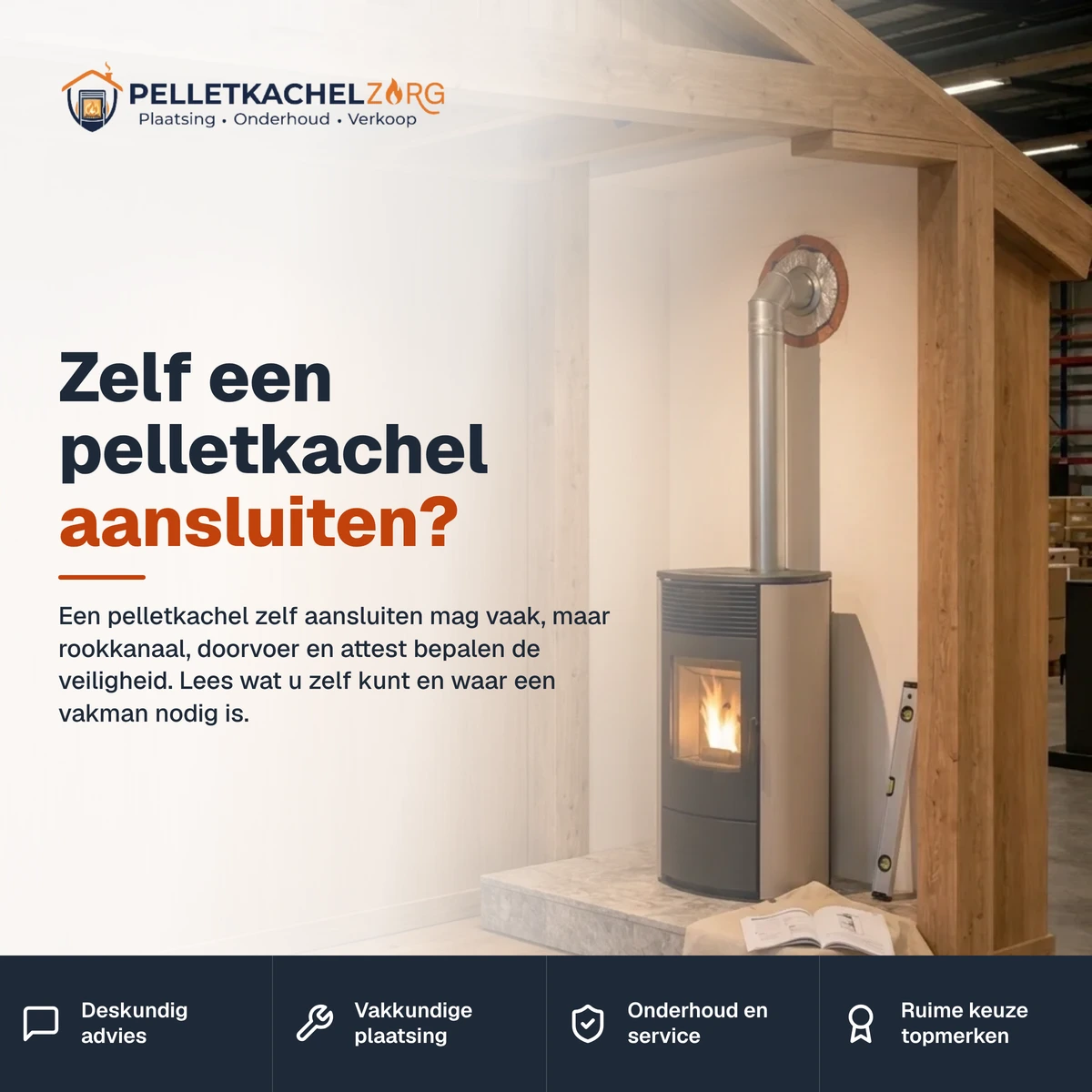
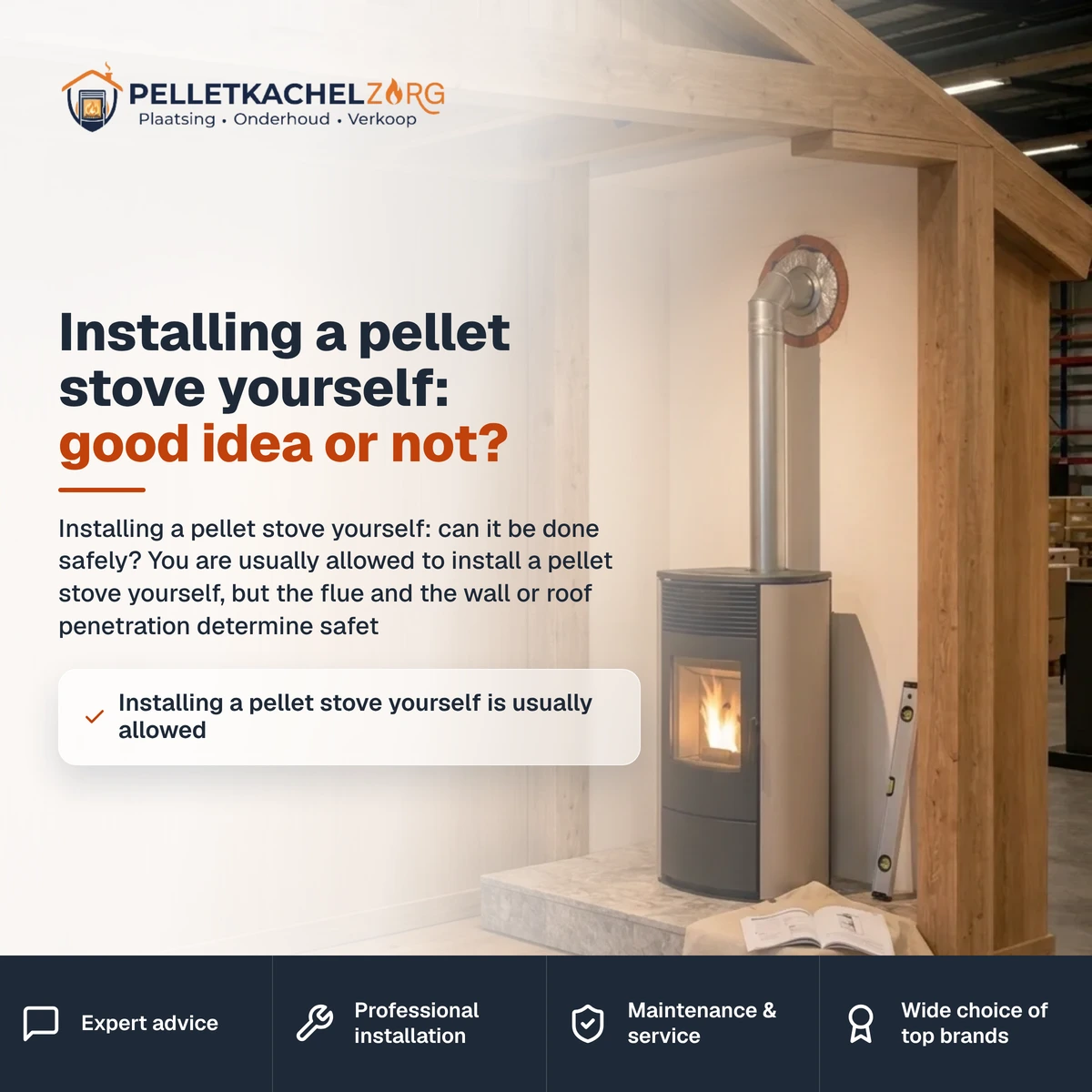
You are usually allowed to install a pellet stove yourself, but the flue and the wall or roof penetration determine safety. Positioning the appliance and connecting to power is often easy enough, but flue gas extraction requires real expertise.
DIY installation is possible, provided you do not underestimate the flue pipe and official certificate.
You are usually permitted to connect a pellet stove yourself, but the flue pipes, penetrations, and electrical connection decide if it remains safe. Positioning the appliance and filling it with pellets works fine without help. However, flue gas extraction and draught calculations require professional skill, as this is where DIY most often fails. Incorrect connections can cause smoke, carbon monoxide, voided insurance, or lost warranties. Below you can read what you can do yourself and where a professional is required.
Placing the stove is the easy part, the flue system determines if you stay safe and insured.
Flue pipe and inspection
We dimension and fit the exhaust system according to standards. This keeps your pellet stove safe and drawing correctly.
No-obligation advice
You receive honest guidance on what you can handle yourself and what requires professional fitting. No sales talk.
Certificates and warranty
Correct installation with official certificates keeps your insurance and manufacturer warranty valid. We supply full proof.
Before you begin, objectively assess how much of the installation truly falls within your skill set. The checklist below will help you make an informed decision without overestimating your abilities. Review each point carefully and be strict when it comes to the flue system.
Determine whether you need a completely new chimney pipe or if you are connecting to an existing, certified flue.
Check the required clearance distances to combustible materials and verify if your wall or ceiling penetration meets them.
Verify whether the manufacturer requires installation by a certified professional to maintain warranty coverage.
Ask your insurance provider if a DIY installation without a certificate remains fully covered.
Honestly evaluate whether you have the skills for draught calculations and airtight assembly.
If you have doubts about any of these steps, take that as a clear signal. You can comfortably handle the positioning and electrical setup yourself, while leaving the flue system installation to a specialist. This keeps costs down while ensuring the most safety-critical part is handled by professionals.
The electrical hookup is usually a safe task to handle yourself. A pellet stove connects to a standard grounded 230V power outlet and does not require heavy electrical work. Avoid using thin extension cords or power strips shared with other appliances.
During the first startup, a new stove often emits a light odor or slight smoke as the protective paint cures. Ensure adequate ventilation and follow the manufacturer's manual step by step. If smoke lingers inside your home, this indicates a draught issue in the flue pipe, not a paint curing issue.
Most errors in DIY installations occur not within the appliance itself, but in the surrounding flue system. A professional will spot these issues immediately, whereas a DIY installer might overlook them. Check these points before lighting the stove for the first time.
Excessive horizontal runs or too many bends that restrict draught.
Using single-wall pipe in areas where twin-wall insulated pipe is required.
Insufficient clearance to wood, plasterboard, or insulation during penetration.
Lack of a condensation trap, causing moisture and soot accumulation.
An ungrounded electrical outlet or an overloaded extension lead.
Absence of safety inspection and valid certification for insurance or warranty purposes.
At worst, an improperly connected pellet stove can leak smoke or carbon monoxide into your living room. An undersized or leaking flue disrupts draught, causing soot buildup or operational errors. Furthermore, running stove pipes too close to combustible materials presents a severe fire hazard.
Your insurance coverage and warranty may also be compromised. In the event of damage, insurers check whether the system was installed correctly and certified. Lacking an official certificate risks a reduced payout or a denied claim when you need it most.
Always take the clearance distance to combustible materials for stove pipes seriously and choose the correct flue layout. If you are uncertain about diameter or flue type, read which flue pipe you need for a pellet stove before ordering parts. If you still prefer to install it yourself, follow the guidelines in installing a flue system yourself: key points to consider.
Whether DIY installation is permitted depends on local regional and municipal regulations. Rules regarding inspection, certification, and insurance coverage are legally binding. Check with your local authority and insurance provider to confirm the specific requirements for your installation.
Flue installations must comply with relevant safety standards, and insurers often require an inspection certificate in the event of a claim. A DIY stove installation without proper certification could invalidate your cover. If you are unsure whether it is safe to proceed, learn when to stop and call an installer and when you need a specialist for your flue system.
While regulations vary by region, the core priorities remain identical: a safe flue gas exhaust, correct wall/ceiling penetrations, and documented maintenance carry more weight than who tightened the screws. Always keep all invoices, inspection reports, and certificates safe.
Unsure whether your setup is suitable for DIY installation? Request a free quote or expert advice to have your flue system or connection checked before lighting your stove.
We are happy to help. Contact us without obligation.
In principle, you can position and assemble a pellet stove yourself. However, the flue system, wall penetrations, and chimney connection require technical expertise. Check with your local authorities and insurance provider regarding specific regulations.
This is possible, as many manufacturers demand installation by a certified engineer to validate full warranty coverage. Always check the manual and warranty conditions. If in doubt, have the connection performed by a professional.
Yes, a pellet stove operates on a standard grounded 230-volt power outlet. Do not use thin extension leads or overloaded circuits. Connecting the power plug is generally safe to do yourself.
Common DIY mistakes include too many bends, insufficient draught, or inadequate distance from flammable materials. This can cause smoke leakage, soot buildup, carbon monoxide hazards, or fire risks. A leaking or unapproved flue may also invalidate home insurance.