
Objective fuel advice
We look at certification and ash content, not color alone. That way you know exactly which pellets suit your stove.
Have a pellet stove installed with the utmost care? Get a quote in 5 steps.
Have a pellet stove installed with the utmost care? Get a quote in 5 steps.
Have a pellet stove installed with the utmost care? Get a quote in 5 steps.

 Written by Dries Nijs3 min read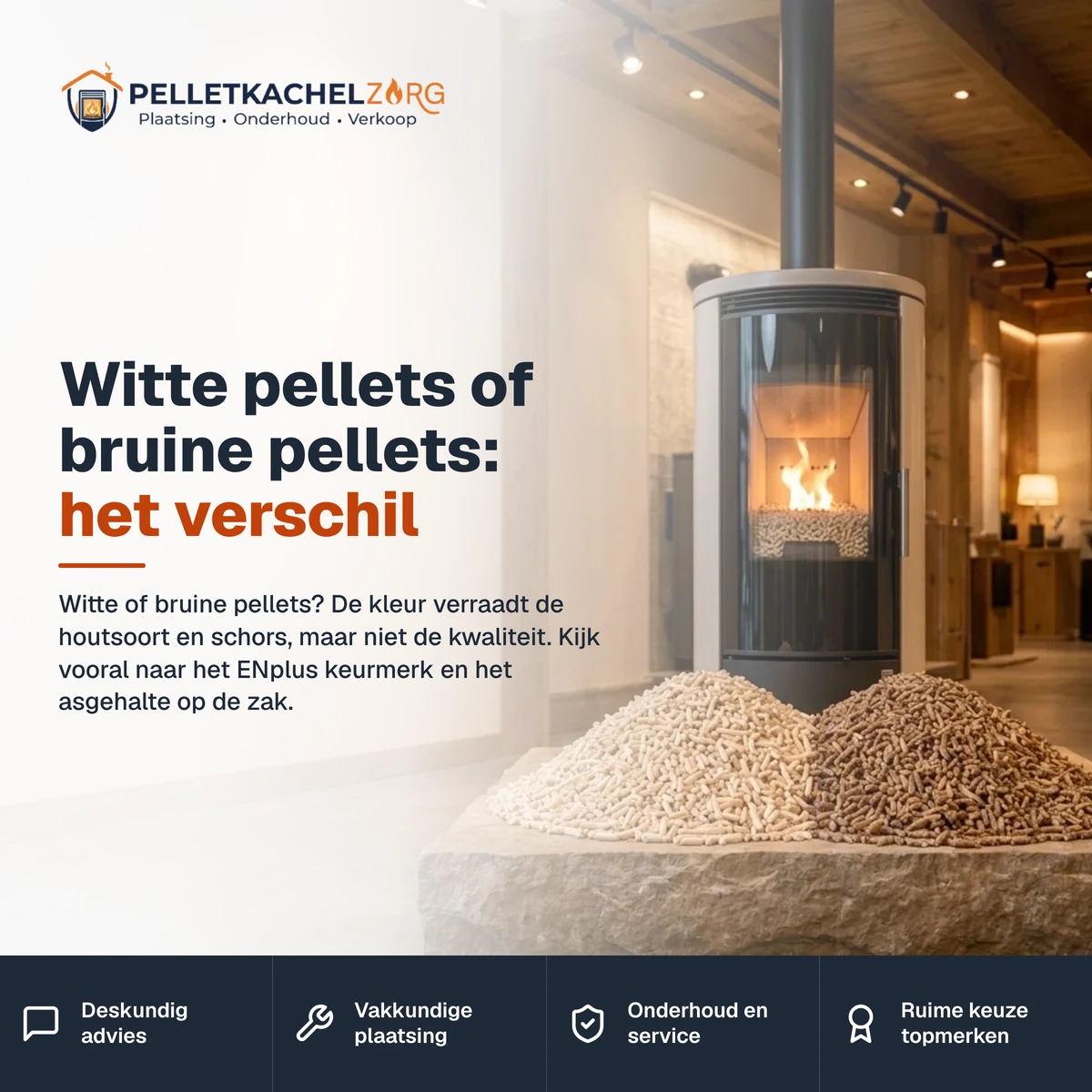
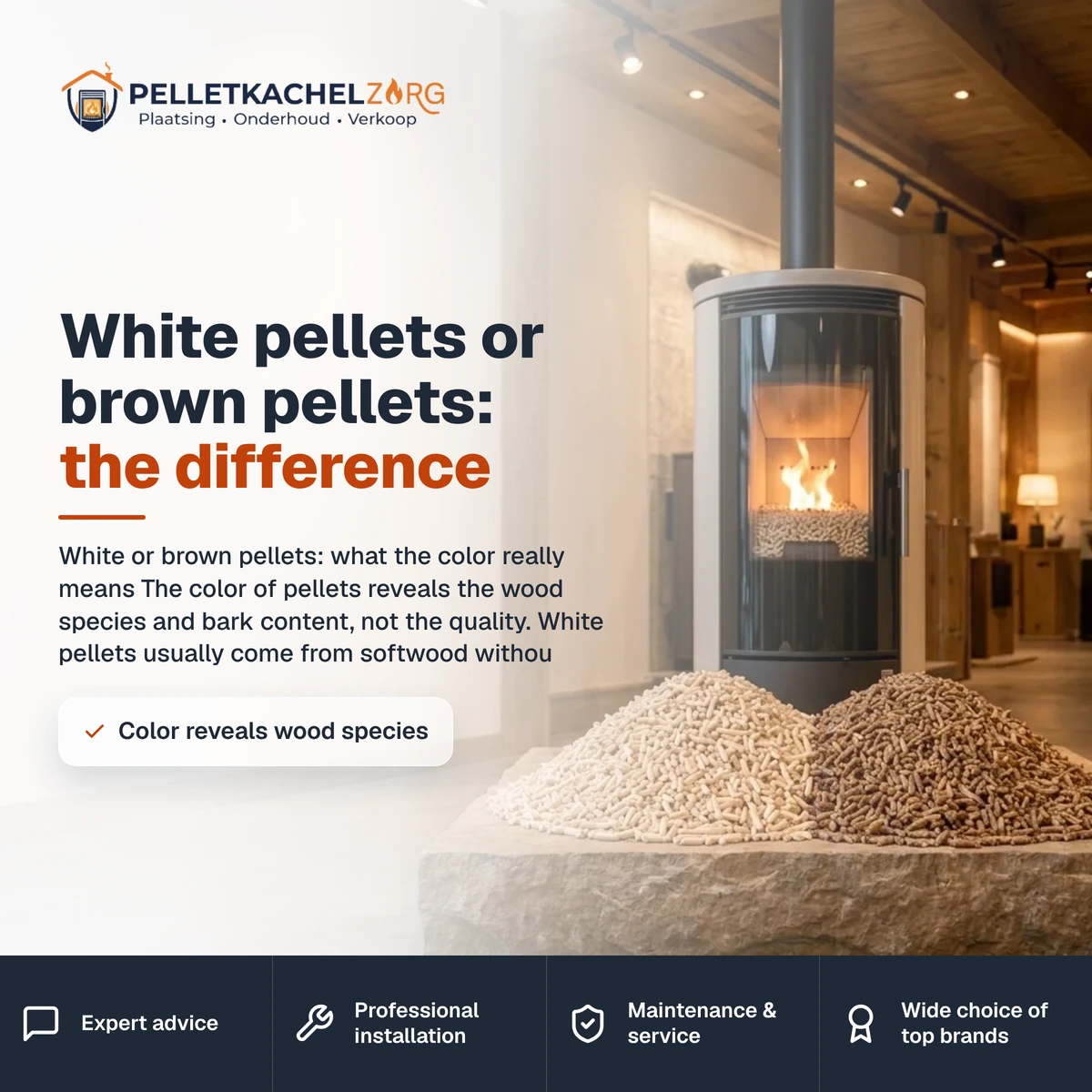
The color of pellets reveals the wood species and bark content, not the quality. White pellets usually come from softwood without bark, brown pellets more often contain hardwood or some bark. Certification marks and ash content say far more than the shade.
Choose pellets based on certification and ash content, not color alone.
When comparing white or brown pellets, the color mainly indicates the wood species used and whether bark is present, not necessarily the quality. Light pellets usually come from softwood without bark and typically produce very little ash. Darker pellets more often contain hardwood or a small portion of bark.
Those darker pellets sometimes leave a bit more ash, without being inferior. Color is merely an indicator, not proof. The quality certification and stated ash content matter much more than the shade on the bag. Below, you will read what to look for and where color can be misleading.
2>White pellets versus brown pellets
Both types can work well in a modern pellet stove. The color difference is caused by the wood species, bark proportion, and pressure during pressing. A light pellet looks clean, but that does not guarantee low ash content. A certified dark pellet can actually burn very cleanly and efficiently.
Origin also plays a role. Sawmill byproducts are pressed into pellets, and the mix of wood species varies per batch. Consequently, the same manufacturer may supply lighter bags one time and darker bags another, while standards and performance remain identical.
Do not judge pellets by color alone, but by the certification mark and ash content on the packaging.
Objective fuel advice
We look at certification and ash content, not color alone. That way you know exactly which pellets suit your stove.
Experience with all brands
We see daily how different pellets burn and deposit residue. We are glad to share this practical expertise with you.
Maintenance and advice combined
In case of combustion issues or excessive ash, we assist on site. You receive an honest evaluation of your fuel.
The following points will help you look beyond the color. Check them before ordering a full pallet.
First check the certification mark on the packaging, not the color of the pellets.
Read the specified ash content, as a lower percentage means emptying the ash pan less often.
Pay attention to the wood type, because softwood is often light and hardwood is generally darker.
Check if the pellets are firm and smooth, as excessive dust indicates lower quality.
Compare brands only after testing a few bags in your own stove, as every stove reacts differently.
This prevents buying an entire supply that disappoints during combustion or leaves unnecessary ash.
2>What truly mattersThis checklist summarizes what truly matters when buying. Color is intentionally omitted, as it is secondary to the standard.
An ENplus or DINplus certification on the bag
A low specified ash content
Minimal sawdust or fines at the bottom of the bag
Firm, shiny pellets with little breakage
Dry storage without damp spots or a musty odor
Color alone is not proof of quality because manufacturers use different wood species and pressing techniques. Two light bags can differ greatly in ash content, while a certified dark pellet can burn very cleanly.
So do not let shade alone guide you. If you want to know which pellets are best for your pellet stove, look at the full specification on the packaging.
This also allows a fair comparison when deciding to buy the best pellets based on quality and price, rather than choosing solely on appearance. A cheap light pellet is not automatically a good choice.
2>When wood species does make a differenceThe wood species behind the color mainly affects ash production and flame appearance. Softwood contains slightly more resin and burns lively, while hardwood is denser and produces a calm glow. For most modern stoves, that difference remains minor as long as the pellets carry a quality seal.
More importantly, pellets must stay dry and intact. Damp or crumbled pellets burn poorly regardless of color. Consistent combustion depends more on storage and stove settings than on whether the pellet is white or brown.
Heavy users will notice minor differences sooner. However, it pays off more to focus on ash content and burn quality than on color. Certification guarantees maximum ash limits and minimum energy values, which matters far more in practice than pellet color.
2>Color, ash, and daily heatingWhat you see in the stove depends more on ash content and moisture than on color. High-ash pellets require more frequent cleaning, and damp pellets burn poorly whether they are white or brown.
Real proof lies in the standard. In the article about what the ENplus A1 certification means, you can read which values truly count when purchasing.
If you notice soot or buildup, check your combustion settings rather than blaming the fuel alone. Understanding why the glass of your pellet stove turns black quickly often comes down to airflow and settings. And since moisture disrupts burning, it helps to know how to store wood pellets dry.
In short, do not rely on color alone. Look for quality certification, low ash content, and dry storage, and you will confidently choose between white or brown pellets that suit your stove best.
Unsure which pellets suit your stove or dealing with excessive ash? Request a free quote or advice and we will review your fuel and combustion setup together.
We are happy to help. Contact us without obligation.
No, white pellets are not automatically better. The light color usually indicates softwood without bark, which often produces little ash. However, certified brown pellets can perform just as well.
Darker pellets often contain hardwood, a small amount of bark, or wood pressed under higher pressure. Color alone says little about quality, as certification and ash content are the decisive factors.
Sometimes brown pellets produce slightly more ash because bark and hardwood leave behind more residue. The difference is usually minimal, and the stated ash content on the bag is a far better metric than color.
First check for ENplus or DINplus certification and the specified ash content. Next, select firm, smooth pellets with minimal dust, and keep them stored dry for clean combustion.