
Tailored stove advice
We match fuel recommendations to your specific stove brand and manual, preventing issues caused by incorrect diameter or wood composition.
Have a pellet stove installed with the utmost care? Get a quote in 5 steps.
Have a pellet stove installed with the utmost care? Get a quote in 5 steps.
Have a pellet stove installed with the utmost care? Get a quote in 5 steps.

 Written by Dries Nijs3 min read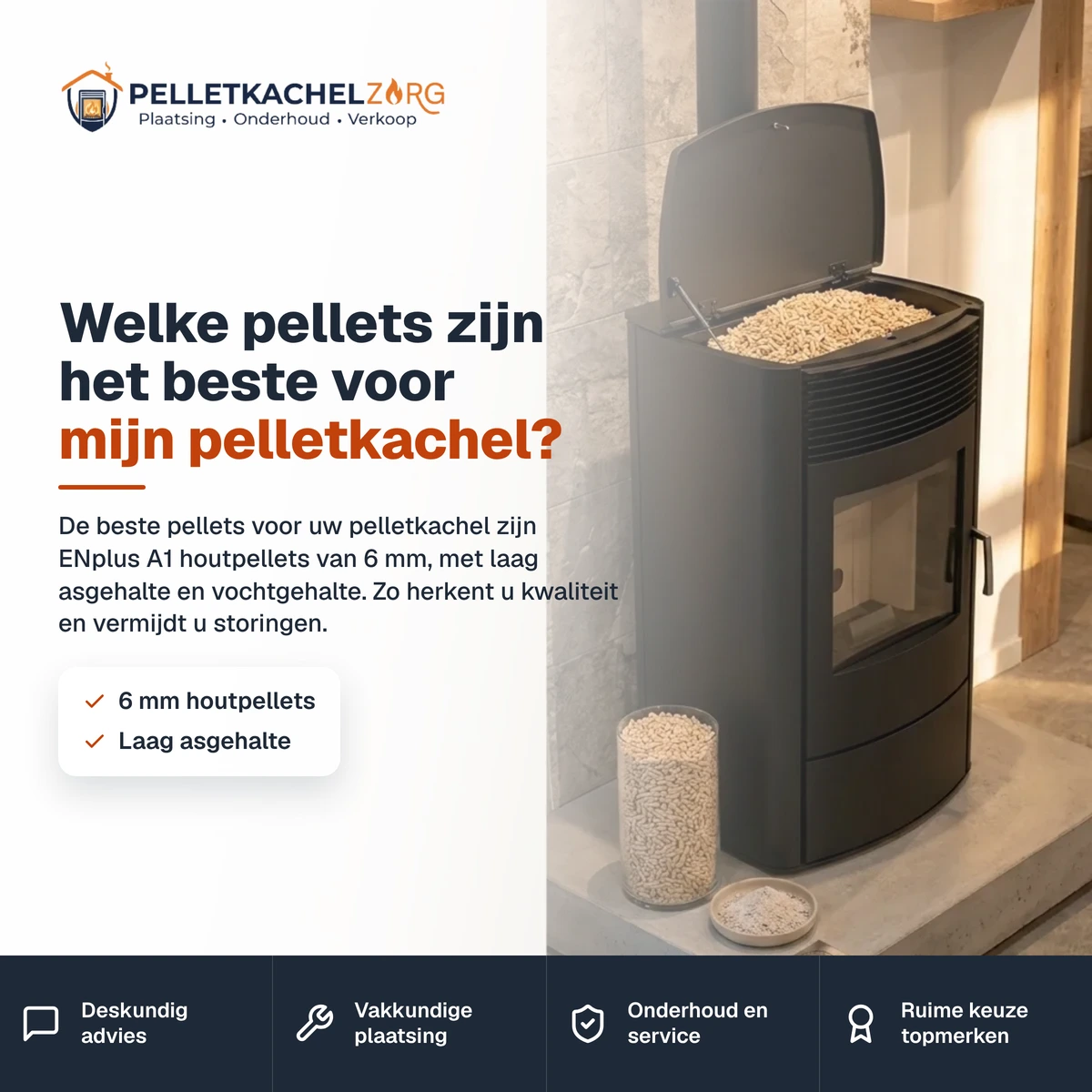
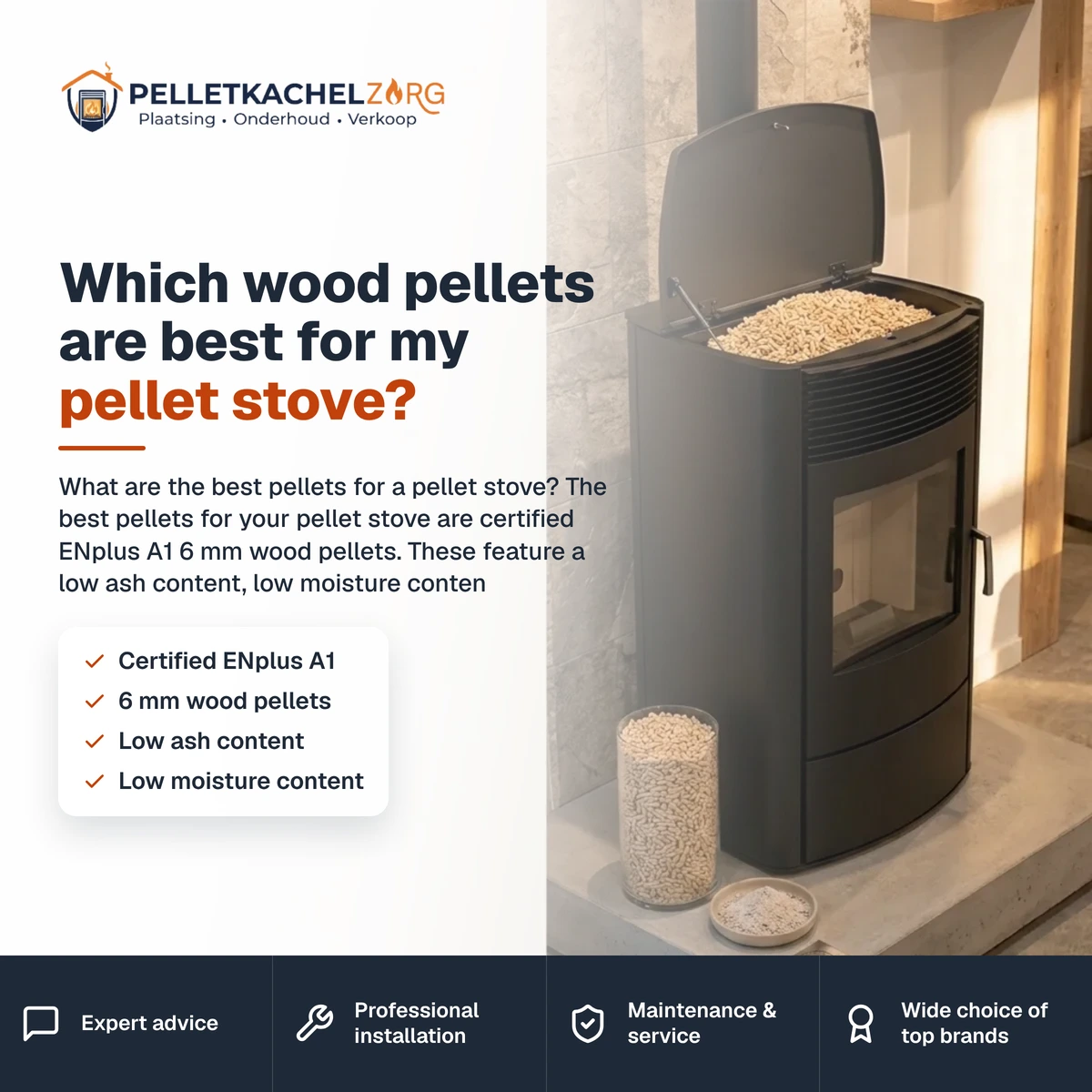
The best pellets for your pellet stove are certified ENplus A1 6 mm wood pellets. These feature a low ash content, low moisture content, and minimal dust, resulting in higher heat output and fewer malfunctions.
Choose certified pellets and always follow your stove manufacturer guidelines.
The best pellets for your pellet stove are ENplus A1 certified wood pellets with a 6 mm diameter, low ash content, low moisture content, and minimal dust. This combination provides more heat output per bag and leads to fewer breakdowns and less maintenance. Cheap, low-quality pellets might seem economical, but often end up costing more. Below you will find out which quality features truly matter.
2>Good pellets versus poor quality pelletsYou can often see and feel the difference between high-grade and low-grade pellets even before lighting your stove. Premium pellets are hard, uniform, and virtually dust-free, whereas inferior pellets crumble and leave a lot of fine residue. The overview below helps you quickly spot the difference.
A certification logo on the bag is the fastest proof of burning quality pellets.
Tailored stove advice
We match fuel recommendations to your specific stove brand and manual, preventing issues caused by incorrect diameter or wood composition.
Hands on troubleshooting
We troubleshoot stove errors, dirty glass, and ash build up daily. We turn practical experience into clear advice for your home.
Installation and servicing
We install and service pellet stoves and chimneys across Limburg and nearby regions, prioritizing safe, clean, and efficient combustion.
Six main factors determine how well pellets perform in your appliance. Checking these prior to purchase ensures a smart choice and avoids unwelcome surprises. These details are usually listed on the packaging or technical datasheet.
Certification mark: ENplus A1 or DINplus guarantees strict thresholds for ash, moisture, and density. Uncertified pellets leave you guessing the composition.
Diameter: 6 mm is standard for most stoves. Certain models require 8 mm, so double check your manual.
Ash content: the lower it is, the less often you empty the ash drawer. ENplus A1 remains below 0.7 percent.
Moisture content: drier pellets burn hotter. Excessive moisture lowers efficiency and causes soot buildup in stove and flue.
Color and aroma: uniform pellets with a natural wood smell signal pure timber. Chemical smells indicate added binders or additives.
Durability and dust content: solid pellets crumble less. Excessive fines at the bottom of the bag indicate poor manufacturing.
Review these steps before ordering a pallet or individual bags. This ensures your fuel matches your specific stove without sacrificing quality due to improper selection or storage issues.
Is the ENplus A1 or DINplus seal clearly displayed on the packaging.
Does the pellet size match your manual, usually 6 mm.
Do the pellets feel firm and smooth, with minimal dust inside.
Do the pellets smell of clean wood, without chemical odors.
Has the bag been stored completely dry without tears.
Bargain pellets without official certification look like a deal, but hidden costs show up later. Higher ash and moisture levels lower thermal efficiency, forcing you to burn more fuel to reach your target temperature.
Furthermore, lower grade pellets foul your burner much faster. You will notice increased soot, a rapidly filling ash drawer, and blackened glass. Read more in our guide about pellet stove glass turning black quickly.
Maintenance demands also rise with poor quality fuel. Frequent cleaning routines and required service visits quickly offset any savings. The tiny price saving per bag rarely outweighs lost heating comfort, reduced efficiency, and stove wear.
This article explains how to spot quality pellets. To compare brands and bulk prices, read our comprehensive guide on buying the best pellets with ideal price quality ratio.
While official certification provides a strong baseline, your specific stove determines optimal compatibility. Certain burners are sensitive to length or ash volume, leading manufacturers to specify preferred fuels in warranty conditions.
When switching brands, monitor your burner for the first few days. If you notice excess ash, soot, or ignition errors, the fuel might not suit your appliance well. Reverting to a certified brand usually restores clean, reliable operation.
To learn what certification standards actually guarantee, read our article explaining what ENplus A1 pellets mean.
If you wonder about color variations, explore why there is a difference between light and dark wood pellets. Storing bags correctly preserves fuel quality long term, as detailed in our guide on storing wood pellets completely dry.
Want to ensure optimal heating efficiency and healthy combustion for your stove? Request a free quote or tailored advice today and our team will assist you.
We are happy to help. Contact us without obligation.
Yes, ENplus A1 pellets are significantly more reliable because the certification enforces strict limits on ash, moisture, and hardness. Uncertified pellets lack quality control, leading to unpredictable heating performance.
Most domestic pellet stoves use 6 mm pellets. Some models require 8 mm, so always check your owner manual before ordering bulk quantities.
Poor quality pellets show high dust levels in the bag, irregular lengths, high ash content, and sometimes chemical smells. They cause frequent stove errors and soot covered glass.
Color only reflects the wood species used, not fuel quality. Both light and dark pellets can perform excellently: official certification and low ash content are far better indicators of performance.