
Correct diameter and draught
We determine the exact diameter based on your stove manufacturer specs. This ensures a stable draw and safe smoke extraction.
Have a pellet stove installed with the utmost care? Get a quote in 5 steps.
Have a pellet stove installed with the utmost care? Get a quote in 5 steps.
Have a pellet stove installed with the utmost care? Get a quote in 5 steps.

 Written by Dries Nijs4 min read
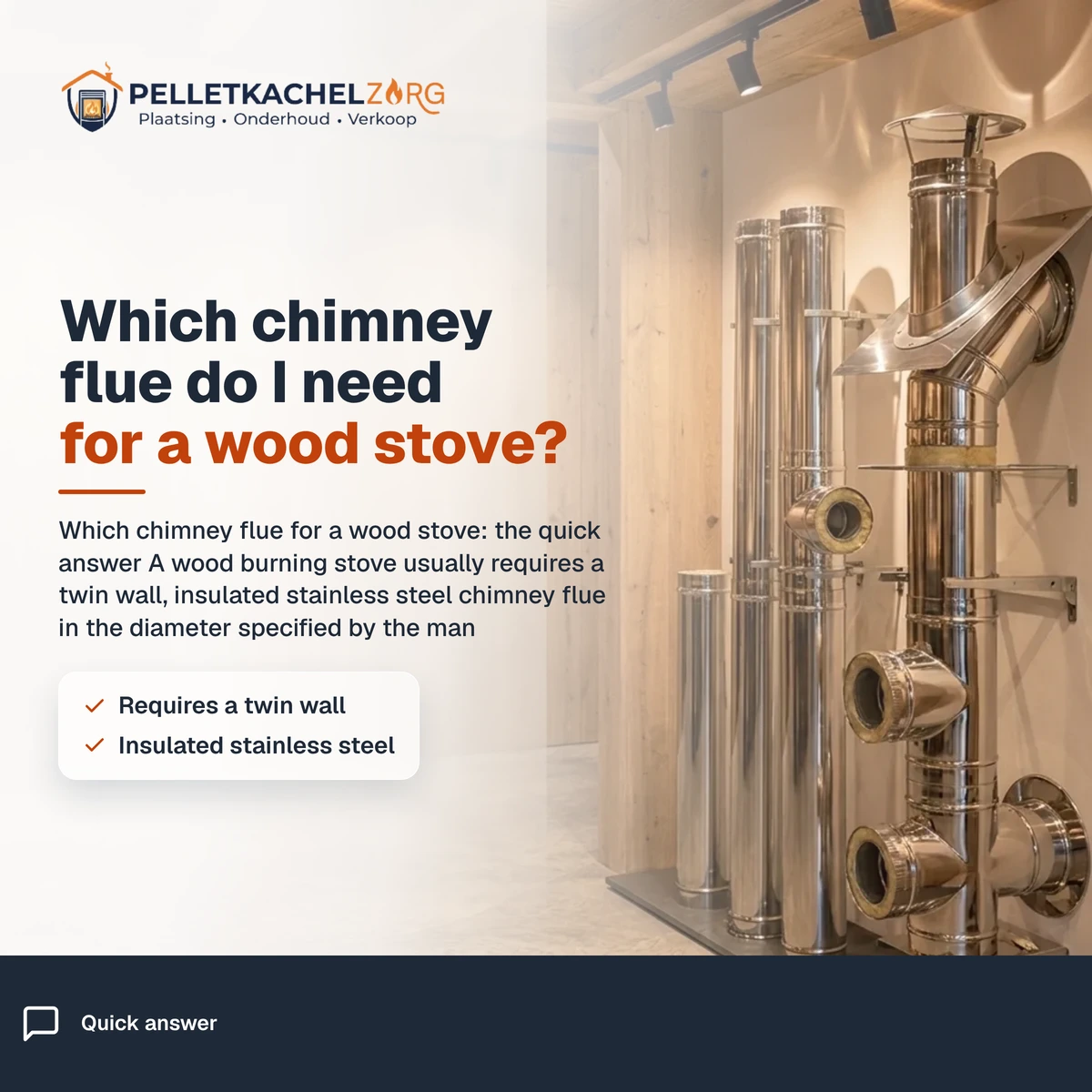
A wood burning stove usually requires a twin wall, insulated stainless steel chimney flue in the diameter specified by the manufacturer. The flue must withstand high temperatures and chimney fires, with sufficient height to generate a stable draught.
Always follow the manual and the applicable regulations, as they are binding.
A flue for a wood stove is usually a twin wall, insulated stainless steel system in the diameter specified by the manufacturer. A wood stove gets hotter than a pellet stove, so the chimney flue must be resistant to extreme heat and soot fires. The height and insulation together determine the draught. If you connect to an existing chimney, a stainless steel flexible liner is usually required. Always follow the manual and local regulations.
2>Wood stove versus pellet stove: differences in flue requirementsAs a rule of thumb: a wood stove requires a larger, better insulated flue than a pellet stove, because the smoke is hotter and the draught depends entirely on height.
Correct diameter and draught
We determine the exact diameter based on your stove manufacturer specs. This ensures a stable draw and safe smoke extraction.
Fully compliant with standards
Our chimney flues are installed in line with EN regulations. You receive an installation ready for safety clearance and insurance.
Tailored advice for your home
Whether fitting a new twin wall flue or lining an existing stack, we offer honest advice with clear upfront pricing.
The main difference lies in how the smoke is expelled. A pellet stove uses an internal fan to push smoke out, while a wood stove relies entirely on natural chimney draught. Because of this, the height of the flue system is far more critical for a wood stove.
Material requirements are also much stricter. In a wood stove flue, soot build-up from a neglected chimney can ignite into a chimney fire. A suitable stainless steel flue system is engineered to withstand these extreme peak temperatures, combined with annual chimney sweeping.
For a new wood stove installation without a usable masonry chimney, you typically install a twin-wall insulated stainless steel flue system through the roof or along the external wall.
If you have an existing masonry chimney, it should be inspected first, followed by installing a flexible or rigid stainless steel flue liner in the correct diameter.
The visible section connecting the stove to the wall or ceiling penetration can be single-wall pipe, provided you maintain the required clearance to combustible materials.
If you are unsure about the required diameter, height, or natural draught, have an experienced installer calculate the system specifications before purchasing.
If the flue runs through unheated attic space or outdoors along an external wall, always use twin-wall insulated stainless steel pipe for that section.
Flue diameter selected according to your wood stove manufacturer manual, without reducing or increasing the sizing arbitrarily.
Twin-wall insulated stainless steel used for any sections passing through unheated rooms or external walls.
Sufficient effective height, typically at least four to five metres, to guarantee stable draught.
Flue materials certified to withstand high temperatures and soot fires.
Correct safety distances kept from wooden beams, plasterboard, and other combustible materials.
Existing chimneys: fully inspected prior to connection and fitted with a stainless steel liner where necessary.
Selecting the correct diameter is your starting point. Always match the manufacturer specification and keep this size consistent across the entire length of the system. Learn more in our guide on what stove pipe diameter you need.
Proper insulation maintains flue gas temperatures, ensuring optimal chimney draught. Whenever the flue system passes through unheated spaces or outside, you must use twin-wall pipe. If flue gases cool down too rapidly, draught drops significantly and soot accumulation accelerates. Read all about these differences in our article on single-wall vs twin-wall flue pipes.
Clearance to combustibles is equally crucial when picking your flue system. Single-wall pipe requires a much larger safety distance than insulated twin-wall pipe. Check our detailed guide on clearance to combustible materials for stove pipes.
Many homes feature a traditional brick chimney, but these are often not gastight or suitable for modern wood stove operating temperatures. A chimney flue that is oversized cools flue gases down, causing weak draught. In such cases, professional installers insert a stainless steel liner sized to the stove. Read when this is required in our guide to flexible stainless steel liners in existing chimneys.
Building regulations and installation standards vary by region and municipality. Relevant European standards (EN) and local building codes apply, and your home insurer may request an inspection certificate. Always treat the stove manual, applicable regulations, and insurer requirements as binding, rather than relying on general rules of thumb.
A professionally fitted and certified flue is more than just compliance. It ensures your wood stove operates safely and efficiently while protecting your insurance coverage in the event of a claim. A certificate of compliance provides proof that your installation meets all required safety standards.
Unsure if your wood stove requires a different flue setup than a pellet stove? Compare requirements with our article on which flue system a pellet stove needs.
Want to guarantee the correct pipe diameter, insulation level, and chimney height for your wood stove? Request a free quote or expert advice today and we will gladly assess your situation.
We are happy to help. Contact us without obligation.
For the insulated section inside and outside the property, twin wall stainless steel is almost always required. Single wall flues are usually only permitted as a visible connecting pipe in the living area, keeping a safe distance from combustible materials. Manufacturer guidelines and local codes set the exact rule.
You must follow the diameter specified by the manufacturer in the manual, usually 130, 150 or 180 millimetres. A wood stove generally requires a larger diameter than a pellet stove. Never reduce or enlarge the diameter without guidance, as this disrupts the draught.
Yes, provided the chimney is suitable, smoke tight and has the correct dimensions. In most cases, an installer will fit a flexible stainless steel liner inside the existing masonry stack. Always have the chimney inspected before connecting.
As a rule of thumb, you need at least four to five metres of effective vertical height to generate sufficient draught. The terminal must extend sufficiently above the roof ridge or edge. Check the manual and local building regulations for exact details.