
Tailored home advice
We evaluate room volume, insulation and heating needs to ensure your chosen stove provides the exact heat capacity required.
Have a pellet stove installed with the utmost care? Get a quote in 5 steps.
Have a pellet stove installed with the utmost care? Get a quote in 5 steps.
Have a pellet stove installed with the utmost care? Get a quote in 5 steps.

 Written by Dries Nijs4 min read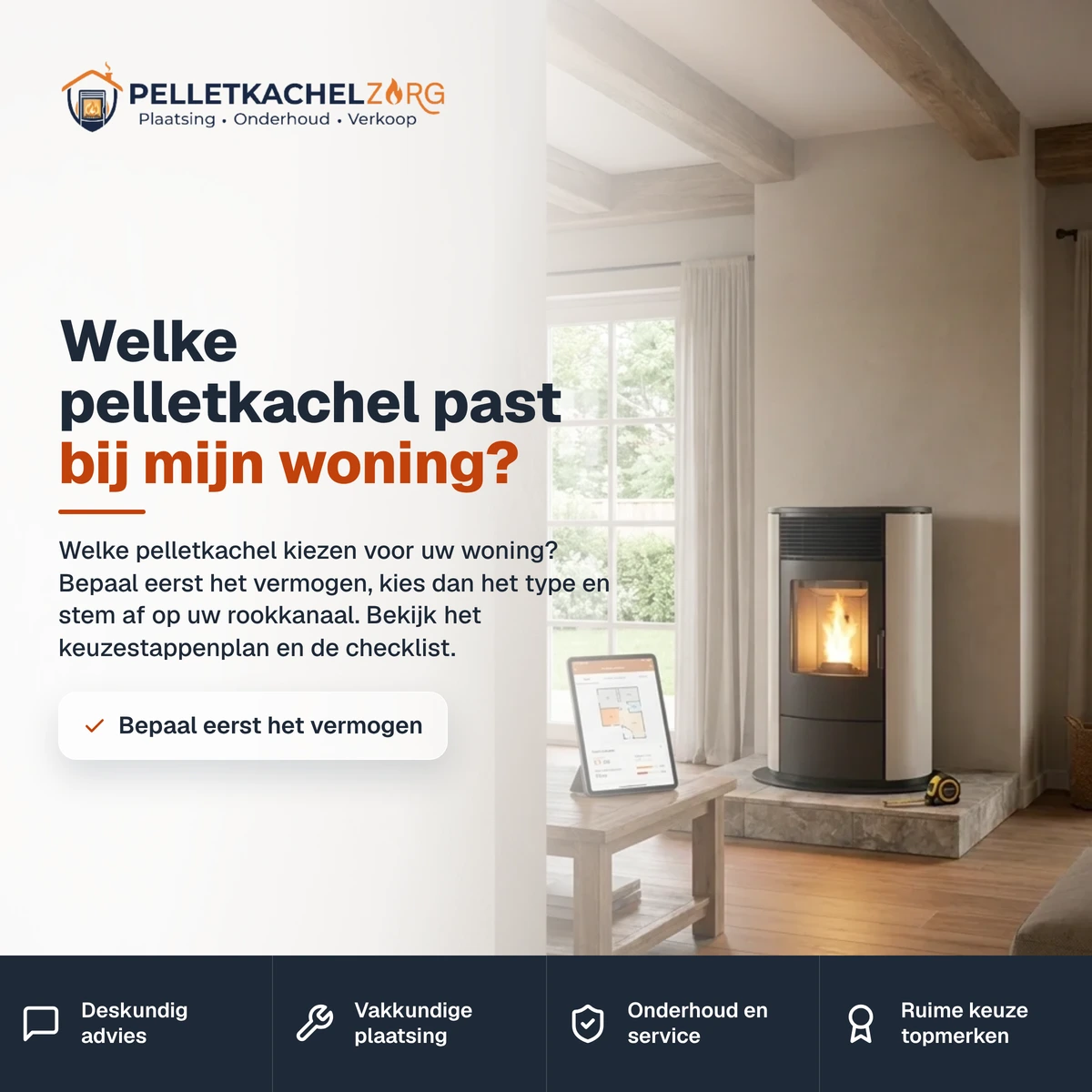
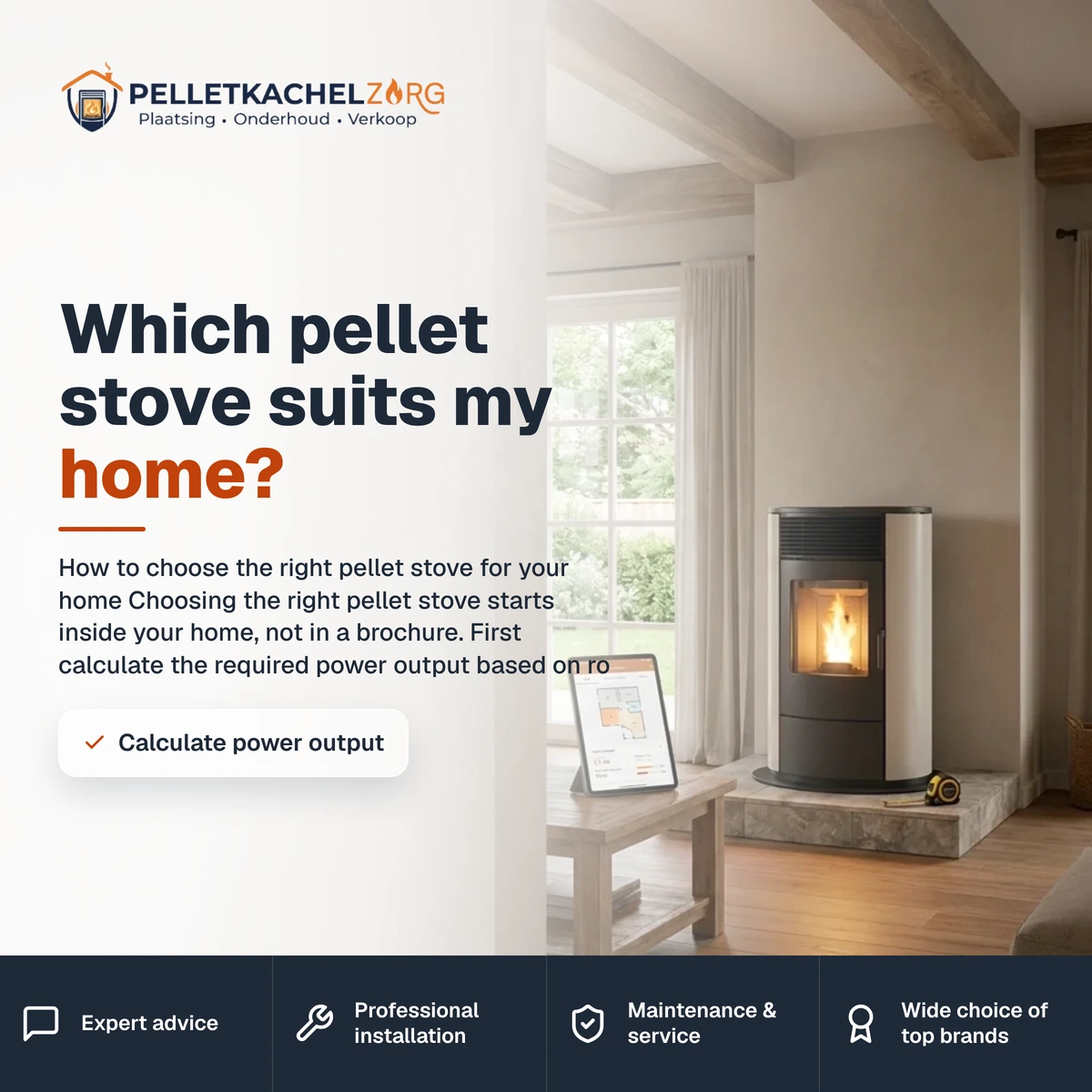
Choosing the right pellet stove starts inside your home, not in a brochure. First calculate the required power output based on room volume and insulation, then select the type and align everything with your chimney flues.
Start with your home and heating goals: the ideal appliance will naturally follow.
Selecting a pellet stove is all about your specific living space. Determine how much heating capacity you need based on the volume to be heated and current insulation levels. Next, choose the stove type that matches your goal, ranging from heating a single room to complete central heating. Finally, consider noise levels, hopper size, efficiency and connection to your flue pipe. That is how you find the ideal pellet stove for every home.
The primary decision involves the area you want to heat. If you mainly want to warm the living room, a compact stove will suffice. If you wish to heat multiple rooms or the whole house, a ductable model or a hydro pellet stove connected to central heating comes into play. The comparison below outlines both options side by side.
Define your primary goal first, single room or whole house, before choosing heat output and stove type.
Tailored home advice
We evaluate room volume, insulation and heating needs to ensure your chosen stove provides the exact heat capacity required.
Flue pipe and stove matching
A pellet stove relies on correct flue ventilation. We verify chimney diameter, materials and draft before you order.
Clear upfront pricing
Know exact costs for the appliance, installation and flue connections beforehand. No unexpected fees, just professional advice.
Work through your choice step by step to ensure you do not miss any key criteria. Start with your home and heating goals, and finish with the appliance and flue system. The step-by-step guide below leads you from calculations to your final choice.
Calculate the required heat output based on the volume and insulation level of the room.
Determine your goal: are you heating a single living space, multiple rooms, or your entire home?
Choose the type: freestanding, inset, ductable, or a hydro model connected to your central heating.
Check if the noise level is suitable for a living area or bedroom.
Consider the hopper size, as a larger capacity means less frequent refilling.
Compare efficiency ratings, because higher efficiency lowers fuel consumption and emissions.
Ensure the appliance is compatible with your existing or planned flue system.
Required heat output matched to room volume and insulation
Stove type tailored to your heating objective
Noise level suitable for the room
Hopper size and desired running time
Efficiency rating and energy label
Compatibility with your flue and correct diameter
Sufficient clearance and safe distance from combustible materials
Heat output is the single most important factor in your decision. An oversized stove in a small, well-insulated room will often run on its lowest setting, leading to faster soot build-up. Conversely, an undersized appliance will struggle to heat your home. Calculate your heating needs accurately first using our guide on calculating pellet stove heat output.
Besides heat output, several practical factors determine your comfort. Fan noise levels matter significantly in living areas or bedrooms, as a quiet stove is far less intrusive. The hopper size dictates how often you need to top up pellets, with a larger hopper offering longer running times on cold days.
Efficiency and stove type also require attention. A high-efficiency appliance extracts more heat from the same amount of pellets, lowering both consumption and emissions. Additionally, consider whether a freestanding, inset, or ductable model best fits your space and heating plans.
The location of the stove is equally important. A central location distributes heat far more evenly than positioning the stove in a far corner. Learn how to determine the best location for a pellet stove in your home before making a final decision on the type. To understand what installation involves, read installing a pellet stove: what you need to know.
Your property and flue system together determine what is possible. Regulations and standards vary by region and municipality in Belgium, as well as per municipality in the Netherlands. Your flue pipe must match the selected appliance in terms of diameter, material, and draught. Always check with your local authority, region, insurer, and the manufacturer manual for binding requirements.
An existing chimney is not automatically suitable for every appliance. Sometimes a flexible stainless steel liner inside the existing chimney is enough, while in other cases a new twin-wall flue is required. The correct diameter depends on the appliance and the draught available in your home. An unsuitable flue leads to poor combustion and increased maintenance.
If you do not have a suitable flue yet, first check which flue pipe do I need for a pellet stove. If you want an idea of expected costs, review the pellet stove installation costs in Belgium. Seek advice if you are unsure, as matching the stove to your home and flue system is essential.
Making the right choice is always a custom process. Two homes with the exact same floor area may require entirely different appliances, depending on insulation, layout, and the existing flue system. Base your decision on your specific situation rather than generic advice, and test your preferences against output, type, and flue requirements.
Unsure which model fits your home best? A specialist can evaluate your property, flue system, and heating goals to recommend the ideal appliance. Request a free quote or expert advice.
We are happy to help. Contact us without obligation.
The required power output depends on room volume and home insulation. A well insulated living room usually needs 5 to 8 kW, whereas heating multiple rooms or central heating requires higher capacity. Calculate carefully before buying your appliance.
Yes, using a ducted pellet stove or a hydro stove. Ducted models blow warm air to adjoining rooms via air ducts, while hydro models connect to central heating pipework and radiators. Both require higher kW output and professional installation.
It depends on available space and personal style. Freestanding stoves are easier to install and reposition, whereas inset or built-in models offer a sleek design integrated into walls or existing fireplaces. Both offer similar heating performance: overall kW capacity matters most.
Besides heat output, focus on noise levels, hopper capacity, energy efficiency ratings and flue compatibility. A larger hopper requires less frequent refilling, and high efficiency lowers pellet consumption. Always check flue pipe requirements beforehand.