


How to Properly Use a Wood Stove?
 Written by Dries Nijs3 min read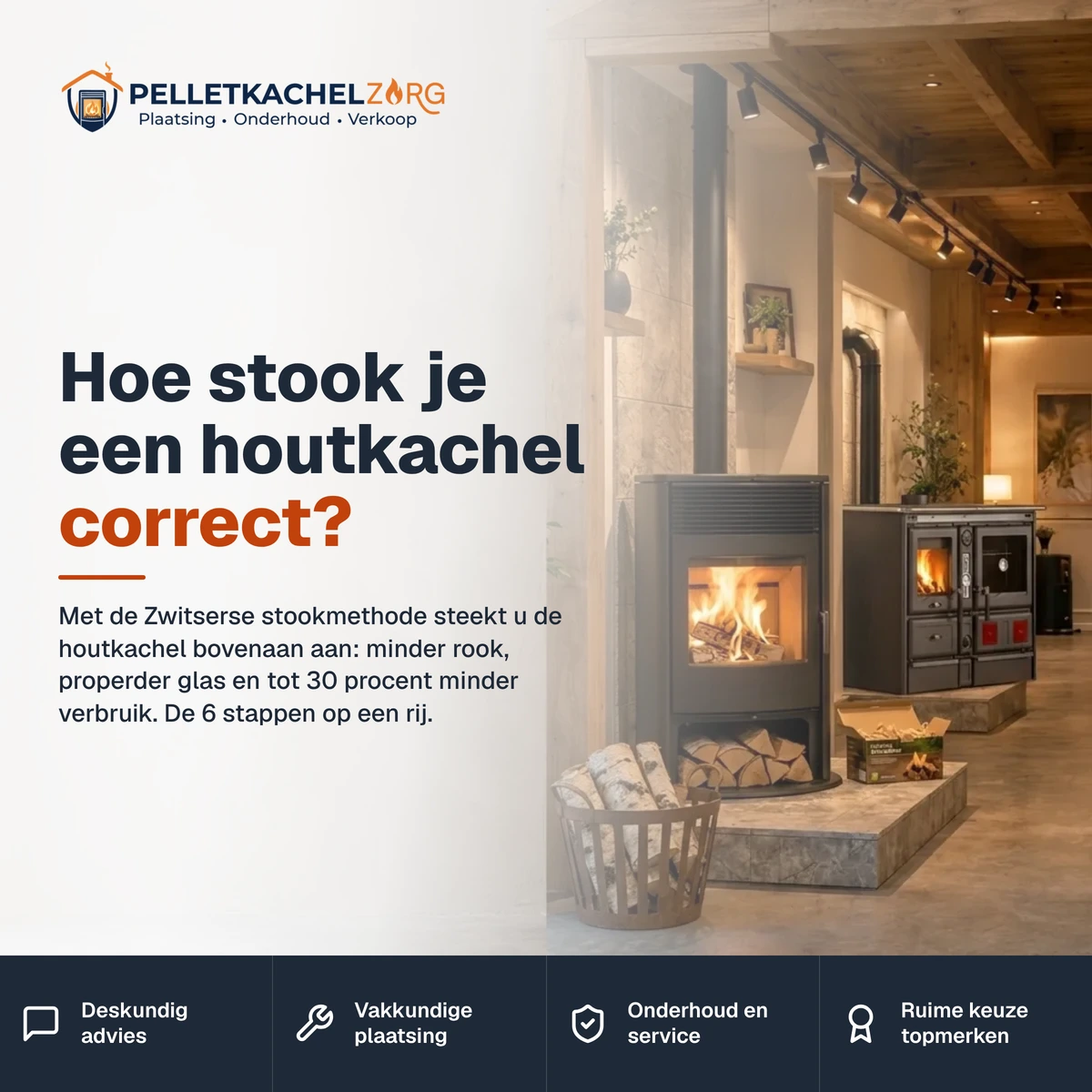
Proper Use with the Swiss Method
Light the fire from the top of the stack: this way, the wood burns from top to bottom with significantly less smoke in the first quarter hour. Together with wood under 20 percent moisture, the glass stays noticeably cleaner.
Light from the top, keep the air open at the start, and never smother: that's 90 percent of proper burning.
Proper burning starts at the top: with the Swiss method, you light the fire on top of the stack, causing the wood to burn from top to bottom with significantly less smoke in the first 15 minutes. Combine this with wood under 20 percent moisture and an open air supply at the start, and the glass and chimney stay noticeably cleaner.
Below, you'll learn the method in 6 steps, the role of the air vents, and the 5 habits of a good burner.
Why Top Lighting Wins
Light from the top: the fire then calmly descends through the stack and immediately burns the smoke gases.
The Swiss Method in 6 Steps
Place 2 to 3 large logs of 25 to 30 centimeters at the bottom, with the splits facing up.
Cross-stack a layer of medium-sized pieces on top, with 1 to 2 centimeters of space between them.
Place 8 to 10 dry kindling sticks on top, again cross-stacked.
Place one firelighter among the kindling sticks and light it.
Open the primary air supply fully for the first 10 to 15 minutes.
Close the primary air once a glowing bed forms and continue regulating with the secondary air.
Understanding the Air Vents
The primary air feeds the fire from below and is only for starting. The secondary air flows along the glass to the flames and regulates the fire during burning; it is also the air that keeps the glass clean.
Close the primary air after 15 to 20 minutes and continue with the secondary vent. Never smother the fire by closing everything: this increases emissions, clogs the chimney, and risks carbon monoxide in the house. A CO detector costing 20 to 40 euros is essential in the room.
The 5 Habits of a Good Burner
Burn only wood with less than 20 percent moisture; a moisture meter costs only 10 to 25 euros.
Leave an ash bed of 1 to 2 centimeters; it insulates the fire and retains the glow.
Add 2 to 3 logs at a time on a glowing bed, not on high flames.
Use the glass as a gauge: if it turns black quickly, you're burning too wet or smothered.
Never burn treated wood, inked paper, or waste, not even for kindling.
Learn how to distinguish wet from dry wood in the tests to recognize dry wood. If smoke still enters, check the causes of a wood stove smoking indoors.
Refueling, Cooling Down, and Aftercare
Make the last refill 1 to 2 hours before you stop and let the fire burn out with the secondary air slightly open. Close the vents completely only when only glowing embers remain.
Have the chimney swept annually, especially with daily use: find out the cost in the chimney sweeping cost overview. If you're considering a new, more efficient appliance, start with the wood stove buying guide. Official burning tips can be found on the Flemish government page on indoor burning.
How to Tell You're Burning Well
Check outside after a quarter hour: the smoke plume should be almost invisible or light white, without bothering the neighbors. Inside, you'll see a lively, light flame, the glass remains clear, and you'll find fine gray ash instead of black chunks afterward. If any of these four signals deviate, the issue lies with the wood, the air, or the chimney.
Find kindling, moisture meters, and CO detectors in our webshop. If you're unsure whether your stove and chimney are properly adjusted, have a maintenance check with burning advice. Request a free quote or advice and our technician will demonstrate the method on-site.