
Tailored appliance advice
We match flue diameter and configuration to your pellet stove manual, ensuring proper draft and condensation drainage from day one.
Have a pellet stove installed with the utmost care? Get a quote in 5 steps.
Have a pellet stove installed with the utmost care? Get a quote in 5 steps.
Have a pellet stove installed with the utmost care? Get a quote in 5 steps.

 Written by Dries Nijs4 min read
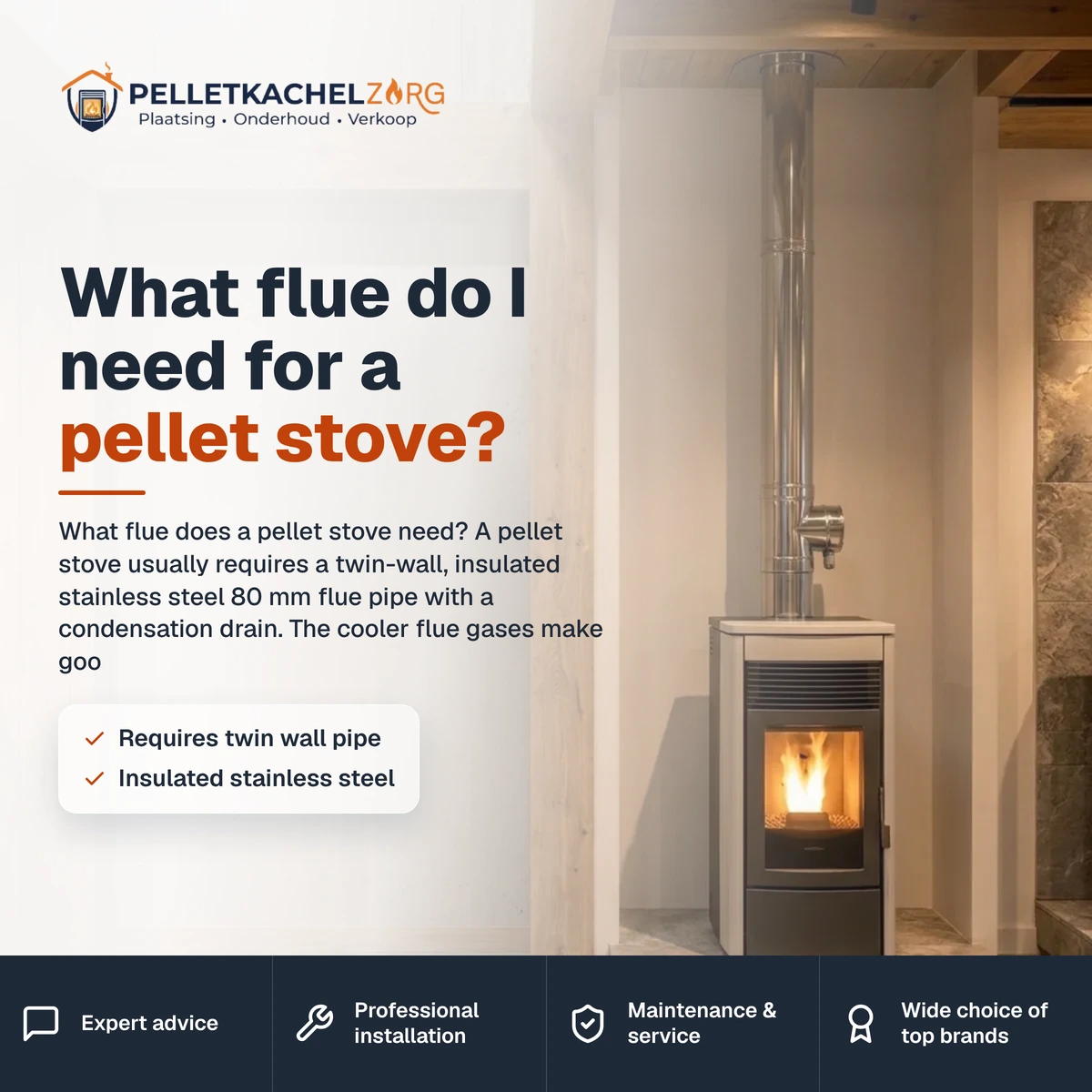
A pellet stove usually requires a twin-wall, insulated stainless steel 80 mm flue pipe with a condensation drain. The cooler flue gases make good insulation and a T-piece with a condensation cap crucial. Always follow the diameter specified in the manual.
Insulated stainless steel, the correct diameter, and proper condensation drainage are key.
For a pellet stove, you usually need a twin-wall, insulated stainless steel flue pipe, often 80 mm in diameter. This pellet stove flue safely evacuates cooler exhaust gases and minimizes condensation. Because a pellet stove relies on an extraction fan, exhaust temperatures are lower than with a wood stove. Therefore, proper insulation and adequate condensation drainage are vital. The required dimensions are detailed in your appliance's manual.
As a rule of thumb, choose an insulated stainless steel flue with condensation drainage for a pellet stove, and strictly follow the manual's diameter.
Tailored appliance advice
We match flue diameter and configuration to your pellet stove manual, ensuring proper draft and condensation drainage from day one.
Safe and compliant installation
Our flues are twin-walled, insulated, and installed according to fire safety distance standards, delivering a clean and inspectable setup.
New flue system or chimney liner
We install complete new stainless steel flues or line your existing chimney, offering the right solution tailored to your home.
Which solution fits best depends on your home. If there is no chimney stack yet, you usually install a completely new stainless steel flue. If there is a sound chimney, a liner is often faster and cleaner. In both cases, the principle remains the same: keeping the flue gases warm and properly draining moisture.
It is important to know that the flue gas connection at the back or top of your pellet stove is often already 80 mm. The flue pipe connects to it with an adapter. Do not simply switch to a larger size, as the manufacturer designed the draught for that specific diameter. Deviating from it risks poor combustion or malfunctions.
The right choice depends on the condition of your chimney and the location of your pellet stove. The situations below will help you determine the right direction quickly, although your appliance manual remains the leading source.
No chimney present or new build: install a complete twin-wall stainless steel flue along the facade or through the roof.
An existing, sound chimney: insert a stainless steel liner or flexible flue with the correct diameter.
An old or oversized chimney: reduce it with a liner so that the draught and condensation drainage are correct.
Unsure about the size: stick to the diameter specified by the manufacturer, usually 80 mm, sometimes 100 mm.
Go through the points below before ordering parts or requesting a quote. This ensures that the flue pipe is suitable for a pellet stove and that the draught, insulation, and condensation drainage are in order. If you are unsure about any point, have it checked.
Twin-wall and insulated stainless steel, no single-wall flue outdoors or in cold spaces.
Diameter according to the manual, usually 80 mm, sometimes 100 mm.
T-piece with condensation cap and an accessible drain at the bottom.
Sufficient height and limited bends for adequate draught.
Have an existing chimney inspected for tightness and draught first.
Components with proper certification and installed according to fire safety distances.
Flue gases from a pellet stove are cooler than those from a log burner, causing condensation to form more quickly in the flue. An insulated twin-wall flue pipe keeps the gases warmer, minimizing moisture and deposit buildup.
At the bottom, a T-piece with a condensation cap neatly collects moisture. Read more details in why condensation collection is important for pellet stoves and in what a T-piece with a condensation cap actually does. The correct stove pipe diameter also helps determine whether the draught is right.
If condensation stays in the flue for too long, it will eventually damage the seals and flue walls. A properly angled T-piece and an accessible drain point keep this under control. Therefore, position the drain point in a location where you can easily reach it for annual maintenance.
Also consider the routing. Every extra bend and every cold, unheated section of flue increases the risk of condensation and reduces the draught. Keep the number of bends to a minimum, ensure sufficient vertical height, and insulate sections running through cold spaces or outdoors. This ensures your installation burns consistently.
A log burner usually requires a larger diameter, often 130 mm or 150 mm, and operates with hotter flue gases. With a pellet stove, the diameter is smaller and condensation drainage is far more critical. If you want to see the difference, read which flue pipe you need for a wood stove.
Specific regulations vary by region and municipality in Belgium and by municipality in the Netherlands. Always follow your appliance manual, NBN standards, and your insurer's requirements. For an existing chimney stack, see when a flexible stainless steel liner in an existing chimney is necessary.
Keep in mind that an incorrect or poorly installed flue pipe can have consequences in the event of damage. Insurers usually require correct installation and a valid maintenance certificate. It is therefore better to opt for the right setup immediately rather than having to fix it later.
In short, it comes down to three key things: an insulated twin-wall stainless steel flue, the diameter specified by the manufacturer, and a proper condensation drain at the bottom. By staying within these guidelines and ensuring proper installation, your pellet stove will operate safely and efficiently.
Are you unsure about the right setup or diameter for your situation? Request a free quote or advice and together we will find out which flue pipe fits your pellet stove best.
We are happy to help. Contact us without obligation.
Most models require an 80 mm flue, while some require 100 mm. Always follow the specific dimensions in your manual, as an incorrect diameter adversely affects draft and combustion efficiency.
Yes, provided you fit a stainless steel liner of the correct diameter. Always have the chimney inspected for airtightness and draft first. Oversized or damaged shafts must be lined or repaired.
Exhaust temperatures are lower, causing single-wall pipes to cool down too fast and form condensation. An insulated twin-wall stainless steel flue keeps gases warm and limits moisture build-up. A bottom T-piece collects any residual moisture.
Usually not, as wood stoves require larger diameters and handle hotter exhaust gases. Pellet stoves depend on a smaller diameter and specialized condensation drainage. Have your existing setup evaluated before switching.