
Tailored advice for your home
We evaluate your room layout, chimney, and interior on site so you pick the right stove before buying.
Have a pellet stove installed with the utmost care? Get a quote in 5 steps.
Have a pellet stove installed with the utmost care? Get a quote in 5 steps.
Have a pellet stove installed with the utmost care? Get a quote in 5 steps.

 Written by Dries Nijs3 min read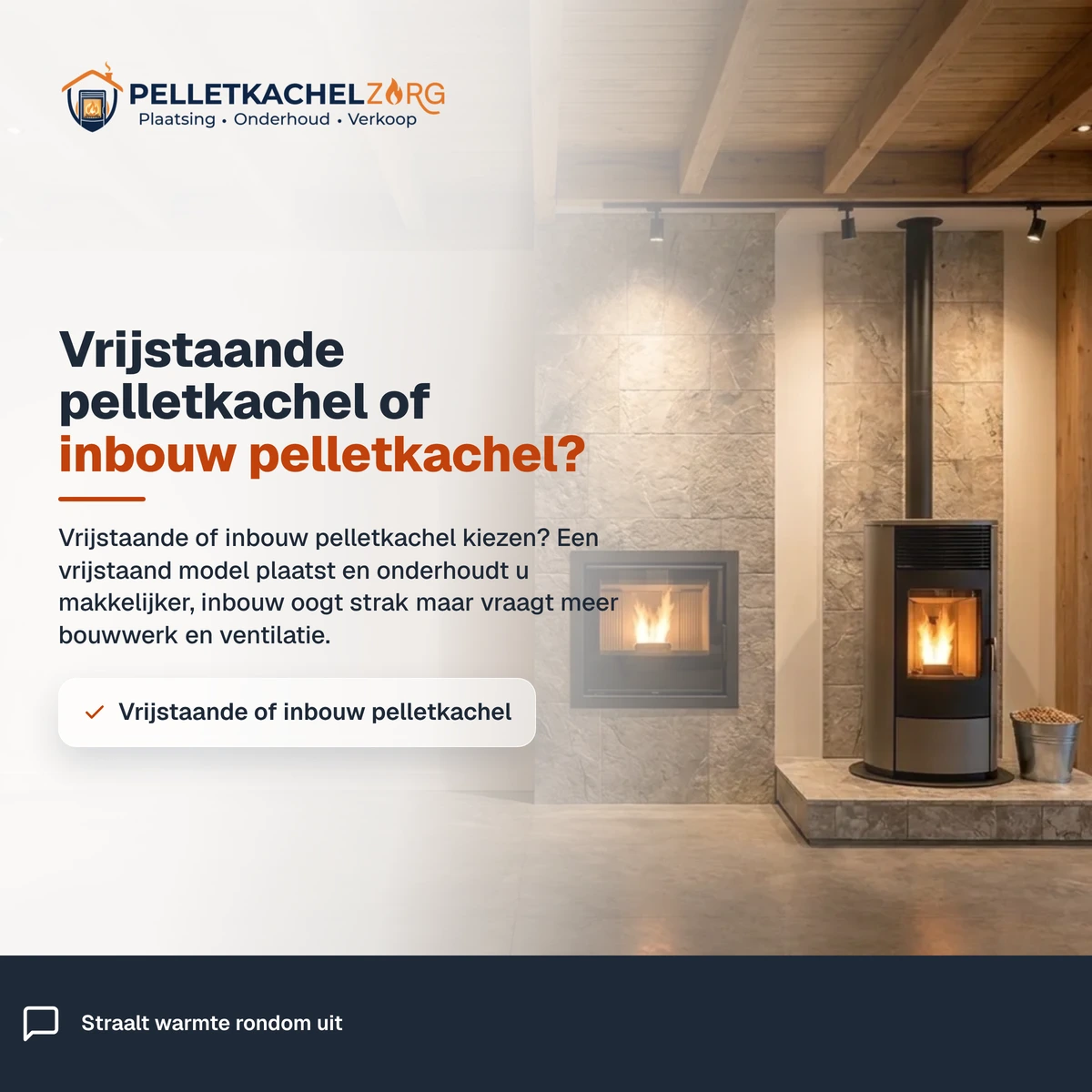
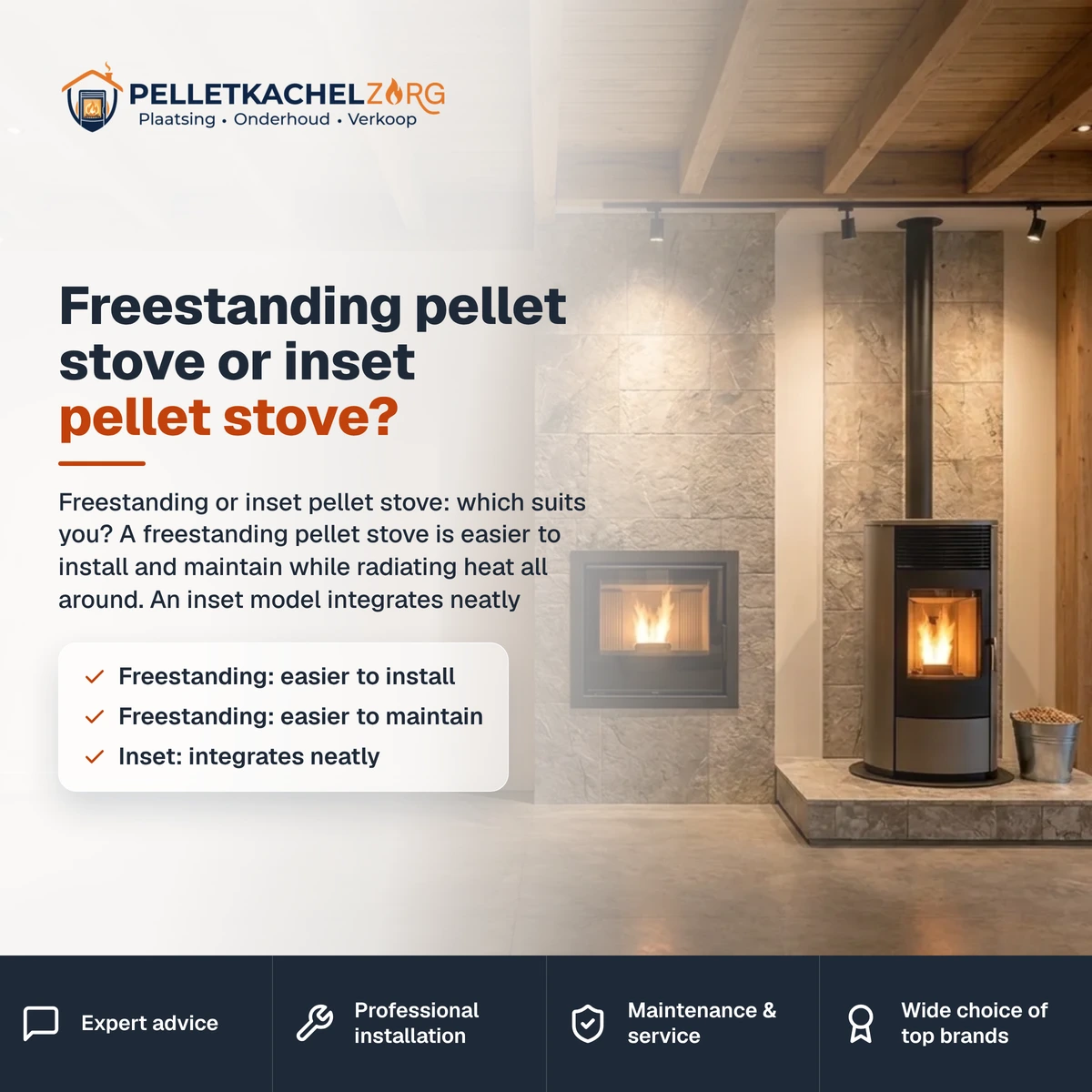
A freestanding pellet stove is easier to install and maintain while radiating heat all around. An inset model integrates neatly into a wall or alcove for a sleek aesthetic, but requires extra building work and adequate ventilation. Your choice depends on your interior, budget, and maintenance preferences.
Choose freestanding for convenience and quick setup: choose inset for a minimalist design requiring extra installation work.
Deciding between a freestanding or inset pellet stove comes down to your interior, budget, and maintenance preferences. A freestanding pellet stove is easier to fit, simple to maintain, and radiates heat across the room. An inset model, often called a cassette stove, fits flush into a wall or existing fireplace for a seamless look. However, built-in models demand extra construction work and proper ventilation. Here is how both options compare side by side.
Rule of thumb: pick freestanding for ease and fast setup: pick inset when a sleek, concealed look is your top priority.
There is no single best option, only the right fit for your living space. Consider the following factors before ordering a model to ensure you choose a stove that suits your home and routine.
Interior design and visibility: do you prefer a standalone feature stove, or a modern heater hidden within the wall?
Budget: freestanding stoves are generally cheaper to install, whereas inset models require extra spending on framing and finishing.
Installation options: if you already have a suitable recess or fireplace, an inset installation becomes much simpler.
Maintenance ease: freestanding stoves offer open access for cleaning, while inset units require planned access points for parts.
Heat distribution: freestanding models radiate warmth 360 degrees, whereas inset stoves project heat forward or through ducted air vents.
If aesthetics are your main priority and you have an available alcove, an inset stove is a great choice. If convenience, lower upfront costs, and quick installation matter most, a freestanding unit is usually the smarter route. Many homeowners choose freestanding as their main heat source, reserving inset stoves for tailored architectural projects.
Tailored advice for your home
We evaluate your room layout, chimney, and interior on site so you pick the right stove before buying.
Expert installation and ventilation
Built-in stoves require correct framing and airflow. We make sure convection vents and flue pipes meet all safety standards.
Easy maintenance access
We always plan practical inspection panels for servicing, ensuring your stove runs safely and efficiently for years to come.
Review these points carefully before making your choice. If you cannot check every box with confidence, booking a home site survey is advisable.
Is there a suitable wall, recess, or fireplace ready for an inset stove?
Can convection air flow freely into and out of the enclosure?
Is there enough room for an access panel for annual maintenance?
Is your chimney suitable, or does it require a stainless steel liner?
Does your budget cover the building work required for an inset installation?
Will you need the flexibility to move or replace the stove in the future?
An inset pellet stove generates heat that must circulate out of its enclosure. Without adequate air intake and heat outlet grilles, temperatures inside the wall will rise, reducing efficiency and risking damage. Always install proper upper and lower ventilation grilles.
Cool room air enters through the bottom grille, heats up around the stove body, and exits through the top vent. If you block this airflow with solid framing or furniture, the appliance can overheat and waste fuel. Freestanding stoves avoid this issue entirely, as heat disperses immediately into the room.
Easy maintenance access is equally vital. The burn pot, heat exchanger, and flue pipe must remain reachable for regular cleaning. If you are unsure which setup fits your room, read our guide on how to choose the right pellet stove for your home before buying.
Both options have specific location and flue requirements. Where you place the stove affects how evenly heat spreads and how straightforward the flue installation will be. Check our guide on the best place to install a pellet stove in your living space.
A central location spreads heat most evenly through your home. Installing a stove in a corner or against an uninsulated outer wall can cause heat loss and lower efficiency. Keep safe clearances from combustible materials and plan for easy chimney sweeping, whether choosing freestanding or built-in.
To ensure a hassle-free purchase, check what to look for when buying a pellet stove. If you decide on an inset model, discover inspiration among the best inset pellet stoves of 2026. For practical advice on fitting, review our guide on pellet stove installation basics.
Regardless of your choice, correct flue fitting and annual servicing are essential. For inset stoves, pay close attention to access panels so chimney sweeping can be done without dismantling brickwork. Freestanding stoves are simpler to service, which often keeps ongoing maintenance costs lower.
Flue installation and safety regulations vary by region and municipality. Always consult the manufacturer instructions, local building codes, and your home insurance guidelines. If you need tailored guidance for your home, we are happy to help. Request a free quote or advice today to find the ideal stove for your heating needs.
We are happy to help. Contact us without obligation.
The main difference lies in installation and heat output. A freestanding stove sits directly on the floor, radiates heat in all directions, and offers easy access. An inset stove is built into a wall or opening and requires proper enclosure ventilation.
Yes, inset models are generally harder to service because they sit inside a wall enclosure. You must install a dedicated access hatch and leave clear space for technicians to reach parts during annual maintenance.
A freestanding pellet stove is usually cheaper to install. It avoids the structural alterations, custom framing, and extra ventilation grilles needed for an inset stove. Final costs depend on your existing chimney setup.
In many cases yes, provided the opening is large enough, the chimney is properly lined with stainless steel, and adequate air ventilation is available. Always have a qualified installer inspect your fireplace first.