
Professional servicing
Our technician cleans and inspects every working component of your appliance, ensuring optimal efficiency and reliable operation.
Have a pellet stove installed with the utmost care? Get a quote in 5 steps.
Have a pellet stove installed with the utmost care? Get a quote in 5 steps.
Have a pellet stove installed with the utmost care? Get a quote in 5 steps.

 Written by Dries Nijs4 min read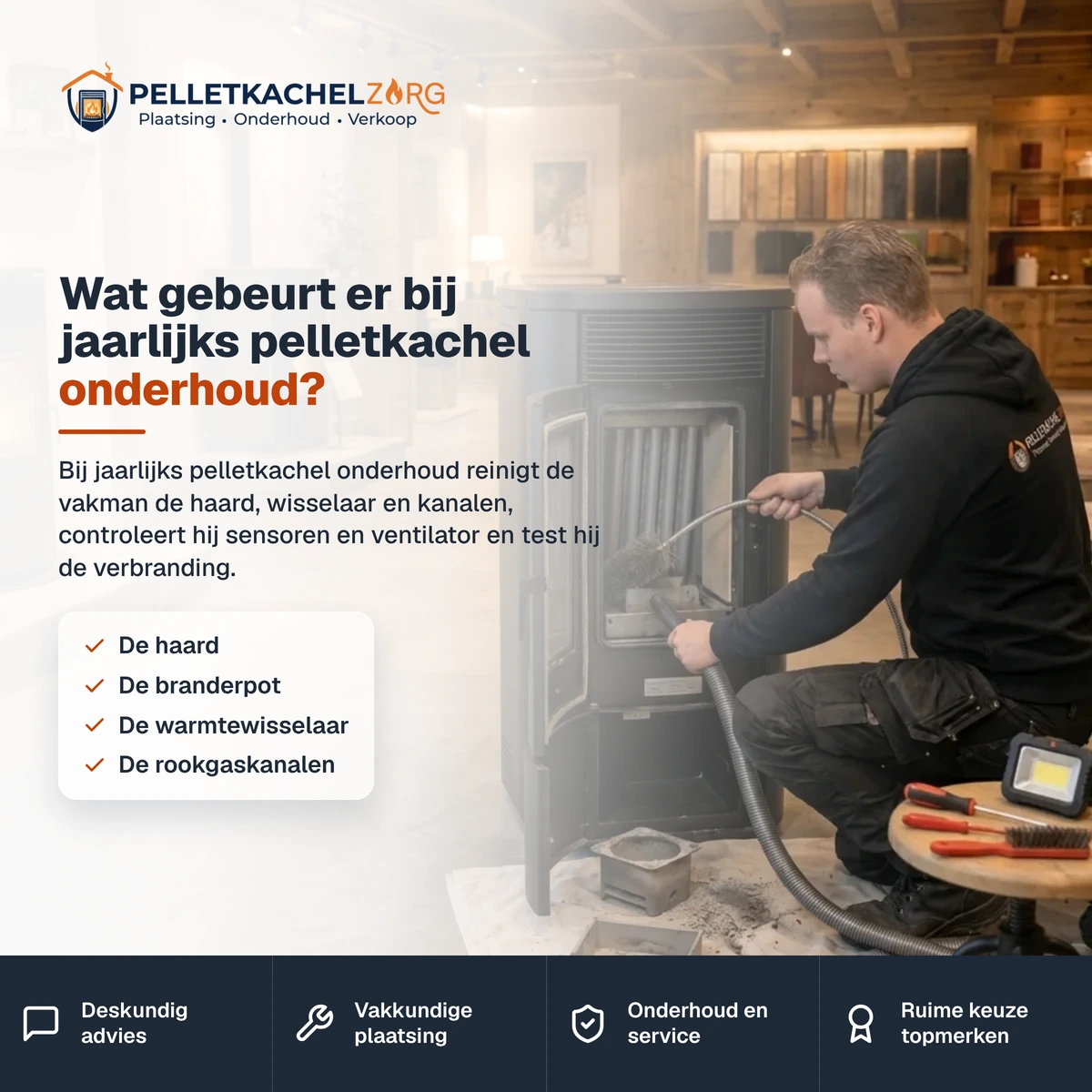
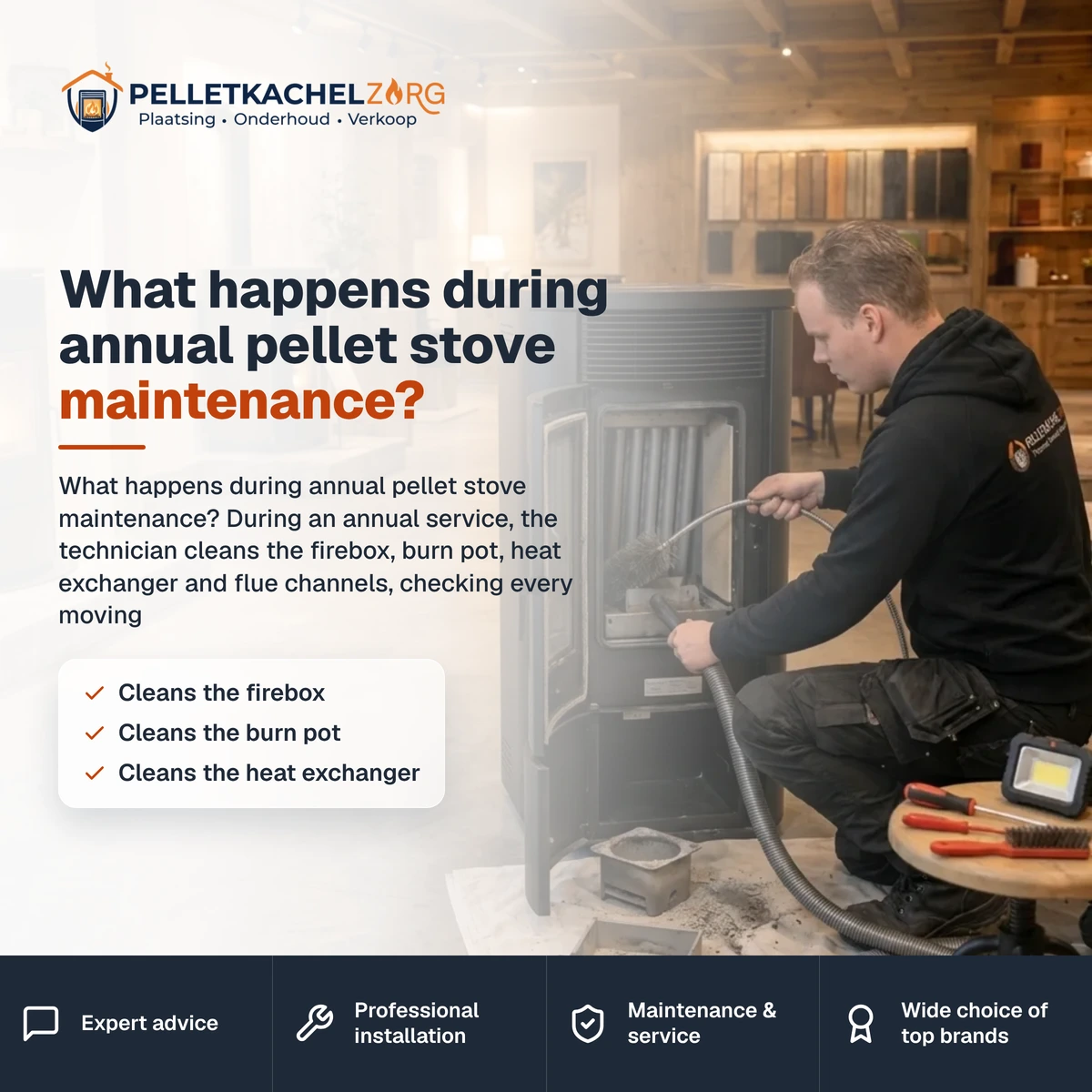
During an annual service, the technician cleans the firebox, burn pot, heat exchanger and flue channels, checking every moving part. Then they test combustion and safety systems to ensure your stove operates efficiently and safely.
A thorough service combines cleaning with inspection and safety testing.
During annual pellet stove maintenance, a qualified technician cleans the combustion chamber, burn pot, heat exchanger and flue channels. Afterwards, they inspect seals, flue gas fan, auger motor and sensors, completing tests on combustion and safety. This keeps your appliance burning efficiently and safely.
Servicing is much more than a quick vacuum. It is an in-depth inspection of every operational component, from where pellets ignite to the flue gas exhaust. This guide explains step by step what a technician does, what you can do yourself, and why annual maintenance pays off.
Annual servicing combines deep cleaning with technical checks, keeping efficiency high and your warranty valid.
Professional servicing
Our technician cleans and inspects every working component of your appliance, ensuring optimal efficiency and reliable operation.
Maintenance report
After servicing, you will receive a report of all completed checks and, if required, a certificate for your insurer.
Safety checks
We rigorously test combustion, sensors and flue gas extraction so you can enjoy safe heating with complete peace of mind.
A technician follows a fixed sequence to ensure no component is overlooked. While the exact process varies slightly by brand, the general procedure for most appliances follows these steps:
The technician turns off the stove, lets it cool down completely, and protects the surrounding floor area.
They remove the burn pot, firebox panels, and baffle plates, clearing away all ash and deposits.
They brush and vacuum the heat exchanger and flue gas passages, where soot and fly ash accumulate.
They inspect the flue gas extraction fan, clean the blades, and verify that it spins freely and quietly.
They check the auger and feed motor responsible for pellet delivery, removing any caked-up dust.
They inspect the seals on the door and ash pan, replacing worn sealing ropes if necessary.
They test the sensors, igniter, and pressure switch, and review the error log history.
Finally, they ignite the stove, measure combustion parameters, and review safety guidelines with you.
A skilled technician provides both a thoroughly cleaned stove and total clarity. You will learn exactly what work was performed, what requires future monitoring, and which documents you will receive. You can expect the following after a proper service visit:
A fully cleaned appliance that starts up smoothly and burns steadily
A comprehensive report detailing completed checks and any replaced parts
Professional advice on wear parts that may need attention next year
Where applicable, a cleaning or service certificate for your insurance policy
A clean workspace with no ash or dust left around the stove
An annual service pays off primarily in three key areas: efficiency, safety, and warranty coverage. A clean heat exchanger transfers heat far more effectively, allowing your stove to deliver the same warmth while consuming fewer pellets. Conversely, clogged flue passages and a sluggish exhaust fan lead to operational faults and a smoky flame.
Safety is equally important. A dirty or poorly adjusted pellet stove can produce carbon monoxide, an odorless and dangerous gas. The technician checks door seals, flue pipe connections, and safety sensors that shut the unit down in an emergency. A precise combustion check confirms your stove burns cleanly and efficiently.
Finally, documented maintenance protects your rights. Many manufacturers tie their warranty coverage to annual inspections by certified technicians, and insurers often request proof of maintenance following a claim. Keeping a service report or certificate on hand prevents disputes later on.
How often service is required depends on your usage patterns and the specific brand, as explained in how often you should service a pellet stove. If you want to know what a service visit costs, pellet stove maintenance costs provides realistic pricing insights.
Yes, the exact scope of an annual pellet stove service varies depending on the manufacturer and the technician. Some models require removing more components, while others feature self-cleaning mechanisms that streamline the job. Your manufacturer's manual remains the primary guide for specific requirements.
Your heating habits also play a role. Intensive use or lower-quality pellets create faster deposit buildup inside heat exchangers and flue channels. The technician tailors the maintenance routine to the actual condition of your stove rather than following a rigid checklist alone.
Regulations and insurance requirements can also vary depending on your region. Check with your local insurer or authority regarding required documentation. A complete annual pellet stove maintenance checklist will help you prepare for your service appointment.
Taking care of routine tasks between professional visits significantly extends the lifespan of your appliance. Discover safe steps in cleaning a pellet stove yourself. If you are unsure about what tasks you can handle versus calling a professional, when to get a professional stove cleaning provides clear guidance.
Looking to have your pellet stove inspected by a specialist this year? Request a free quote or expert advice today to get started.
We are happy to help. Contact us without obligation.
An annual service typically costs between 100 and 250 euros, depending on the brand and condition of your appliance. It is best to request a clear quote beforehand.
Servicing usually takes between one and two hours. It may take longer if the stove is heavily soiled or requires additional repairs.
You can perform regular tasks such as clearing the burn pot, ash pan and cleaning the glass. Full annual servicing, including technical disassembly and checks, should be left to a professional.
A certificate is not always legally required, but many home insurers request proof of maintenance. Check with your insurance provider to see which documentation they require.