

Always work on a cold stove
We only clean and maintain your pellet stove once it has completely cooled down. This ensures we both work safely, with no risk of burns or damage.
Have a pellet stove installed with the utmost care? Get a quote in 5 steps.
Have a pellet stove installed with the utmost care? Get a quote in 5 steps.
Have a pellet stove installed with the utmost care? Get a quote in 5 steps.

 Written by Dries Nijs3 min read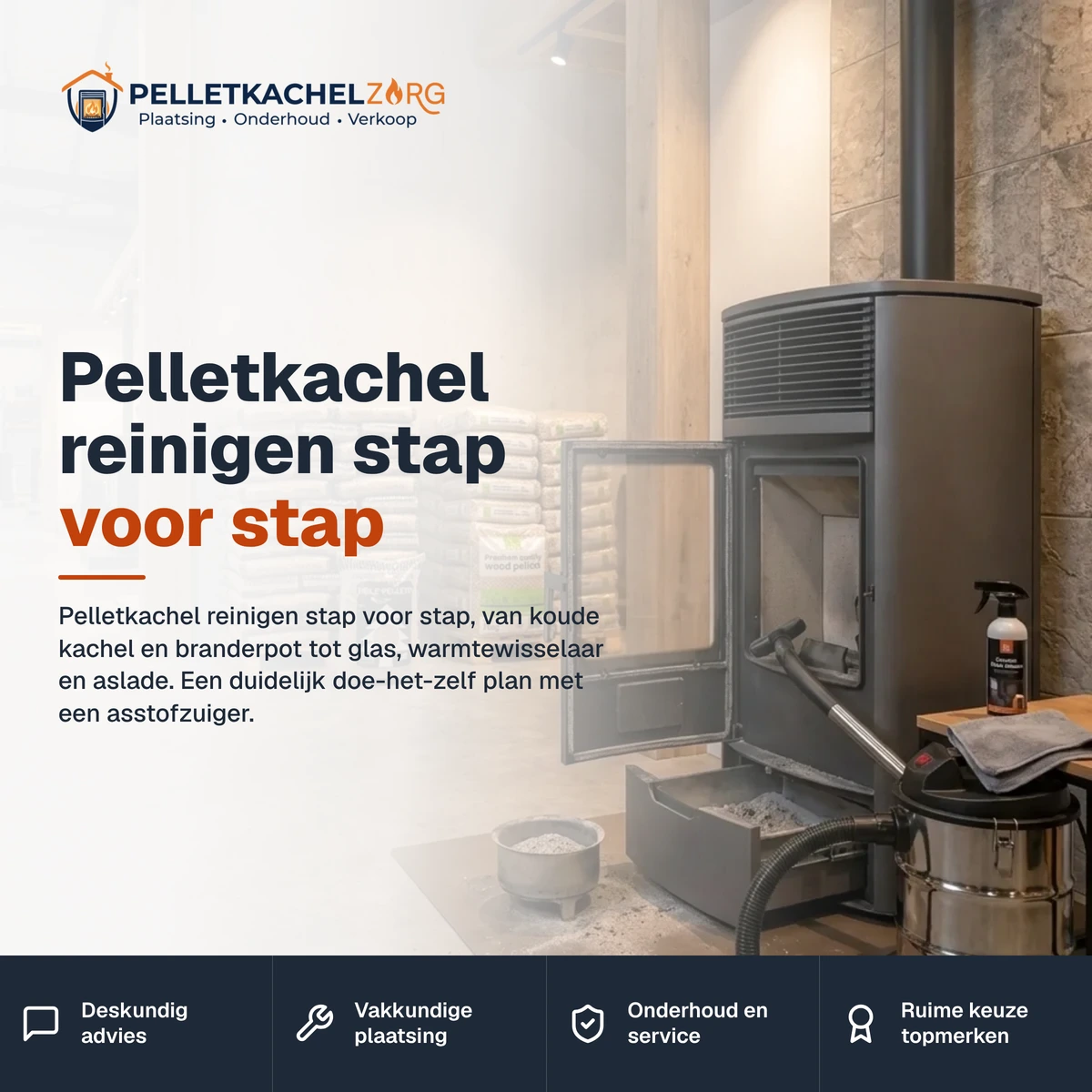
Clean your pellet stove when it is cold, using an ash vacuum. You remove the burn pot, empty the ash pan, wipe the glass, and run the scraper through the heat exchanger.
A cold stove, an ash vacuum, and a set routine keep the process safe and simple.
Cleaning a pellet stove is best done briefly every week and thoroughly every month, always on a cold stove with an ash vacuum. You remove the burn pot, brush it out, and empty the ash pan. Then you clean the glass and move the heat exchanger with the scraper. This keeps combustion healthy and efficiency high.
Divide the cleaning into two routines. A short weekly clean keeps the flame looking good, while a thorough monthly check tackles the heat exchanger and ash chamber. This keeps the workload light and manageable.
Always work on a cold stove and use an ash vacuum, never a regular vacuum cleaner.
Go through the steps calmly and in a set order. Lay out your tools first and make sure the stove is cold. These pellet stove cleaning steps work for almost any model, check your manual for details.
Turn the stove off, let it cool down completely, and unplug it. Never work on a hot stove.
Open the fire door and remove the burn pot from its holder. Knock out the loose ash over a bucket or ash vacuum.
Brush the burn pot clean all around and clear every air hole with a pin or brush. Blocked holes cause a poor flame.
Pull out the ash pan and empty it into a metal bucket. Then vacuum the ash pan with the ash vacuum.
Clean the glass with a cloth and some stove glass cleaner, or a damp cloth dipped in fine ash. Polish until clear.
Move the heat exchanger a few times with the supplied scraper or control rod. This knocks the soot loose into the ash chamber.
Vacuum the firebox, the burn pot cavity, and the areas around the firebox with the ash vacuum. Work from top to bottom.
Place the burn pot and ash pan back correctly, close the door, and check if everything is in place before restarting.
If you run through these eight steps every month, cleaning stays a 15-minute job. Feel free to note down the date, so you can track your routine and quickly spot if the stove gets dirty faster than usual.
Always work on a cold stove
We only clean and maintain your pellet stove once it has completely cooled down. This ensures we both work safely, with no risk of burns or damage.
Ash vacuum, no regular vacuums
Fine ash and glowing remnants belong in an ash vacuum with the right filter. A regular vacuum cleaner gets damaged and blows fine dust through your room.
Professional work for flues
We have the exhaust fan and the flue checked by a professional. You get a proper inspection and, where required, a valid certificate.
Having the right tools on hand makes everything go smoother. Lay out these items before opening the stove.
An ash vacuum suitable for cold ash
A soft brush and a firmer brush
Work gloves to protect your hands
The supplied scraper or control rod
Stove glass cleaner or a damp cloth with some fine ash
A metal bucket or heat-resistant bag for the ash
You can confidently do most maintenance yourself. Removing the burn pot, emptying the ash pan, cleaning the glass, and moving the scraper are all part of regular use. You recognize a successful cleaning session by a clear window, a clean burn pot, and a steady flame.
Two parts are best left alone. The exhaust fan and the flue require knowledge, tools, and sometimes dismantling. Working incorrectly on these can disrupt the draft or damage a seal. Call a professional for those parts.
Take your time and do not force anything. If a part is stuck, check the manual first before you pull or pry. This prevents damage to the burn pot or seals.
Always use an ash vacuum with a fine filter for the ash, never a regular vacuum cleaner. Ensure there are no glowing embers left and store the ash outside in a metal container. This completely eliminates fire risk.
If you want to know how far you can go yourself, read our explanation on what you can clean yourself on a pellet stove. If the window gets dirty quickly despite polishing, the article on why the glass of your pellet stove gets black quickly will help you find the cause.
Cleaning it yourself does not replace annual maintenance. A professional checks the seals, measures combustion, clears the flue gas path, and sweeps the chimney. That thorough service keeps your warranty and insurance valid.
How often you have a professional visit depends on your usage and the rules in your local area. These requirements differ, and your insurer may ask for a valid certificate. Always consult your municipality or insurer as the binding source.
If you notice between services that the stove produces more soot, shuts down more often, or struggles to ignite, clean it more thoroughly and check the flame pattern. If the problem persists, an inspection by a professional is appropriate.
You can establish a good routine with the checklist for annual pellet stove maintenance and our complete guide to pellet stove maintenance. If you are unsure about the frequency, look at how often you should schedule pellet stove maintenance.
With this routine, you can safely clean your pellet stove and keep combustion efficient. If you prefer to have the thorough service or the flue done for you, request a quote or advice without obligation.
We are happy to help. Contact us without obligation.
It is best to clean the burn pot and glass weekly during the heating season, and do a thorough clean of the heat exchanger and ash chamber monthly. Clean more frequently if you use it intensely. Annual maintenance by a professional remains necessary.
No, always use an ash vacuum. Fine ash clogs and damages a regular vacuum, and warm particles can start a fire. Furthermore, only vacuum when the stove is completely cold.
Yes, always let the stove cool down completely and unplug it. Working on a hot stove risks burns and damages seals. Cleaning a cold stove is safer and more thorough.
It is better to leave the exhaust fan and the flue to a professional. Incorrect dismantling disrupts the draft or damages parts. You can clean the burn pot, ash pan, glass, and heat exchanger yourself.


