Inspect First
We inspect your chimney with a camera before anything is installed. This ensures whether a liner is needed and what size fits.
Have a pellet stove installed with the utmost care? Get a quote in 5 steps.
Have a pellet stove installed with the utmost care? Get a quote in 5 steps.
Have a pellet stove installed with the utmost care? Get a quote in 5 steps.

 Written by Dries Nijs3 min read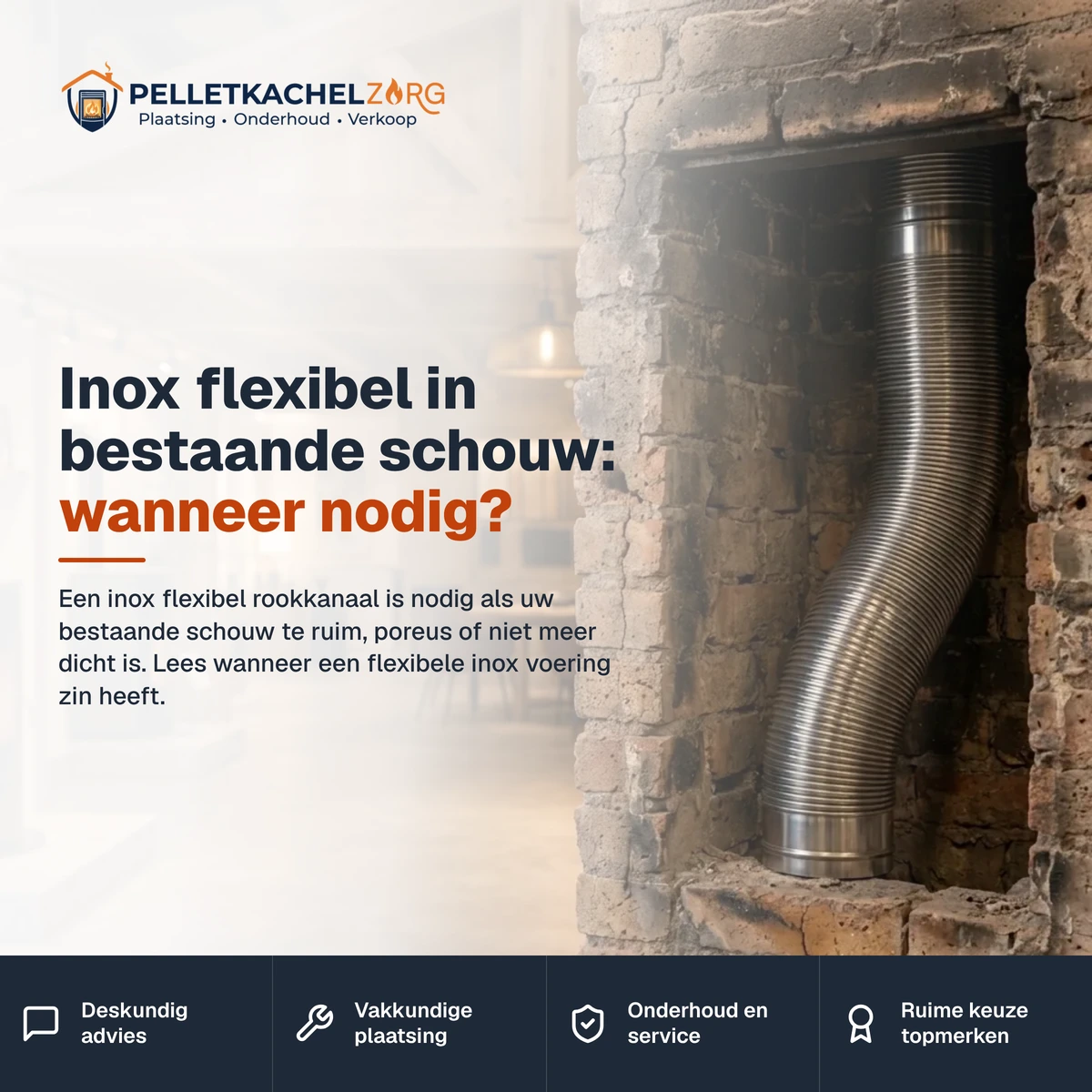
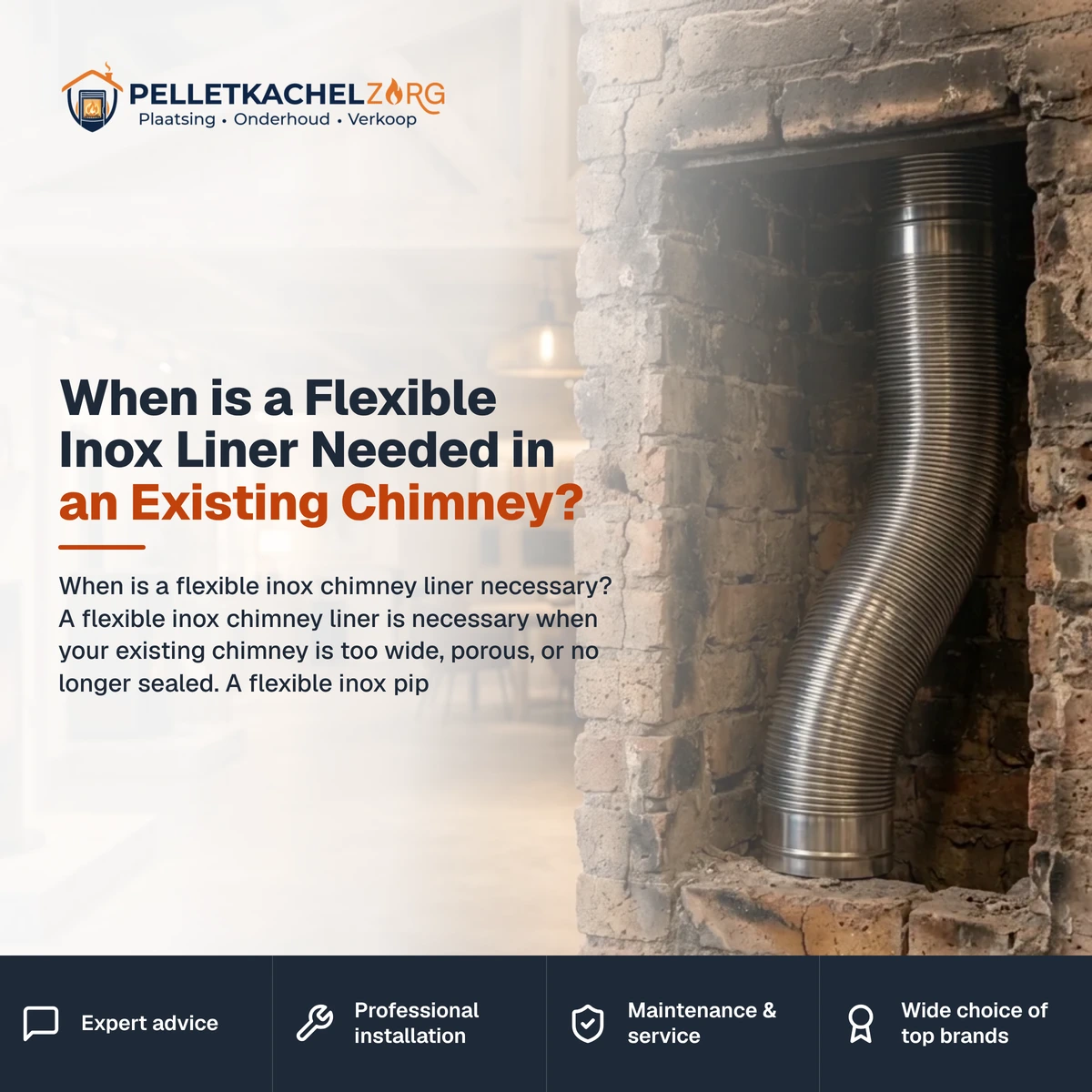
A flexible inox chimney liner is necessary when your existing chimney is too wide, porous, or no longer sealed. A flexible inox pipe custom fits the shaft, restoring the draft of your pellet or wood stove.
Have the chimney inspected first, then choose the right liner.
A flexible inox chimney liner is usually needed when connecting a pellet or wood stove to an old masonry chimney that is too wide, porous, or no longer sealed. The existing shaft is rarely suitable for the exhaust gases of a modern stove. A flexible inox liner customizes the channel and restores the draft. Below, you can read when a liner is really necessary and what to consider.
The chimney is too wide for the stove, causing the exhaust gases to cool and the draft to disappear.
The masonry is porous, cracked, or no longer gas-tight.
You are connecting a stove to a channel that was once used for an open fireplace.
Soot deposits, creosote, or moisture penetration are visible.
The chimney is recent, gas-tight, and has the correct diameter for your stove.
The channel already has a suitable ceramic or metal inner pipe.
You are installing a completely new double-walled chimney along the facade or through the roof.
An inspection shows that the existing shaft is in good condition.
Always have the chimney inspected first; install a liner only after a camera inspection and correct diameter check.
We inspect your chimney with a camera before anything is installed. This ensures whether a liner is needed and what size fits.
The liner is tailored to your stove, not the old shaft. This restores the draft and prevents condensation and creosote.
We use certified inox material and an insulated top. You get a neatly finished and fire-safe chimney.
A flexible inox chimney liner is usually needed when connecting a pellet or wood stove to an old masonry chimney that is too wide, porous, or no longer sealed. The existing shaft is rarely suitable for the exhaust gases of a modern stove. A flexible inox liner customizes the channel and restores the draft. Below, you can read when a liner is really necessary and what to consider.
The masonry chimney is much wider than your stove connection, causing the exhaust gases to cool and the draft to disappear.
The masonry is porous or cracked, allowing smoke and moisture to seep into the walls.
You are switching from an open fireplace to a closed stove, which requires much less exhaust gas and a smaller diameter.
There are creosote deposits or brown moisture spots, indicating condensation in a too-cold channel.
The path is straight or slightly curved and easily accessible, allowing a flexible pipe to fit from top to bottom.
You smell smoke in the living room when the stove is burning.
The chimney drafts poorly and the stove frequently shuts off.
There are brown moisture spots on the chimney wall.
The chimney diameter is much larger than the stove connection.
The chimney hasn't been used or swept in years.
There is debris, an old bird's nest, or loose stone in the channel.
The diameter of the liner must match the stove, not the old shaft. A too-wide pipe allows exhaust gases to cool too quickly, causing condensation and creosote. To choose the correct size, read how to determine the right stove pipe diameter.
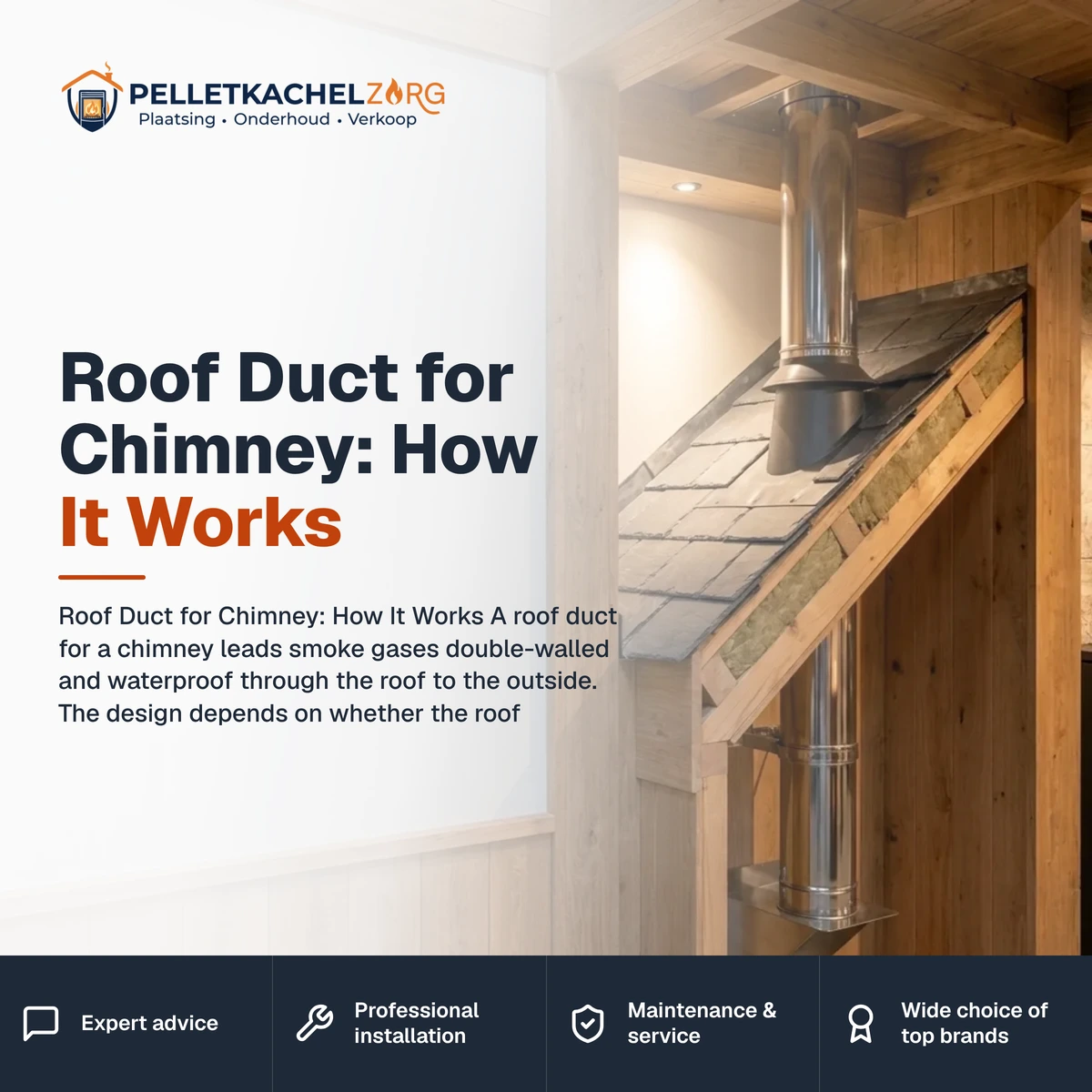
Insulation at the top is important. The last section above the roof cools the fastest, weakening the draft and causing moisture. An insulated top and attention to why condensation collection is important keep the channel dry and safe.
The choice depends on your chimney and your stove. In Belgium and the Netherlands, regulations vary by municipality and insurer, so have a professional inspect the shaft before you start. A liner is only installed in a straight or slightly curved path that is easily accessible.
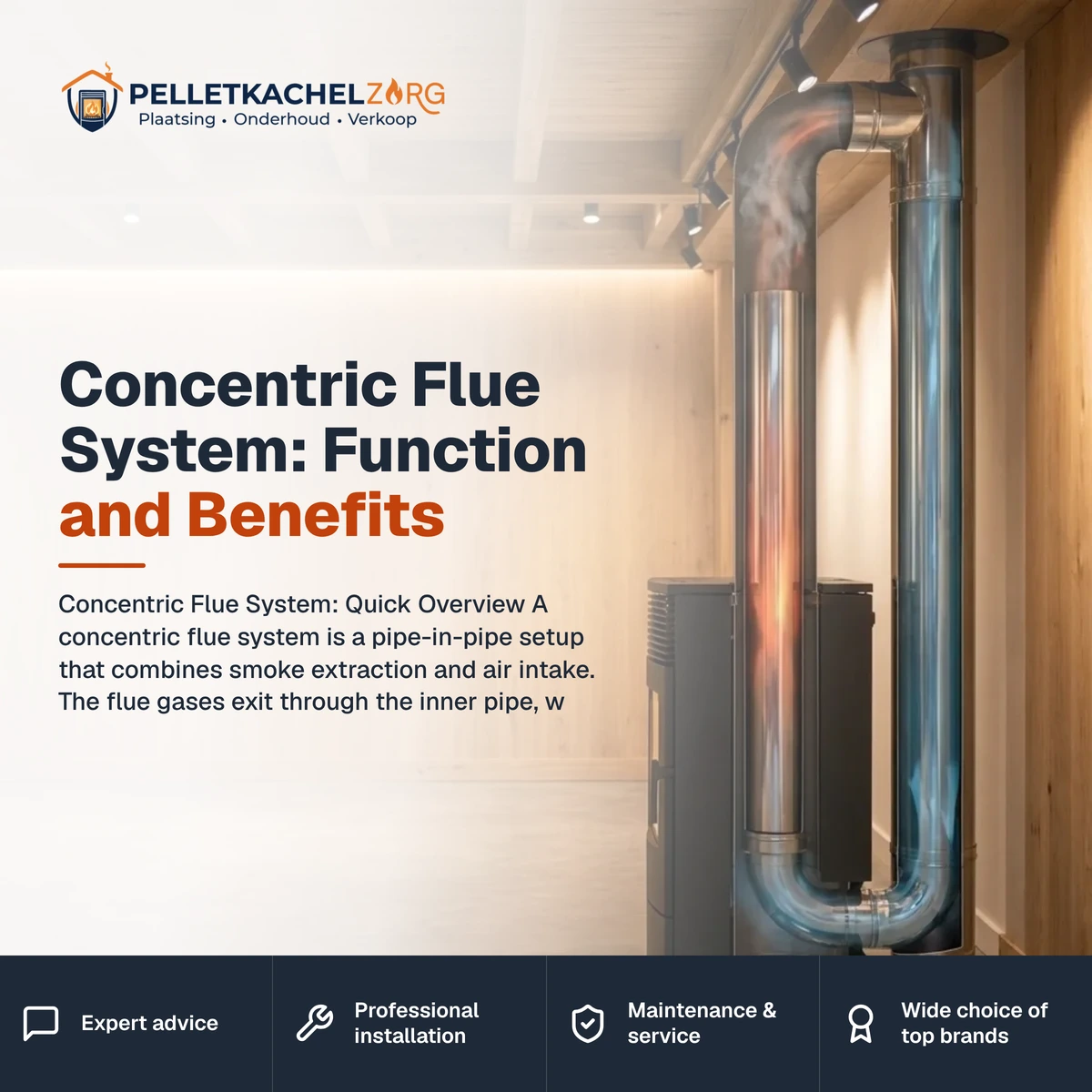
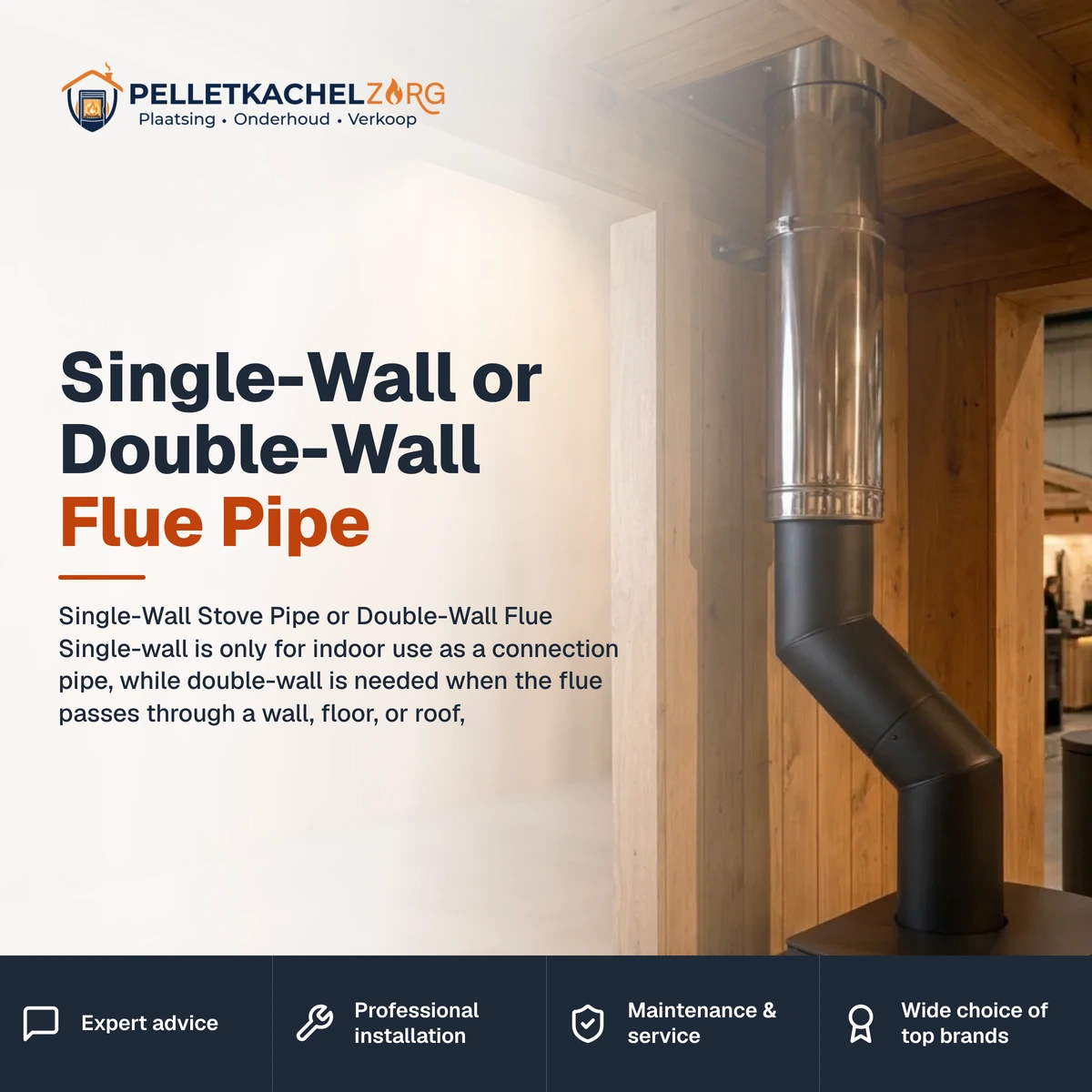
If you're unsure about the approach, background information on a flexible chimney liner in an existing chimney and on the difference between single-walled and double-walled chimneys can help. The steps to connect a pellet stove to an existing chimney also provide a good overview.
Want to be sure if your chimney needs an inox liner? Request a free quote or advice and we will thoroughly inspect your chimney first.
No, not always. A liner is mainly needed when the chimney is too wide, porous, or not gas-tight. If the shaft is recent, sealed, and the right size, connecting without a liner may suffice. An inspection will provide clarity.
Yes, a flexible inox pipe can follow a straight or slightly curved path. Sharp bends or an offset shaft make it difficult or impossible. A professional will check the path from top to bottom before you start.
A too-wide chimney allows exhaust gases to cool too quickly, causing the upward draft to disappear. This results in condensation, soot, and creosote on the wall. A custom-fit liner reduces the channel size and restores a warm, stable draft.
The price depends on the length, diameter, and accessibility of the chimney. A short, straight shaft is cheaper than a long or curved path with roof work. Always request a quote after inspecting your chimney.