
Tailored Advice for Your Appliance
We assess which flue system suits your pellet stove and home. This helps you avoid incorrect diameters or connections.
Have a pellet stove installed with the utmost care? Get a quote in 5 steps.
Have a pellet stove installed with the utmost care? Get a quote in 5 steps.
Have a pellet stove installed with the utmost care? Get a quote in 5 steps.

 Written by Dries Nijs3 min read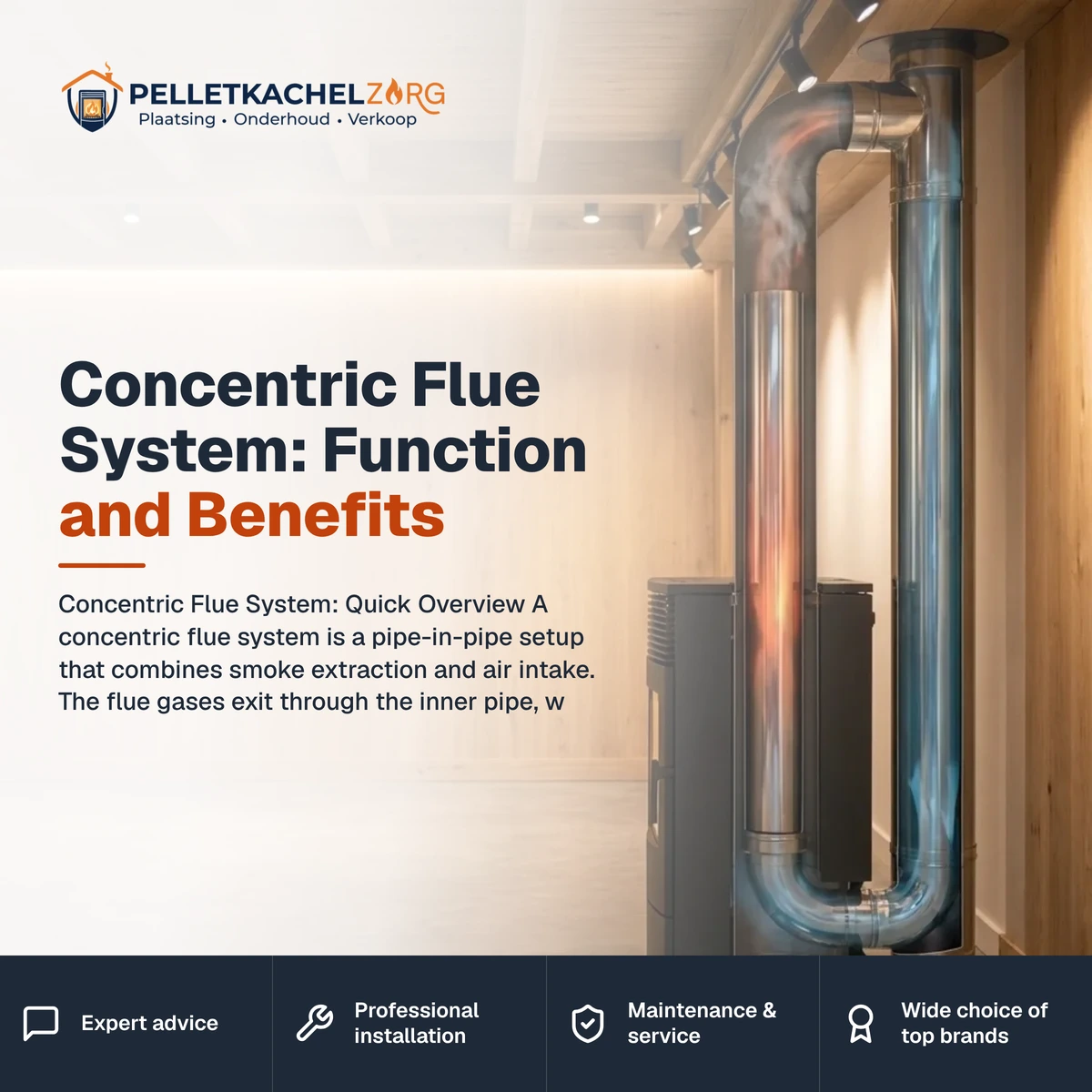
A concentric flue system is a pipe-in-pipe setup that combines smoke extraction and air intake. The flue gases exit through the inner pipe, while fresh air enters through the outer pipe. This ensures your appliance operates airtight.
Ideal for well-insulated homes and many pellet stoves.
A concentric flue system is a pipe-in-pipe setup where flue gases exit through the inner pipe and fresh combustion air is drawn in through the outer pipe. Your appliance sources air directly from outside, without using indoor air. This allows for airtight or room-sealed operation.
This setup is perfect for well-insulated or airtight homes and many pellet stoves. Below, you can read about how it works, its advantages, disadvantages, and when the system is suitable for your situation.
The operation is easy to understand. At the core of the system is the inner pipe, which leads the hot flue gases from your pellet stove outside. Surrounding it is a space, the outer pipe, through which cool outside air flows to the appliance.
This counterflow has a useful effect. The fresh air absorbs some of the heat from the flue gases along the way. Your stove thus receives preheated air, which stabilizes combustion and reduces heat loss.
A concentric flue system combines smoke extraction and air intake in one system, ideal for airtight heating.
We assess which flue system suits your pellet stove and home. This helps you avoid incorrect diameters or connections.
Our installation follows the manual and applicable standards. You get a system that works safely and airtight.
We install flue systems for pellet stoves daily in Limburg and surrounding areas. Concentric setups are familiar work.
Room-sealed operation: the appliance doesn't use indoor air but sources combustion air directly from outside.
Increased safety: with its own air supply, the risk of negative pressure and backdraft of flue gases into the home decreases.
Better efficiency: the warm flue gases in the inner pipe preheat the incoming air in the outer pipe.
One neat conduit: smoke and air share the same opening, simplifying the finish of the wall or roof.
More comfort: no cold drafts or extra vents needed to supply the stove with fresh air.
Your home is well-insulated or built airtight.
You are installing a pellet stove suitable for an airtight connection.
The appliance has a connection for external air intake.
You prefer one tidy conduit through the wall or roof instead of multiple openings.
A ventilation system D or a powerful extractor hood can cause negative pressure in the house.
Pay attention to the correct diameter, allowed length, and condensate drainage with a concentric flue system. Pellet flue gases are relatively cool, causing condensation in the pipe. Proper drainage prevents leakage and corrosion over time.
Therefore, read why condensate drainage is important for pellet stoves. The system you need depends on your appliance, so which flue system you need for a pellet stove is a good next step.
A concentric flue system also has considerations. The system is generally more expensive than a single flue and requires an appliance with a separate air connection. The maximum length and number of bends are limited, as a too long path reduces the draft. In an older, less airtight home, the advantage is often less significant.
The conduit also deserves attention. For a wall exit, there are rules regarding the distance to windows, neighbors, and the roof edge. Check the considerations for a wall conduit for your stove beforehand.
The suitability and regulations vary per appliance and home. In Belgium, the NBN standards and municipal regulations apply. In the Netherlands, the rules vary per municipality, and you should consider the Building Decree and the manual. Always follow the manufacturer's installation guide, and consider your municipality, region, and insurer as binding sources.
Remember that a concentric flue system is a means, not an end in itself. It offers the most benefit in an airtight home with a suitable appliance. In other situations, a traditional flue with separate air intake may work just as well or even better.
Not every stove is suitable for a concentric connection, and not every flue can end concentrically. Sometimes a double-walled system is the better choice, for example, with a long vertical path. Read when a double-walled flue is needed. If in doubt, have the setup checked by a professional beforehand.
A concentric flue system is a pipe-in-pipe setup. Flue gases exit the home through the inner pipe, while fresh combustion air is drawn in through the outer pipe. This way, your appliance doesn't use indoor air.
No, your pellet stove must have a connection for external air intake. Only then does the appliance operate room-sealed. Always check the manual or seek advice before choosing.
The main advantage is that your appliance draws fresh air from outside and doesn't consume indoor air. This is safer in airtight homes and prevents drafts and negative pressure.
Often yes, but there are rules regarding the distance to windows, neighbors, and the roof edge. Regulations vary by municipality and region, so have your setup checked in advance.