
Placement Advice
We work with you to determine which space best distributes heat. Your pellet stove will be placed in the most logical spot.
Have a pellet stove installed with the utmost care? Get a quote in 5 steps.
Have a pellet stove installed with the utmost care? Get a quote in 5 steps.
Have a pellet stove installed with the utmost care? Get a quote in 5 steps.

 Written by Dries Nijs4 min read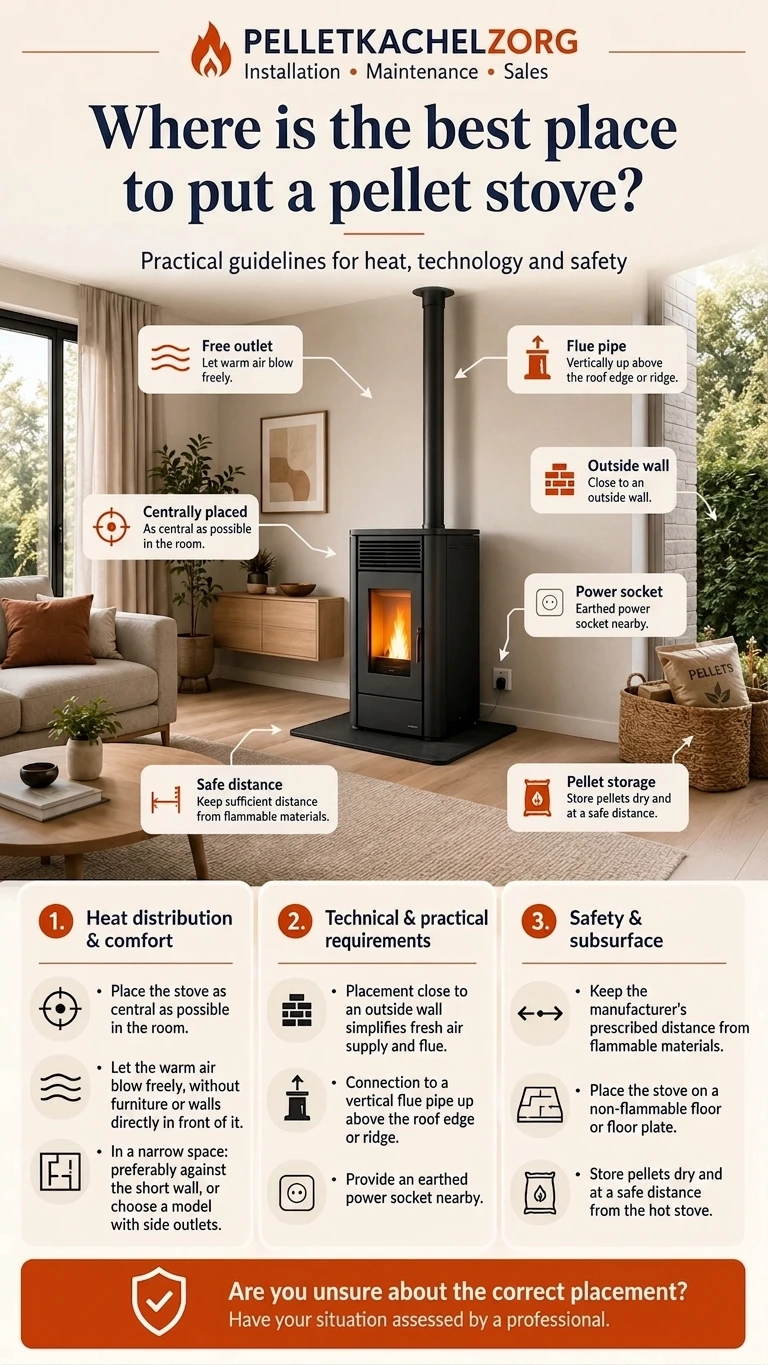
The best place is a central living area where heat naturally spreads. Choose a location near a feasible flue route, with safe distances and enough free space around.
Connection, a short exhaust, and safe distances determine the spot, not the prettiest corner.
The best place for a pellet stove is a central living area where heat naturally spreads to adjacent rooms.
Choose a spot near a feasible flue route, with enough distance from combustible materials and sufficient free space around the appliance. An open connection to other rooms allows warm air to flow through. So don't place the stove in a corner or a closed room.
The difference between a good and a bad spot mainly lies in connection, distance, and the feasibility of the exhaust. The following comparison makes this clear.
Central living area with open connection to hall, kitchen, or stairs
Short, mostly straight path to the flue via roof or wall
Ample distance from furniture, curtains, and wooden walls
Flat, non-combustible surface with a nearby power outlet
Adequate air supply, especially in a well-insulated home
Small, enclosed room where heat lingers
Distant or winding route to the exhaust
Right next to combustible materials or squeezed into a tight niche
Strong drafts from doors and windows affecting the flame
A corner from which heat can hardly escape
A central spot with a short exhaust and safe distances almost always outweighs the prettiest corner of the room.
We work with you to determine which space best distributes heat. Your pellet stove will be placed in the most logical spot.
We consider the distances to combustible materials and standards. Your stove is safely installed, minimizing overheating risks.
We determine the feasible route to the roof or wall for your home. You get a well-drawing flue that is neatly finished.
Review these criteria one by one before finalizing a spot. Together, they determine whether your pellet stove operates efficiently, safely, and comfortably.
Central Location: choose the room where you spend the most time. You'll benefit most from the direct heat there.
Heat Distribution: ensure an open connection or wide passage to adjacent rooms. This allows warm air to naturally flow further.
Flue Route: keep the path to the roof or wall as short and straight as possible. Every bend reduces draft and increases the risk of pollution.
Safe Distances: respect the distances to combustible materials for stove pipes from the manual and standards. This keeps furniture, curtains, and wooden walls at a safe distance.
Free Space: leave enough space in front of and around the appliance. This space is needed for air circulation, refilling, and cleaning.
Air Supply: ensure enough fresh air, especially in an airtight, well-insulated home. An external air supply connection is often the best choice.
Multiple Rooms: consider a ducted pellet stove if you also want to heat an adjacent room. Pipes then direct some of the warm air away.
Use this short checklist as a final check before installing the pellet stove.
Is there an open connection to at least one other room
Is the spot close enough to a feasible roof or wall route
Are the distances to wall, furniture, and floor safe
Is there a power outlet and sufficient fresh air supply nearby
Can you easily access the appliance for refilling and cleaning
If you encounter any of these issues, relocate the stove or adjust the flue route. A small shift in setup often makes the difference between a safe and risky placement.
A pellet stove primarily heats the room it's in, plus the rooms that are openly connected to it. An open-plan kitchen or a mezzanine spreads heat much better than a closed room with shut doors.
A pellet stove radiates heat and also warms the passing air. Both effects work best when air can move freely around the appliance and through the home.
The power plays a role in this. An overly powerful stove in a small room overheats that space, while an underpowered appliance won't heat the rest of the home. Therefore, first check which pellet stove suits your home before choosing a fixed spot.
Also consider daily comfort. A spot too close to the seating area can feel uncomfortably warm, while a spot behind a wall hardly transfers heat. A central, but not too cramped setup offers the best balance.
The ideal spot in the room is not always the feasible spot for the exhaust. The path to the outside, via the roof or wall, heavily influences the decision. A short, mostly vertical exhaust draws better and reduces the risk of condensation and draft issues.
Also consider the exterior. The outlet must be far enough from windows, doors, and property lines, and usually high enough above the roof. These requirements can still adjust your indoor placement choice.
Whether you choose a flue through the roof or wall depends on the construction, environment, and local regulations. In Belgium, these rules vary by region and municipality, in the Netherlands by municipality. Consult your municipality, insurer, and the appliance manual as binding sources.
If you want the full picture before deciding, read installing a pellet stove: what you need to know. This way, you'll know in advance which spot is both comfortable and safe, and permissible.
If you're unsure about the best place for your pellet stove or the accompanying flue route, have it assessed in advance. Request a quote or advice without obligation and choose with peace of mind.

A pellet stove is best placed where warm air can circulate freely through the living space. Avoid a deep corner or a position right behind a sofa, cabinet, or other large furniture. In a long room, a spot against the short wall is often ideal, as it allows heat to spread better along the length of the space.
The minimum distance to a wall varies by brand and model. The wall material also matters: more space may be needed for wood or other combustible materials than for stone or concrete. Always follow the distances from the technical sheet and have the situation checked by a professional if in doubt.
A pellet stove can be placed on a wooden floor in certain situations, but the surface must be strong enough and protected. Often, a non-combustible floor plate made of glass, steel, or stone is placed under the appliance. The size of this plate and the required protection depend on the manufacturer's guidelines.
Being close to an exterior wall is not always necessary, but it can simplify installation. The supply of fresh combustion air and the installation of a safe flue are usually more practical there. The final position must also be suitable for heat distribution, safety distances, and stove maintenance.
Every pellet stove needs enough air for proper and safe combustion. In modern, well-insulated, or airtight homes, a direct external air supply is often necessary or strongly recommended. Ventilation systems and range hoods can affect indoor air pressure, making a prior technical assessment important.
The flue must safely expel smoke and ensure sufficient draft. The correct route and exit location depend on the home, roof, windows, ventilation openings, and local regulations. Check before purchasing whether a correct and maintainable flue is technically feasible.
Yes, a pellet stove partially operates on electricity. The ignition, auger, fans, and electronic controls require power. Therefore, provide a grounded and easily accessible power outlet near the appliance to avoid loose extension cords or obstructive cables across the room.
In addition to the prescribed safety distance, there must be enough space to operate, refill, clean, and maintain the stove. The door, pellet reservoir, side panels, and flue connection must remain accessible. Also, keep the warm air outlet free from furniture, curtains, and other obstacles.